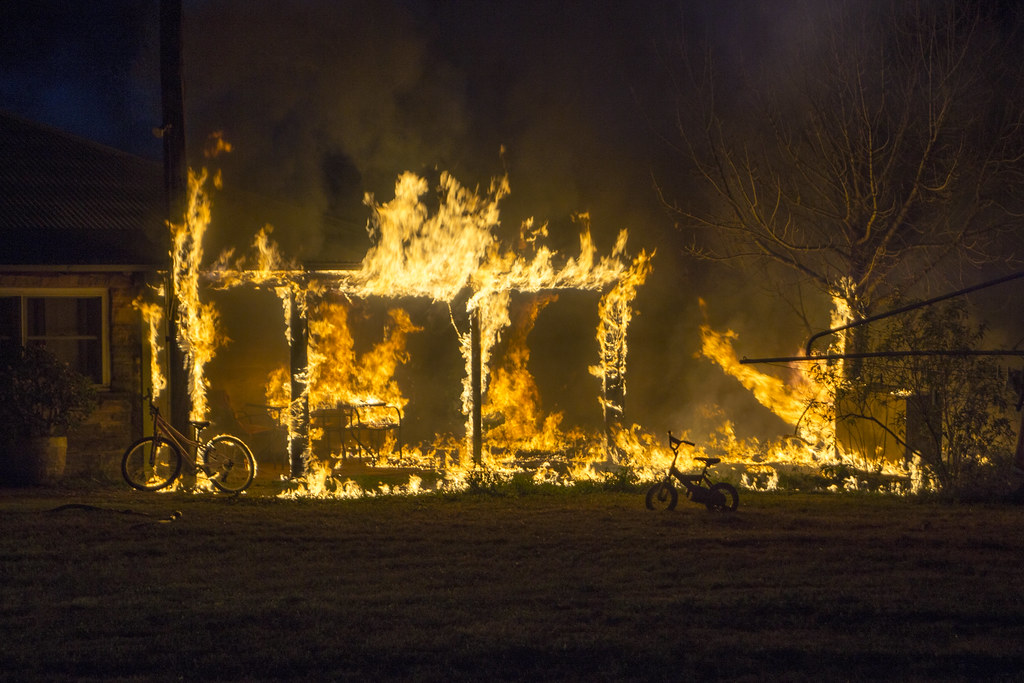
Since the January 2026 Victorian bushfires, the Country Fire Authority reports that around 3,400 people have expressed interest in joining as new volunteers (Country Fire Authority, 2026). On the surface that is an encouraging number and it has been reported that way by most outlets that covered it. Looked at more carefully, the number is harder to read as an unqualified good news story, and the reasons have more to do with how post-disaster volunteer surges actually work than with anything specific to Victoria this summer.
Post-disaster volunteer surges are a well-documented phenomenon in the emergency management literature. They tend to follow a predictable shape. A major event generates a wave of public interest and a sharp spike in expressions of interest, driven by personal connection to the event and media framing, alongside a genuine desire to help rebuild what was lost. The motivation at that moment is real and is almost always in excess of what the receiving agency can absorb quickly. The problem is that the motivation is also time-limited. Research on disaster volunteer retention consistently shows that without sustained training and meaningful integration into existing units (plus the quieter work of ongoing support), a significant proportion of post-surge recruits will not be operationally active by the following fire season, and an even larger proportion will have drifted away within two years. The 3,400 figure in the CFA’s recruitment headline measures initial interest, not operational capacity. The next twelve months will determine how much of that interest survives the slow work of building a trained firefighter from a motivated volunteer.
This distinction matters because volunteer fire services are built around surge capacity as a core design principle. A healthy volunteer service has many more trained people on the roll than it needs on an average day, because the whole point of the model is that when a bad day arrives you can deploy thousands of trained people at scale within hours. The ratio between total volunteers and concurrent operational need is what makes the whole model work, and erosion of that ratio shows up years after the event, not weeks. An intake system that treats recruitment numbers as the endpoint rather than as the start of a retention pipeline produces headlines in year one and unseen operational shortfalls in year three, when the same people who made up the 3,400 have largely stopped showing up to training.
The retention problem is a change management problem more than it is an emergency management problem, which is a formulation most emergency services are understandably a bit reluctant to accept. The work of turning an expression of interest into a trained operational volunteer involves induction, basic training, station integration, ongoing skills development, social connection to the existing membership, reliable access to meaningful roles, and a visible career pathway for people who want to specialise or take on leadership. Each of those is a capability that has to be staffed and resourced. Agencies that treat the post-surge recruitment wave as a free resource typically find that it has cost them more than they expected a year later, because the integration work was never properly planned and the attrition was higher than the pipeline assumed.
A paper published in late March 2026 on wildfire governance (CORIN, 2026) offers a useful second framing for the broader structural problem that sits behind the volunteer question. The paper argues that escalating wildfire crises are driven primarily by fragmented governance and misaligned incentives rather than by insufficient resources, and proposes a coordination architecture (the CORIN framework) that links federal and provincial actors together with municipal and private ones through a shared data and decision layer. The Canadian context the paper was written for has obvious resonances with Australian practice. We have state-based fire agencies operating under state legislation, federal coordination functions through the Australasian Fire and Emergency Service Authorities Council and the National Aerial Firefighting Centre, and a steadily more complex stakeholder environment that now includes Indigenous land managers alongside private landholders with significant holdings near the wildland-urban interface, and insurance markets that are repricing the risk in real time (a dynamic I wrote about separately).
The CORIN paper’s central claim (that fragmentation is the problem, not resources) is worth taking seriously in the Australian setting because it is both right and uncomfortable. More resources would help at the margin. They would not, on their own, fix the structural issues in how wildfire responsibility is distributed across levels of government and how incentives are aligned (or not) between them. State fire services are funded and accountable to their state governments. Federal coordination operates on a consensual basis through inter-jurisdictional agreements that depend on the goodwill of the participants. Indigenous fire practitioners are invited into the process in different ways depending on the state they are operating in. Private landholders are both essential to the coordination model and structurally under-represented in its governance. Insurance markets are now reshaping the physical risk environment in ways the state-based coordination architecture was not designed to accommodate.
None of that is unique to Australia, and the Canadian analysis applies to most federations with a similar constitutional distribution of emergency management responsibility. What is specific to the current Australian moment is that the January 2026 Victorian fires produced a volunteer surge, a State of Disaster declaration across 18 local government areas, a mutual aid response that reached into other jurisdictions (including international partners, with BC Wildfire Service deploying 37 personnel to Victoria in January-February 2026), and a set of post-season reviews that will feed into pre-season planning for 2026-27. All of those processes are running at once, and the question is whether the coordination architecture can absorb all of them without defaulting to the lowest-common-denominator approach that fragmented governance usually produces under time pressure.
The connection to the volunteer question is actually direct. Retention of the 3,400 CFA recruits will depend on the quality of the induction program inside the CFA, and equally on the coordination between the CFA and the broader volunteer ecosystem across services and jurisdictions. Volunteers move between agencies and between states, and they move between paid and unpaid roles over the course of a career. An unmanaged surge at the CFA can pull capacity out of neighbouring services, or create expectations that cannot be met because the underlying system is not structured to meet them. A retention strategy that treats the CFA’s numbers in isolation is missing the interdependencies that actually govern whether the surge translates into durable operational capability.
For management consultants and change practitioners following this discussion, the interesting thing about wildfire governance is that it is a particularly clean example of a pattern that also shows up in defence acquisition and major project delivery (both subjects I have written about separately), and in health system reform more broadly. The pattern is that fragmented authority and misaligned incentives across jurisdictional levels consistently explain more of the variance in outcomes than resource availability does, and the usual response to that finding is to look for a structural fix on the governance chart rather than a behavioural fix in the incentives. The CORIN paper is refreshingly direct about the limits of structural fixes. It argues for continuous, integrated coordination rather than a new federal agency or a new layer of oversight, because the existing actors are the ones who have to make the coordination work, and inserting a new box above them does not change that.
Recruitment headlines make good press coverage. Retention rates measured twelve months after a disaster tell you whether the system behind the headlines actually works, and coordination quality between agencies and across jurisdictions is what mostly determines the retention rate. The 3,400 figure from this January’s surge will be a useful leading indicator for both, if anyone bothers to track it carefully enough to see how many of those volunteers are still on a roster in March 2027.
References
Country Fire Authority. (2026). Post-January 2026 volunteer recruitment figures. CFA Victoria.
Australasian Fire and Emergency Service Authorities Council. (2026). National aerial firefighting and coordination arrangements. AFAC / NAFC.
CORIN framework authors. (2026). Coordination architecture for wildfire governance: a Canadian perspective. Zenodo.
Victorian Government. (2026, January). State of Disaster declarations and response coordination for the January 2026 bushfires.
 Russell Buzby
Leave a comment