Fuel is the only commodity the inquiry’s terms of reference name, and it comes with days of cover and a department reporting them. Whether Australians would fight to defend the country was measured once, in 2025, and not since.
Scrum was abstracted from manufacturers who could not patch a product after it shipped. Software inherited the practices in a medium where correction is nearly free. Programs building hardware are now taking on the ceremony without the condition that made it safe.
Direction 002-2026 counts only what meets both gates of the PSPF legacy test, so a supported internet-facing service sits outside the stocktake because the definition puts it there. Agencies setting scope this month can still ask who reaches a service without authenticating.
Commonwealth guidance tells agencies how to produce an execution trace, and none of the eight mandatory AI requirements asks them to reconstruct what an agent did. When assessment fell behind, the department swapped its Medicare fraud model for a statistical one instead of adding assessors.
Seven years of voluntary fee disclosure got 106 of roughly 6,300 specialists to publish, so the Commonwealth legislated the power to do it for them, with immunity attached. Ten weeks earlier the DTA kept its supplier register inside government on the same legal risk.
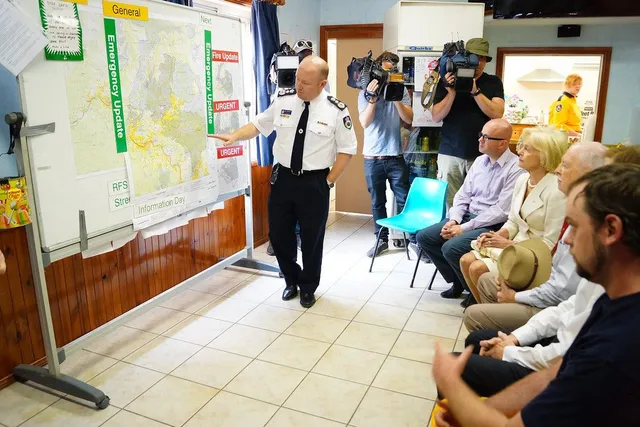
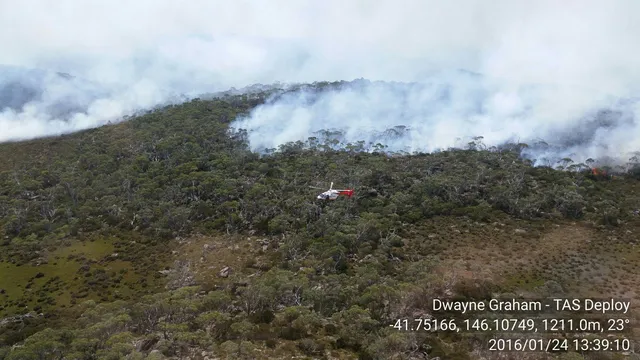
Australia’s fire season still falls outside the Northern Hemisphere’s, so reciprocal deployment holds. What has changed is that our partners now peak together, which leaves less spare capacity to lend us, and resourcing submissions still count borrowed capability as capability held.
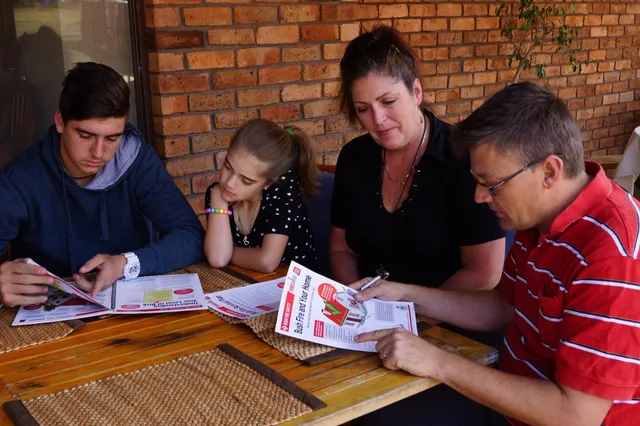
CFA’s 81 per cent is not comparable with the 31 per cent its own survey reported a year earlier, so the season’s headline figure rests on a rewritten question. Australian research has said since 2020 that what households lack is a named trigger.
No one in Australia holds a consent right over a data centre on Aboriginal cultural heritage, at any level of government. Nothing announced for the coming framework creates one, and the case cited as the exception was a withdrawal over generator noise.
Change management counts the volume of change and says capacity is the half nobody measures. Australia has measured it for years: 48 per cent of public servants told the 2025 APS Employee Census change is managed well, and nobody sequences off that number.
Nearly every assurance instrument an agency can reach for reads what a system says about itself. In one set of evaluation runs only a before-and-after comparison of the database caught an agent making the change it had been gated against.
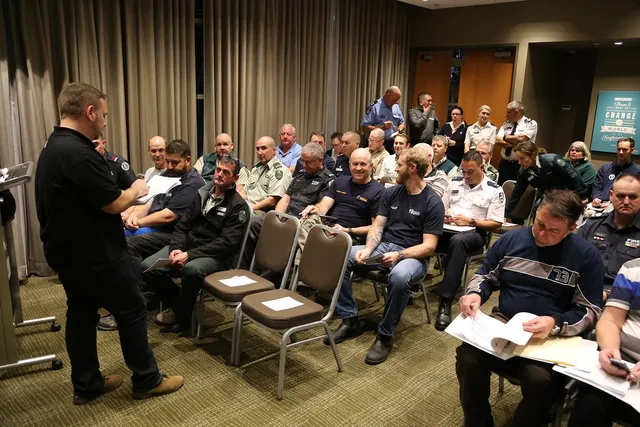
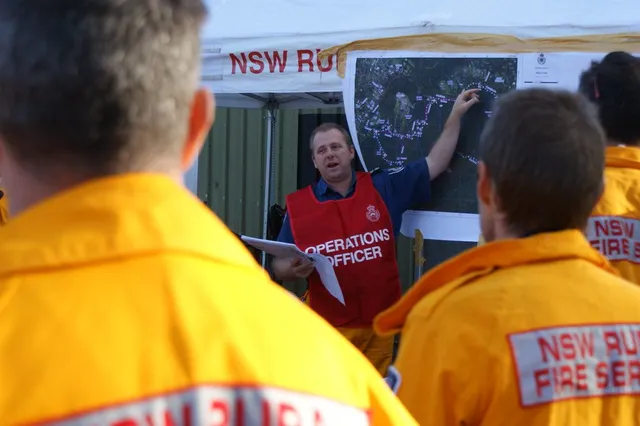
Australia’s fire agencies already share one incident management system, so when coordination fails it is because no procedure says who owns the decision. Four different problems sit under that one word, and automation cannot supply the missing owner.
In one August week the health department made registered nurse coverage in aged care an externally audited figure and projected a shortfall of 70,707 nurses by 2035, with those staffing rules already assumed in the aged care forecast. Both documents are honest, and neither names who closes the gap.
A model bought to rank inspections becomes, two years later, the reason an inspection never happens. That drift now has a name, decision role migration, and the DTA’s 15 December impact assessments capture the role a system was bought for, while migration starts after deployment.
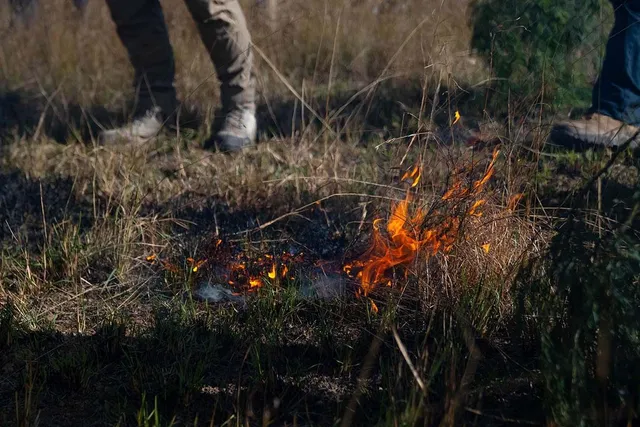
Since 6 August the 2025 finding that prescribed burning cuts net smoke emissions has sat in open dispute, and no journal has ruled. Hazard reduction never needed the smoke number; its case stands on severity and the operational record, and spring burn plans belong there.
Long-term bushfire smoke exposure is linked to coronary plaque in asymptomatic adults, and in California agricultural and prescribed burning together produce roughly a third of smoke-attributable asthma cases. Burn windows should score downwind populations alongside fire behaviour, and health districts belong at the planning table.
The Parliamentary Budget Office has priced budget balance at roughly 41,000 APS positions, and the default way to deliver that is automation. Competence and tool reliance turn out to be bistable: past a threshold the skill goes for good, and sequencing decides whether that happens.
AusAlert reached about 94 per cent of mobile towers in its national test, and a 30-metre model now predicts burn windows. Neither gain converts to an outcome until the officer issuing the alert has rehearsed and a crew is rostered for the window.
Robodebt was disclosed in budget papers and defended at estimates, and it ran anyway: humans reviewed cases at scale and none held documented authority to set the output aside. Whatever commences on 10 December 2026 has to hand somebody that authority.
In July, Commonwealth agencies signed more than A$1 billion in Microsoft contracts as the Prime Minister promised AI standards. A discount answers the price question and says nothing about whether one foreign supplier should hold the Commonwealth’s cloud and AI assistant until 2031.
Of 2,086 studies of AI in wildfire management, fewer than one per cent tested their models on country those models had never seen, which inflates most accuracy figures on vendor spec sheets. Agencies can refuse to buy on those numbers, starting with the tender form.
Staff at the DTA distributed whole-of-government policy by guessing email addresses, and the next day politicians turned out to sit outside the AI framework they administer. Australia is about to legislate a mandatory AI standard that will not cover the people writing it.
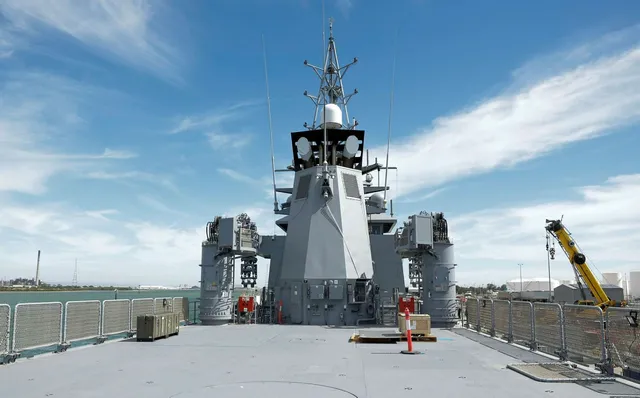
Eleven years after abolishing the DMO, Australia has announced the Defence Delivery Agency. Structure is the easy lever; the tests are the first minimum viable contract signed in weeks and the first troubled program killed early, and neither can be passed at a press conference.
Microsoft engineers adopting coding agents merged 24 per cent more pull requests; in a controlled study, AI-assisted developers scored 17 per cent lower on comprehension. Comprehension is what teams draw on at 2 am when systems fail, so learning has to be budgeted like security.
An AI camera in Arizona now sees smoke about 45 minutes before the first emergency call, and California’s network flagged 3,600 fires in 2025, over half before anyone rang. Science is no longer the constraint, and a camera still cannot sign its own purchase order.
Budget Paper No. 4 counts over 11,800 roles created to replace outsourced work, restoring capability earlier efficiency measures dispersed. A restructure business case prices its savings to the dollar and books departing knowledge at zero; any evaluator would reject that asymmetry in a vendor’s bid.
FEMA pulled its teams off door-knocking in North Carolina after an armed man threatened its workers, and fabricated claims changed how a disaster agency operated. Australia’s message delivery has never worked better; whether the message is believed cannot be tested in a drill, so rumour management is preparedness.
Australia’s bushfire prediction models are already accurate; more than 400 practitioners in Adelaide saw machine learning that works. What keeps them off the fireground is fragmented data going in and predictions no analyst can interrogate coming out, and that is where the money should go.
Aboriginal and Torres Strait Islander emergency workers are asked to build trust and interpret culture on top of the job, while the decision rights stay where they were. That asymmetry is the colonial load, a capability problem before it is a wellbeing one.
Canada’s AI-assisted summary of 5,253 consultation submissions passed accuracy checks and dropped dissenting participants at rates between 33 and 88 per cent. Australia’s decentralised AI plan leaves every policy team to choose its own tooling, and no agency gate yet checks whose voices a summary keeps.
Western Australia’s 2015 bushfire prone area maps were followed by a 4.2 per cent discount on sale prices inside the boundary, and the study traces it to the disclosure itself. Telling buyers the truth repriced the risk at close to zero fiscal cost; the obligation is keeping the map current.
Wildfire killed 17.6 per cent of Earth’s large giant sequoias in a decade; groves given prescribed burns beforehand kept more trees. With El Niño declared, what stops Australia treating country at scale is agency-built credentialing and approval rules that keep Traditional Owners at arm’s length.
All 94 agencies bound by the AI transparency standard have published statements, and a June study of 92 found the people most exposed to government AI get the least usable disclosure. Compliance is measured at the centre; the harm accrues at the edge.
One model refresh raised estimated building exposure in the eastern United States by 61 per cent, and nothing burned differently. A risk map is a snapshot of a moving hazard, and decisions made on the last map may already be stale.
Nobody can say who answers when an autonomous firefighting drone gets it wrong. One early-warning system would have evacuated 180,000 residents eight hours earlier in a replayed typhoon, so refusing the capability would be the worse error; accountability has to be written into the contract before the first flight.
Between 2001 and 2024, 42 per cent of western United States forest that burned did so during or after a heatwave, on 12 to 15 per cent of warm-season days. Risk that concentrated is risk you can pre-position crews against, if resourcing follows the forecast.
Finance has barred new KPMG engagements until 30 September, three years after PwC was frozen out, and close to $200 million in expiring audit work may survive through extensions. Both cases were caught by a whistleblower; the standing controls were not doing the catching.
When Washington told Anthropic to block foreign nationals, the company switched off two models for everyone, and Australian access went with them. Sovereignty means knowing what your agency does the morning the access is cut, and most have never asked.
On 30 June funding ends for the near real-time picture of where Australia is burning. Six years after the Royal Commission asked for a national bushfire database there is a scoping study and no authority able to compel a common schema; governance is the gap.
Resilience asked the firefighter whether they were tough enough. The new AFAC-endorsed principles ask the agency whether it is tracking cumulative trauma exposure, and the duty falls hardest on volunteer services, whose people appear on no payroll.
Five years after Black Summer, Australia’s 2025-26 fire season showed the post-Royal Commission coordination machinery working as designed. Coordination improves a response built for bounded emergencies without redesigning it, and a climate-era crisis keeps testing the structure the reforms left intact.
AI tools that lift short-term productivity can erode the expertise those gains depend on, and the firm books the gain while the worker and the institution pay the skill cost later. Skill maintenance belongs in the business case as an owned line.
Staff across 27 Australian critical infrastructure organisations already use frontier AI outside any control, and a policy nobody can see followed is no control. Agentic systems turn that observability gap into an accountability gap, so governance has to exist before the system may act.
AI sits in almost every line of the $425 billion defence investment plan and is governed by one March 2026 policy. That policy asserts human accountability without auditable records to evidence it, and spiral development will keep the capability a moving target.
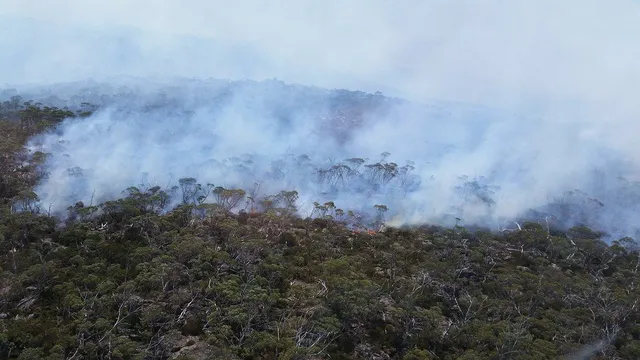
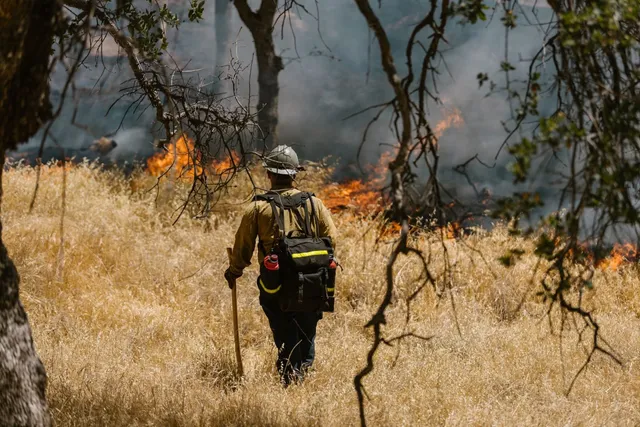
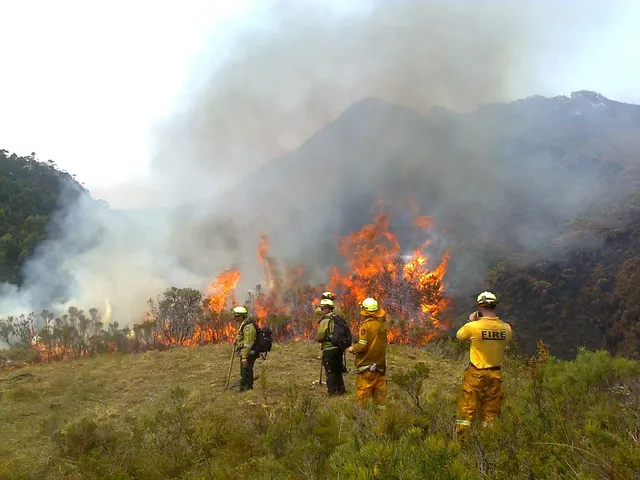
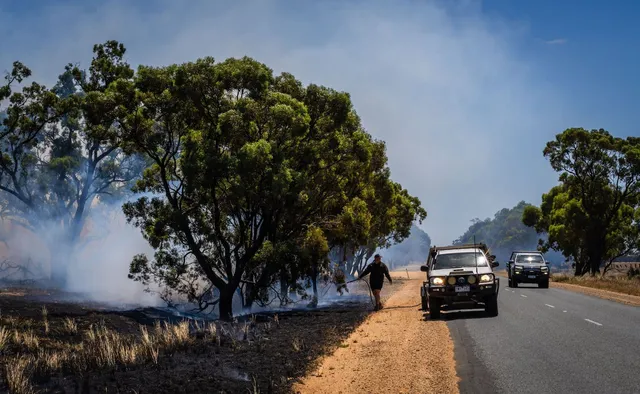
In late May a Victorian bushfire hit a planned-burn line and slowed enough for crews to hold it. That is the evidence burning has lacked; what is scarce is the authority to act on it before a season the CFA warns is coming early.
Australia’s 2026 National Defence Strategy reads the China contest more clearly than its predecessor did. It then resources the war over perception as a communications function, and that is the fight already underway and the one Australia is least prepared to win.
Every non-corporate Commonwealth entity needs a Chief AI Officer by 30 June, drawn from existing leadership with no new money, which buys a designation. The deadline will mostly be met on paper, and what changes on 1 July is, for most agencies, not much.
A century of suppressed Indigenous burning left California’s tribal lands with fires 15.7 times larger than those on non-tribal land from 2000 to 2018. Australia’s cultural burning runs orders of magnitude below the historic cadence; the operational case for scaling it stands on its own.
Northern New South Wales shows the largest projected rise in pyrocumulonimbus probability, while two decades of research investment went to Victoria and southern NSW. Fire agencies buying AI forecasting tools need an operational test in the contract, because benchmark winners change with the benchmark.
Public-sector deployers cannot yet demonstrate compliance with the EU AI Act’s high-risk obligations, and enforcement begins on 2 August, nine weeks away. Studies from Estonia to Brazil put the gap in institutional capability, and the rules are getting clearer faster than agencies can build it.
California has roughly 17,000 megawatts of battery storage and still cuts power when the wind turns. Australia is routing new transmission corridors through bushfire country, and the optimisation models to site them well exist; no agency is authorised to commission them or defend their outputs.
Under the 2026 National Defence Strategy, REDSPICE spending roughly doubles and cyber becomes a fifth operational domain. Doctrine is the simpler half; the strategy stands or falls on whether Defence can train and clear cyber operators at scale.
Before deployment, HMRC knew its travel data had a 46 per cent pilot error rate. It suspended Child Benefit for 23,800 families anyway, 71 per cent of them legitimate, and Australia has no legislation in train two and a half years after Robodebt’s 57 recommendations.
Grant Thornton found 78 per cent of executives doubt they could pass an independent AI governance audit inside 90 days. The audit itself cannot see what buyers most need verified, so honest assurance work scopes to what current methods can check and names the rest.
Fires that trend on social media end up with more resources than they need on operational grounds; the remote fire that does not trend gets fewer. A University of Waterloo study of California fires measures the gap, and Australian agencies hold the data to run the same audit.
A simulated satellite constellation detected a Californian ignition in 68 seconds; the responding agency saw it about 45 minutes later. Sub-minute detection is now a procurement problem, and an agency that tenders without specifying constellation architecture is buying a black box.
AI.gov.au is a credible deliverable with useful content. A guidance website cannot close the gap between the National AI Plan and agency practice, and the next two budget cycles decide whether the launch was a start or the most visible thing the plan produced.
Two years of GPS and the route you once drove from memory is gone. Professional AI delegation runs the same way, path dependent and harder to reverse the longer it goes on, which makes adoption a decide-now question about which tasks the model gets.
A small vendor reading Finance’s draft procurement rules is asked to accept accountability for AI outputs from models it neither owns nor understands, a liability no local insurer will underwrite. The agencies receiving those disclosures cannot yet evaluate them; their own transparency statements show it.
Calling national defence whole-of-nation does not make it so until people outside Defence have something to do. Sweden reissued its preparedness handbook to every household; Australia’s 2026 National Defence Strategy gave civil preparedness one paragraph and no institution with the authority to own it.
Roughly 97 per cent of intercontinental internet traffic runs on seabed cables, and seventeen of them thread the Red Sea and the Strait of Hormuz. Finland answered the Baltic cable disruptions with a military and civilian framework; Australia spreads the problem across departments and nobody holds the integration mandate.
A $5,000 quadcopter took out a Russian motorised company in an afternoon while Defence was working through comments on a responsible AI policy written for AI as an adviser. Either that policy is rewritten for machine tempo or the exceptions get made off the page.
Butler’s NDIS reset is sound on paper. Funding changes bite from 1 July 2026 while eligibility criteria wait until 2028, leaving 760,000 participants wondering for two years, and the review pathway that would earn their trust after Robodebt has not been built.
AI summaries of a Canadian consultation dropped up to 16.9 per cent of respondents and filtered dissent at up to 88 per cent. Government AI is an organisational learning problem first and a procurement problem second, so auditing what a tool drops is standing work.
Agencies keep failing to adopt the wildfire decision tools built for them, and a Fire Ecology review traces that to communication and capacity gaps. A CFA goat trial did more for practitioners in five weeks than the satellite science; fund co-design before the next product.
“Deterrence” appears nearly 30 times in the 2026 National Defence Strategy and justifies $425 billion in capability investment. Alliances built to deter turned an assassination in Sarajevo into a continental war in 1914, and the strategy does not engage with that entrapment risk.
In California, premiums in fire-prone postcodes have roughly quadrupled and carriers are pulling out; Australia should read that as a preview. Actuaries are repricing climate risk well ahead of any government decision on who bears it once cover is withdrawn.
With climate concern down to 51 per cent, Australia chairs COP31 in November. Policy support follows personal attribution of extreme weather to warming, a 68-country study finds, and stronger national identity makes Australians attribute less, so the diplomacy is running ahead of the electorate.
On 1 April Australia signed its first National AI Plan memorandum with Anthropic, aiming to layer American deployment speed onto European coherence. That MOU is a research and safety collaboration; the layer with authority to stop a deployment has still to be built.
With 54 of 59 initiatives complete or in delivery, APS Reform has entered embedding, where reforms take root or evaporate. Governance explains 67 per cent of variance in implementation outcomes; readiness decides whether it works, and the quietest phase of the program is its most fragile.
Simultaneous extreme fire weather across Europe has expanded by nearly 15 per cent a year over the past decade. Sharing aircraft and crews between hemispheres assumed sequential seasons, and Australia now has to size its own fleet and workforce for overlap.
AusAlert will ping every phone inside a 160-metre target area from October. Sustained emergency broadcasting still runs on local ABC staff, and the ABC’s real-terms budget sits around $150 million below its 2013 level, so the Commonwealth is funding the alert while starving the backbone.
Indigenous Very Remote populations use public health services at roughly 12 per cent of the urban non-Indigenous baseline. Train AI triage on that data uncorrected and the under-service becomes ground truth, a risk the APS rollout’s pace leaves little room to design out.
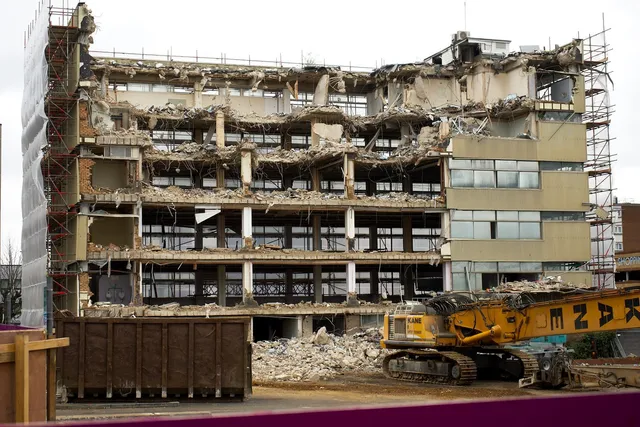
On 6 March 2026 the JCPAA discontinued the Major Projects Report, with the Defence Delivery Agency on track to manage close to $60 billion a year. Concentrating authority while retiring the scrutiny of it is reorganisation with a new letterhead.
Two Science Advances papers this year put the human fingerprint on extreme fire weather at 99 per cent confidence, which closes the science. It leaves treasury holding a resourcing bill that has genuinely grown, and no community preparedness program can pay it.
Inland Rail was scoped at $4.7 billion and now sits near $32 billion, and optimism bias covers only part of that. The opposition to these projects never changed; the political environment did, and most engagement plans still file political risk as background.
Defence’s March 2026 AI policy sets sound requirements and names a governance hub, then attaches no resourcing and no consequence for non-compliance. The US and UK are years into the operational phase of military AI governance; Australia has published a statement of intent.
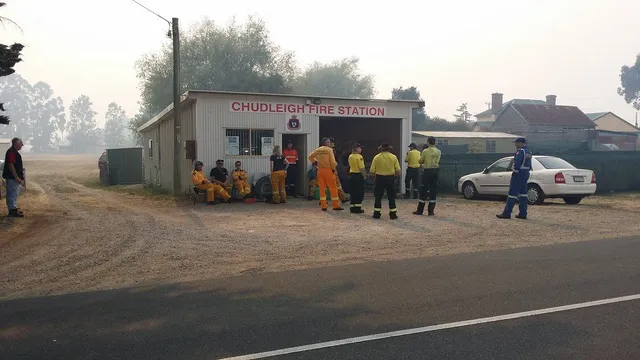
Around 3,400 people expressed interest in joining the CFA after the January 2026 Victorian fires, a number that measures interest. Whether it becomes capability turns on coordination across agencies and jurisdictions, and on how many are still rostered in March 2027.