At two in the afternoon on Monday 27 July, compatible phones across Australia sounded at once. The national test of AusAlert reached its target, with about 94 per cent of mobile towers broadcasting the alert successfully ahead of the system’s October launch (AusAlert, 2026). For a cell-broadcast network built from scratch and tested nationally for the first time, that is a strong engineering result, and the people who delivered it are entitled to say so.
Eleven days before the test, a study of a different warning system suggested where the remaining risk actually sits. Researchers surveyed 85 United States National Weather Service fire partners about the Fire Warning product and found that scepticism toward it came mainly from training gaps and not from fixed structural barriers, with hands-on simulation experience substantially improving practitioner confidence (Operationalizing the Fire Warning, 2026). The recommendation was modular training and integrated warning teams. Put plainly, the warning technology was working and the people around it had not been brought up to speed on when to use it.
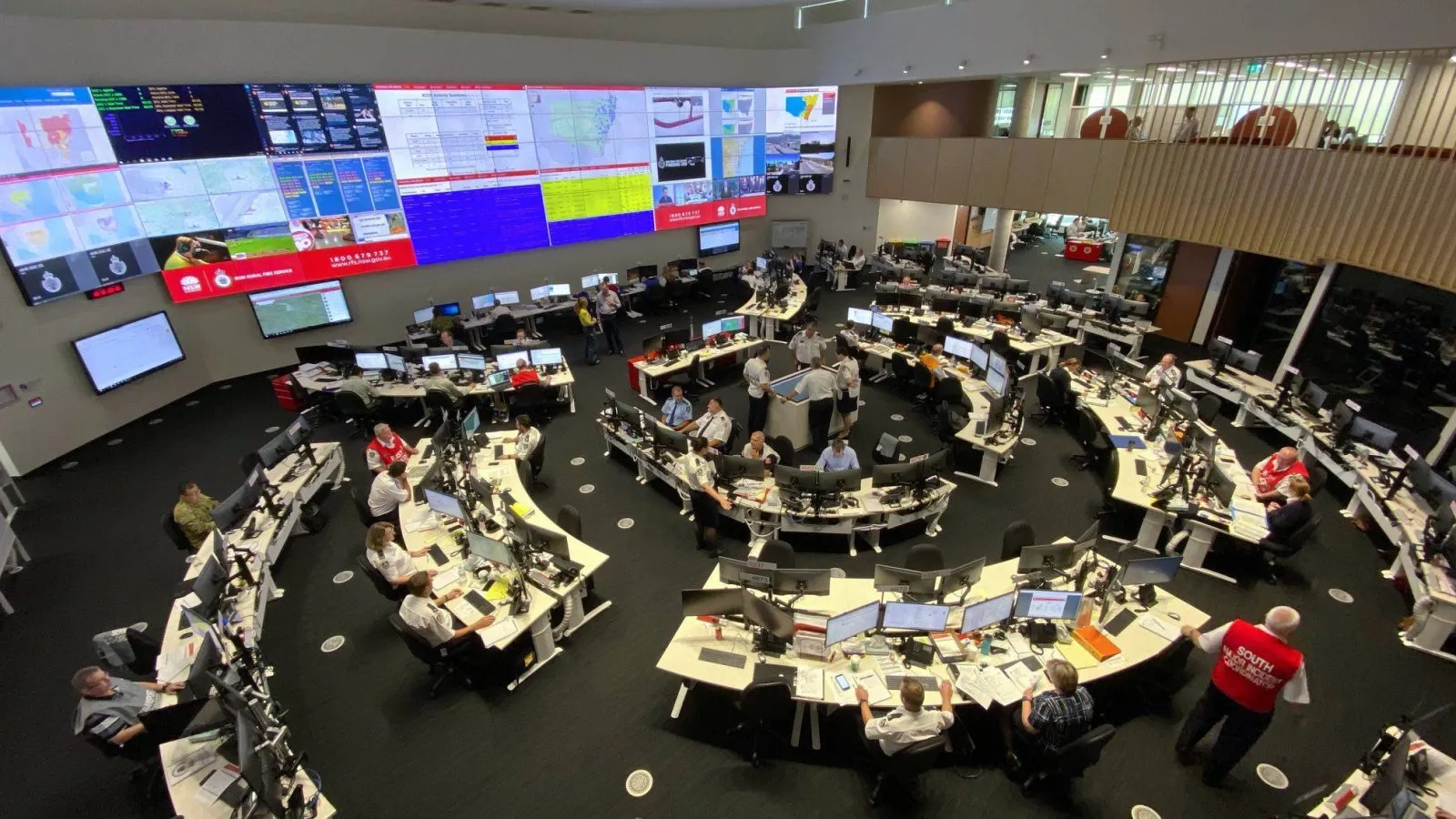
Australia has three months. A national test proves that a message can reach a phone, which is the part of the problem that engineering can settle. Whether an incident controller in a regional operations centre at two in the morning knows which AusAlert message to issue and at what trigger is a training question, and training questions are answered by rehearsal rather than by launch dates. The public-belief half of this problem is the subject of The Rumour Front. This is the other half, and it sits inside the agencies.
The same pattern shows up in a much more optimistic place. Research published in mid-July in Fire Ecology presents a spatially explicit burnability model for Australian eucalypt forests at 30-metre resolution. The model combines dynamic microclimate and soil moisture with topography, and it shows that feeding real-time forecast moisture into burn-window decisions materially improves prediction compared with the static environmental proxies agencies have relied on. Related work published a day later found that dryness and fire intensity significantly increase the flammability of native perennial grasses in temperate Australia, with clear differences between species (Flammability of native perennial grasses, 2026). Both are the kind of finding a practitioner can actually use.
A better-predicted burn window is worth no more than an agency’s ability to move inside it. That means crews rostered and available on the day the model says go, with aviation booked and approvals already in hand. Most Australian fire agencies run on volunteers whose availability is set by their paid work and by school terms, so a burn window identified on a Wednesday is of limited use to a brigade that can only turn out on a Saturday. Improving the forecast without improving the mobilisation shortens nothing. The authority side of this problem, which is a separate constraint again, I worked through in Who Gets to Light the Fire?.
There is also an unresolved objection to scaling prescribed burning that deserves more airtime than it gets in operational circles. A paper published on 15 July argues that expanding prescribed fire may expose some communities disproportionately to smoke pollution. The evidence needed to assess those health and environmental justice impacts is held back by methodological and institutional gaps (Challenges to Ethical Assessments of Prescribed Fire Policies, 2026). This is a genuine problem and not a reason for delay. Australian work on shifting burn windows suggests the viable days are moving later into winter, which changes who is exposed to smoke and when, so the equity question is being altered by the climate at the same time as it is being asked.
Meanwhile the fire environment is moving away from the assumptions the whole apparatus was built on. A study published on 17 July documents fire regimes turning more volatile across Mediterranean and other regions. Intense events are growing more frequent there, and they depart from the energy release patterns the historical record would predict, which undermines conventional management frameworks (Fire regimes are becoming increasingly volatile, 2026). The 2025 Northwest Iberian season produced the highest recorded burned area in European history, driven by extreme fire weather and shrubland fuel continuity that overwhelmed suppression capacity (Record-breaking 2025 wildfires in Northwest Iberia, 2026). Suppression capacity is the variable that failed there, and suppression capacity is what Australia is also counting on.
Put the pieces together and a pattern emerges that I keep meeting from different directions. Predictive precision is improving faster than the organisational capability to act on it, which was the argument in Fire Tech Has Outrun the Fire Agencies and remains true a month later. A 30-metre burnability model and a national cell-broadcast system are both real capability gains. Those gains convert into operational outcomes only through people, and the training and rostering around those people have not moved at the speed the capability has.
Three things are worth doing before October, and none of them needs new technology. Run AusAlert simulation exercises with the officers who will actually issue the alerts. The Fire Warning study has already shown that hands-on rehearsal is what shifts practitioner confidence, and Australia has the unusual luxury of knowing that before its own system goes live. Build burn-window forecasting into rostering and availability systems, not just into planning documents, so that the model output reaches the person who decides whether a crew turns out. Publish what is known and unknown about smoke exposure from prescribed burning in populated areas, because a community that has been told the truth about a trade-off is a community that can be asked to accept one.
There is a broader argument in international practice worth noting too. A synthesis published on 20 July sets out eight evidence-based ways to improve wildfire risk management with the aim of reducing fatalities and property loss (Eight lifesaving ways to improve wildfire risk management, 2026). Very little of what it recommends is technological. The gains available to Australian agencies over the next three months sit almost entirely in preparation, and preparation is the part nobody announces.
The AusAlert test showed that Australia can now reach almost everyone in the country in a few seconds. October will show whether the people holding the button have practised.
References
- Atmospheric moisture, soil moisture, and topography predict windows for prescribed burning (2026). Fire Ecology. https://doi.org/10.1186/s42408-026-00540-1
- AusAlert (2026). National test. https://www.ausalert.gov.au/alerts-explained/national-test
- Challenges to Ethical Assessments of Prescribed Fire Policies (2026). Ethics, Policy & Environment. https://doi.org/10.1080/21550085.2026.2699063
- Department of Health, Disability and Ageing (2026, 14 July). Get ready for the AusAlert national test. https://www.health.gov.au/news/get-ready-for-the-ausalert-national-test
- Eight lifesaving ways to improve wildfire risk management (2026). https://doi.org/10.64628/aao.vram5gs96
- Fire regimes are becoming increasingly volatile: implications for managing extreme fire events in the Mediterranean (2026). EGUsphere (Plinius Conference abstract). https://doi.org/10.5194/egusphere-plinius19-12
- Flammability of native perennial grasses in temperate Australia as influenced by dryness, fire intensity and species (2026). International Journal of Wildland Fire. https://doi.org/10.1071/wf25290
- Operationalizing the Fire Warning: distinguishing structural constraints from training-sensitive perceptions (2026). https://doi.org/10.1038/s44304-026-00247-y
- Record-breaking 2025 wildfires in Northwest Iberia: extreme fire weather, fuel continuity and emerging Mediterranean fire risk (2026). EGUsphere (Plinius Conference abstract). https://doi.org/10.5194/egusphere-plinius19-47