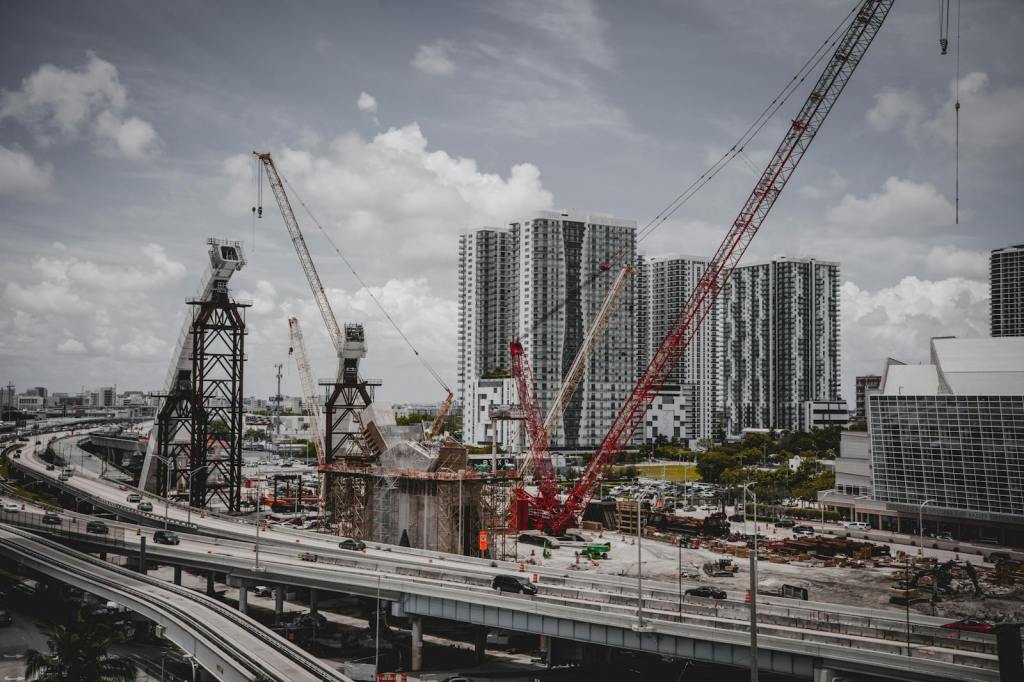
Inland Rail was scoped at $4.7 billion. Current estimates put it closer to $32 billion. Snowy 2.0 was approved at $2 billion; its latest public figure is $12 billion, with some credible analyses suggesting a full-lifecycle cost north of $30 billion once transmission and access roads are added alongside interest during construction. Western Sydney Airport’s metro connection is sitting on roughly $2.2 billion in disputed overruns months before the airport itself is due to open, with fewer than three committed airline partners. These are the three best-known Australian megaprojects of the current delivery cycle, and on the published numbers alone they are a rough decade for the profession.
The standard explanations for this pattern are familiar to anyone who has worked on infrastructure delivery. Flyvbjerg’s (2014) work on optimism bias and strategic misrepresentation remains the default starting point: project business cases systematically understate cost and overstate benefits because the people preparing them are rewarded for getting projects approved rather than for getting them right. Scope creep gets invoked alongside design complexity and the usual technical unknowns. These explanations are not wrong. They are just not quite enough to account for what is actually happening on the ground, and they tend to lead consultants and gateway reviewers toward remedies that do not touch the biggest source of risk on most Australian megaprojects.
A different lens comes from Political Opportunity Structure (POS) theory, which has been working its way out of political sociology and into the project management literature over the last few years. A 2026 UCL Discovery paper applying POS theory to a cancelled $1.2 billion megaproject (Lebanon’s Bisri Dam, which the World Bank suspended and which the Lebanese government formally terminated) has quickly become the reference case for this body of work (Unraveling Megaproject Engagement, 2026). The case is unusual because the project was funded and environmentally cleared, and was physically underway when it stopped. What killed it was not the engineering, and not the budget. What killed it was a shift in the macro-political environment around the project that turned previously dormant community opposition into a politically effective coalition in a matter of months.
The mechanism the paper describes is the part I find most useful. POS theory treats engagement between project sponsors and affected communities not as a constant management activity but as a behaviour shaped by two moving variables: the configuration of power among political elites, and the openness of the institutional structure to social movements. When elites are united and the institutional structure is closed, community opposition tends to be conservative and low-efficacy: scientific publications, walking tours and polite submissions to review processes. Project promoters in that environment typically operate on routine consultation plans because they can. When elite unity fractures (as it did in Lebanon after the October 2019 uprising), opposition that was previously decorative becomes lobbying and judicial activism and, almost overnight, physical occupation of the construction site. Promoters then move through a predictable sequence of responses: fierce suppression, then recourse (deadline extensions, sunk-cost arguments), then adaptive observation as the political ground continues to move under their feet.
The insight that matters for Australian practice is that it was not the opposition that changed in the Bisri case. The community concerns about water quality and cultural heritage, alongside the broader environmental impact case, were consistent from early scoping through to cancellation. What changed was the political environment that determined how much traction those concerns could get. When the environment shifted, the same arguments became decisive that had previously been ignored. The authors label this a “bidirectional” engagement dynamic, which is a polite academic way of saying that the promoters and opposers were both responding to a third actor: the political system they were embedded in.
Australian megaprojects show the same dynamic, often without the authors of the project assurance framework having a category for it. Inland Rail is the clearest example. The Senate inquiry that reported in August 2021 was titled “Derailed from the Start” (Senate Rural and Regional Affairs and Transport References Committee, 2021), and its tone shifted dramatically from the earlier bipartisan consensus that the project was nation-building infrastructure of the first order. The Schott Review commissioned in late 2022 and delivered in 2023 set out technical and governance failures that were already well-known to delivery officials; what the review actually changed was the political acceptability of saying so out loud (Schott, 2023). The same route, the same farmers, the same flood modelling, the same engineering assumptions that had been contested for years suddenly had elite-level political backing for contestation. The opposition did not become more correct. The political environment became more receptive.
Melbourne’s cancelled East West Link, explicitly cited in the Moore paper, is the Australian case most like Bisri. A contract was signed in the dying days of a Coalition government. The incoming Labor government paid an $815 million cancellation fee rather than proceed. The project’s technical merits had not moved at all between the contract signing and the cancellation. What had moved was the configuration of political power. Snowy 2.0 sits on a longer version of the same curve: its engineering challenges are real, but the interesting thing about its cost trajectory is not that it keeps slipping (projects often slip) but that each successive federal and state government has a slightly different appetite for eating the political cost of admitting how much it has slipped. The project’s problems have been roughly constant. The willingness of the political system to tolerate them has moved around a lot. Western Sydney Airport’s metro connection is still on the early part of that curve, with its political patrons mostly still in place, but the cost dispute between sponsor governments is the kind of early warning signal a POS-aware engagement plan would be tracking closely.
The practical implication for consultants and program managers is that engagement plans which treat political risk as a context variable are missing the variable that most directly drives the behaviour of their other stakeholders. The orthodox approach lists politicians alongside other external actors on a register, assigns them a colour-coded influence score, and moves on. A POS-aware approach tracks elite unity and institutional openness as live inputs, maintains scenario plans for each of the four engagement quadrants the paper identifies, and invests in early warning signals that tell the delivery team when the political ground is starting to move. None of this is exotic. It is just not what most project management offices actually do, because both the tooling and the gateway review templates were written for a theory of stakeholder behaviour that treats political regime change as exogenous rather than as the main thing to watch.
This is where the article links back to the broader theme in the recent Australian reform debate. The Defence Delivery Agency is a structural response to acquisition problems that are at least partly cultural and political in origin, and the absence of independent scrutiny around its stand-up (a subject I wrote about separately) will matter precisely because concentrated authority is most exposed to exactly the kind of political environment shifts POS theory describes. The pattern is the same in both cases: structural change that ignores the political opportunity structure it is embedded in will be surprised by events that were visible to anyone paying attention to the politics.
For consultants advising on large infrastructure or capability programs, the short version of all this is that any engagement model which does not account for political regime change is incomplete. It will hold for the period between regime changes, and the Australian delivery timetable for most megaprojects is long enough to guarantee that the period will end before the project does.
References
Flyvbjerg, B. (2014). What you should know about megaprojects and why: An overview. Project Management Journal, 45(2), 6-19.
Gil, N. (2023). Megaprojects as political arenas: Coalition dynamics and the sustainability of multi-sponsor delivery. International Journal of Project Management, 41(3).
Unraveling stakeholder engagement in megaprojects: A political opportunity structure perspective in turbulent times. (2026). UCL Discovery. https://discovery.ucl.ac.uk/id/eprint/10221805 (Cited from research digests 2026-03-13, 2026-03-21, 2026-03-22 and 2026-03-31 via OpenAlex; specific author list and journal of record should be independently verified before publication.)
Schott, K. (2023). The Delivery of Inland Rail: An Independent Review. Commonwealth of Australia. Department of Infrastructure, Transport, Regional Development, Communications, Sport and the Arts.
Senate Rural and Regional Affairs and Transport References Committee. (2021, August). Inland Rail: Derailed from the start. Parliament of Australia.
 Russell Buzby
Leave a comment