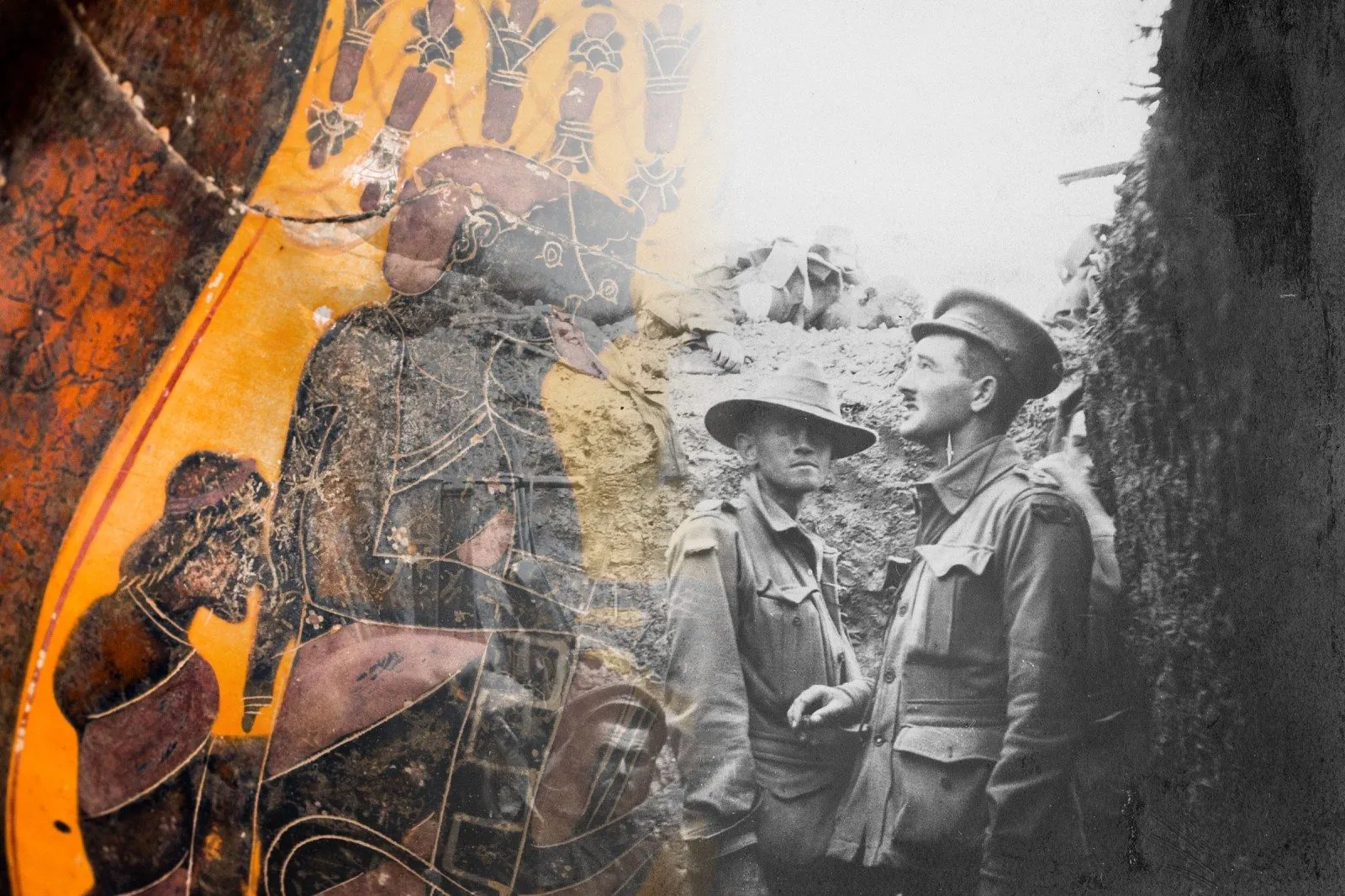
The word “deterrence” appears nearly 30 times in Australia’s 2026 National Defence Strategy. It is the strategy’s primary objective, the foundation of the Strategy of Denial, and the justification for $425 billion in capability investment over the coming decade. Deterrence is where the NDS begins and ends. The ADF must deter actions against Australia’s interests. Alliances must deter coercion. Capability must deter force projection. The logic is internally consistent and, within its own terms, sound. What the strategy does not examine is the historical record of what happens when the alliances built to deter aggression become the mechanism through which a localised crisis escalates beyond anyone’s intent.
Graham Allison’s “Thucydides Trap” has shaped a decade of strategic conversation about the Indo-Pacific. The framework, drawn from Thucydides’ observation that “what made war inevitable was the growth of Athenian power and the fear which this caused in Sparta,” posits that a rising power and a ruling power face structural pressure toward conflict (Allison, 2017). Applied to the United States and China, it offers a compelling narrative of great-power rivalry. But the historical evidence, including Thucydides’ own account, suggests the framework is incomplete. The Peloponnesian War was triggered less by the structural tension between Athens and Sparta than by disputes among middle powers. Corcyra’s alignment with Athens, Corinth’s lobbying at Sparta and the Megarian Decree activated alliance obligations and left the great powers with less room to manoeuvre than the structural frame implies. As Donald Kagan argued in his study of the war’s origins, the conflict was not inevitable; specific decisions by specific actors at specific moments made it so (Kagan, 1969).
The stronger historical parallel for the current strategic moment lies in the century between the Congress of Vienna and the trenches of 1914. The Concert of Europe, established after the Napoleonic Wars, was what Paul Schroeder called a genuine “political equilibrium,” a shared normative framework among the five great powers for managing disputes through consultation and restraint (Schroeder, 1994). It worked for decades. The Crimean War fractured its eastern pillar. Bismarck’s wars of unification restructured the continental balance. Between 1879 and 1907, the flexible Concert system was replaced by something far more rigid: two opposing blocs designed to deter the other from aggression, the Triple Alliance on one side and the Triple Entente on the other. Each alliance was individually rational. Each made its members safer in isolation. Collectively, they created a system where a political assassination in Sarajevo activated chains of obligation that pulled every major European power into the most destructive war the world had seen. Austria’s ultimatum to Serbia activated Russia. Russian mobilisation activated Germany’s Schlieffen Plan. Germany’s invasion of Belgium activated Britain. A.J.P. Taylor’s verdict on the alliance system is that it turned a manageable Balkan crisis into a continental catastrophe (Taylor, 1954). Christopher Clark’s more recent account emphasises that the actors involved had agency and intelligence. They were decision-makers who had built a system that, once triggered, left them with almost no space to step back (Clark, 2012).
The parallel to the contemporary Indo-Pacific is uncomfortably close. Australia is building a dense web of security commitments: the Quad, reciprocal access agreements with Japan (2022) and the Philippines. The treaty-level Defence Cooperation Agreement with Indonesia (2025), which includes consultation obligations during security crises, extends this web into a relationship that has historically been among the most sensitive in the region. These are sound responses to a deteriorating strategic environment. They raise the cost of aggression for potential adversaries and signal resolve. These are the functions of deterrence, and they are working as intended. But the same commitments that signal resolve before a crisis remove decision-making autonomy during one. A Philippines-China clash at Second Thomas Shoal that activates the US-Philippines Mutual Defense Treaty puts Australia’s alliance commitments under immediate pressure. A Taiwan contingency that draws in Japan under its revised constitutional framework pulls Australia’s bilateral agreements into play. A North Korean provocation that escalates on the Korean Peninsula tests the limits of every overlapping commitment in the region. Glenn Snyder’s concept of “chain-ganging,” where alliance partners are dragged into conflicts they would prefer to avoid because the costs of abandonment outweigh the costs of entanglement, describes this dynamic precisely (Snyder, 1984).
This is the Deterrence Trap. The alliances that deter before a crisis entrap during one. The mechanism designed to prevent war becomes the mechanism that makes war uncontrollable once a crisis reaches a certain threshold, because the commitments that made deterrence credible also make de-escalation structurally difficult. Each partner faces a binary choice: honour the commitment and risk being drawn into a conflict that may not serve its interests, or break it and destroy the credibility of the deterrence architecture that kept the peace. In 1914, every major power faced exactly this choice. Every one chose to honour its commitments. The result was four years of industrialised slaughter that none of them intended when the crisis began.
The NDS does not engage with this problem. It treats deterrence as an unqualified good: more deterrence is better, more alliances are stronger, more commitment is more credible. Within the framework of competition short of conflict, this is correct. The question the strategy leaves unanswered is what happens at the threshold where competition becomes crisis. The alliance web that deters aggression in peacetime becomes, at that threshold, a transmission mechanism for escalation. The 2024 NDS introduced the concept of National Defence as a whole-of-nation undertaking. The 2026 edition deepens it. But neither edition has yet produced a companion concept for crisis management that accounts for the entrapment dynamics inherent in the deterrence architecture being built.
I wrote earlier about the gap between the NDS’s threat assessment and its investment priorities. The strategy-investment mismatch matters, but the deterrence-entrapment question may matter more. Australia can address a funding shortfall in the next biennial review. It cannot easily address a structural vulnerability in the alliance architecture itself, because the vulnerability is inseparable from the architecture’s core function. The strategic task for a middle power like Australia is to build enough commitment to deter without building the kind of system that turns a manageable crisis into an uncontrollable one. Clark’s sleepwalkers did not lack intelligence or intention. They lacked a system that gave them room to stop. Whether the alliance web being woven across the Indo-Pacific leaves that room is the question the next National Defence Strategy should answer before it needs to.
References
- Allison, G. (2017). Destined for War: Can America and China Escape Thucydides’s Trap? Houghton Mifflin Harcourt.
- Australian Government (2026). National Defence Strategy 2026. Department of Defence.
- Clark, C. (2012). The Sleepwalkers: How Europe Went to War in 1914. Allen Lane.
- Kagan, D. (1969). The Outbreak of the Peloponnesian War. Cornell University Press.
- Schroeder, P. (1994). The Transformation of European Politics, 1763-1848. Oxford University Press.
- Snyder, G. (1984). “The Security Dilemma in Alliance Politics.” World Politics, 36(4), 461-495.
- Taylor, A.J.P. (1954). The Struggle for Mastery in Europe, 1848-1918. Oxford University Press.