The most consequential change in Australia’s 2026 National Defence Strategy is not the AU$425 billion of capability investment to 2035-36, nor the AU$30 billion in extra spending across the forward estimates. It is a single phrase. The 2024 NDS framed the Australian Defence Force’s central task as helping to maintain a “rules-based order” in the Indo-Pacific. The 2026 NDS reframes it as contributing to a “favourable regional balance of power.” ASPI’s read of the published documents on 22 April 2026 called this an understated but consequential reframing of the political objective underpinning the ADF’s five key tasks. The drafters knew what they were doing.
The shift is modest in form and large in substance. A rules-based order is something Australia helps uphold against challenges. A favourable regional balance of power is something Australia helps construct and shape against rivals. One frame is defensive and organised around principle. The other is competitive and organised around outcome. The change concedes, in language a department head can stand behind in Senate Estimates, that the first frame is no longer sufficient. The rules-based order to which Australia anchored itself between 2007 and 2022 has been weakened by Russian aggression in Ukraine and by sustained Chinese coercion in the South China Sea, alongside the loss of US enthusiasm for upholding the architecture itself. The 2026 NDS does not announce that the rules-based order is gone. It chooses a different organising concept and lets the inference travel.
For a defence and security audience, this is the more honest position. For a generation of Australian strategic thinkers educated on the international institutional order, including this writer, it is also a difficult one. Realism in the political-science sense, where states pursue relative power within an anarchic system because they have no other option, is uncomfortable in the Australian rhetorical tradition. Defence policy documents from the 1991 Higgins Doctrine through to the 2020 Strategic Update all preserved the rules-based language even when the underlying logic was thinning out. The 2026 NDS retires the language, which is a more honest political act than persisting with a rhetorical commitment that the strategy itself is not built around.
The substantive question is whether the rest of the document follows the doctrinal shift. ASPI’s parallel analysis on 20 April identified three different ways the published NDS counts defence spending, with totals diverging significantly across them. That is not a small issue. If Australia’s strategic posture is now organised around a favourable balance of power, the contribution Australia makes needs to be legible to the country and its partners alike. They need to know what the contribution actually is and how it is funded. Producing three different totals reads as a budget communications problem rather than a strategic settlement.
There is a parallel I have written about separately on the gap between the NDS’s threat assessment and its investment program. The doctrinal shift makes that gap more visible. A “rules-based order” framing tolerates a slow, principled approach to capability development because the threat is structural and diffuse. A “favourable balance of power” framing demands a pace of force generation that matches the rate at which the regional order is moving against Australia’s interests. The Lowy Interpreter’s analysis on 22 April pointed out that maritime supply chain protection, the foundational layer of any balance-of-power contribution Australia could make, remains the most underaddressed vulnerability in the strategy. Without protected sea lanes, the ADF cannot sustain operations beyond the immediate northern approaches, regardless of how many platforms the Integrated Investment Program acquires.
The same week threw two harder tests at the strategy. The first was the firing of US Navy Secretary John Phelan by the Trump administration on 23 April. Defence Minister Richard Marles immediately told Australian media that AUKUS remained “on track.” That is the right thing for the Minister to say. It is also a statement that has to be reconciled with the structural fact that AUKUS depends on a US administration that has now demonstrated, twice, that it will fire senior officials over policy disagreements which it does not consider worth arguing publicly. Building a “favourable regional balance of power” through a coalition partnership architecture that includes a partner exhibiting that pattern of behaviour is a defensible bet, but the bet has to be recognised as one. The doctrinal shift gives Marles less cover than the rules-based order framing did, because under the new doctrine the strategy’s success is measured against the regional balance rather than against fidelity to a principle.
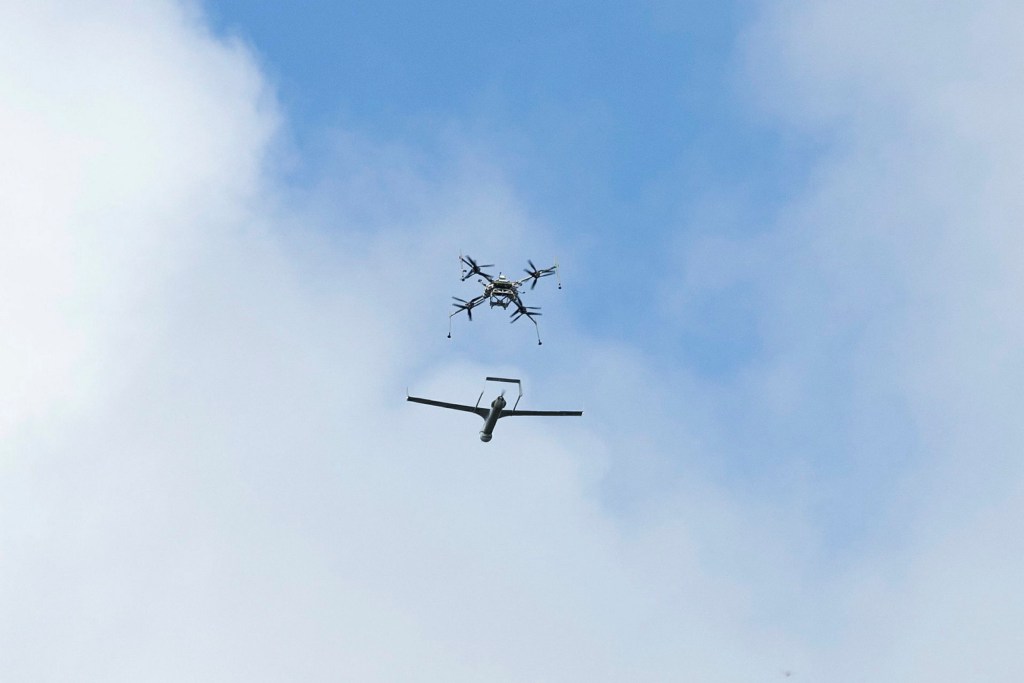
The second test is Cameron Milner’s argument in The Nightly, also on 20 April, that Australia should scrap the AUKUS submarine commitment and redirect the AU$360 billion lifetime cost into drones and autonomous systems, alongside fuel security. Milner’s argument has obvious weaknesses. The Australian industrial base cannot pivot AU$360 billion of submarine spend into autonomous systems on the timeframe he implies, and the strategic deterrent value of an undersea capability remains different in kind from distributed, attritable systems. Milner’s argument fails as a serious blueprint. It works, however, as a serious symptom of how the Ukraine and Iran conflicts are reshaping what informed Australian commentators believe constitutes credible deterrence in 2026. The 2026 NDS commits the country to a force structure organised around high-cost, long-lead-time crewed platforms at a moment when the empirical evidence from active conflicts suggests that autonomous and human-augmented systems are doing disproportionate work at far lower unit cost. The doctrinal shift to balance-of-power thinking would arguably justify a faster reweighting of the Integrated Investment Program toward those systems. That is a debate the strategy invites without resolving.
War on the Rocks, on 23 April, made a related point in a different register. A formal Pacific Defence Pact between Australia and three of its core regional partners, the piece argued, is the wrong instrument for the deterrence problem the 2026 NDS describes. The diagnosis (deterrence gaps against China) is correct, but a binding multilateral treaty risks rigidity and political over-reach where the system actually needs better integration of command and intelligence-sharing through the alliance structures that already exist. The doctrinal shift to favourable balance of power supports that conclusion. A balance of power is an outcome a coalition produces through behaviour, not a status conferred by a treaty.
The 2026 NDS reads as a strategy that has updated its political objective without yet adjusting its instrument selection or its budget transparency to match. The rules-based language is gone, the favourable-balance language is in, and the country has been given a more honest description of the strategic environment in which it now operates. The harder work of choosing which capabilities and partnerships actually move the regional balance has been deferred to the next budget and a future government’s call. The drafters changed the vocabulary. The rest of the system has not caught up to what the new vocabulary asks of it.
References
- ASPI Strategist. (2026, April 22). NDS 2026 – How Australia’s defence strategy converges with US’s balance of power. https://aspistrategist.org.au/nds-2026-how-australias-defence-strategy-converges-with-uss-balance-of-power
- ASPI Strategist. (2026, April 20). NDS 2026 – The three ways to count Australian defence spending. https://aspistrategist.org.au/nds-2026-the-three-ways-to-count-australian-defence-spending
- ASPI Strategist. (2026, April 23). NDS 2026 – GWEO gets priority, with little published detail. https://aspistrategist.org.au/nds-2026-gweo-gets-priority-with-little-published-detail
- Department of Defence. (2026). 2026 National Defence Strategy and 2026 Integrated Investment Program. Commonwealth of Australia. https://www.defence.gov.au/about/strategic-planning/2026-national-defence-strategy-2026-integrated-investment-program
- Lowy Interpreter. (2026, April 22). Maritime gaps remain in Australia’s defence. https://lowyinstitute.org/the-interpreter/maritime-gaps-remain-australia-s-defence
- Milner, C. (2026, April 20). Why Australia should scrap AUKUS and spend $360b on defensive capabilities and fuel supply. The Nightly. https://thenightly.com.au/opinion/cameron-milner-why-australia-should-scrap-aukus-and-spend-360b-on-defensive-capabilities-and-fuel-supply-c-22164516
- The Nightly. (2026, April 23). US Navy Secretary John Phelan sensationally fired, Richard Marles insists sacking won’t rattle AUKUS. https://thenightly.com.au/politics/us-politics/us-navy-secretary-john-phelan-sensationally-fired-richard-marles-insists-sacking-wont-rattle-aukus-c-22181038
- War on the Rocks. (2026, April 23). A Formal Defense Pact in the Indo-Pacific Is the Wrong Answer. https://warontherocks.com/a-formal-defense-pact-in-the-indo-pacific-is-the-wrong-answer
 Russell Buzby
Leave a comment