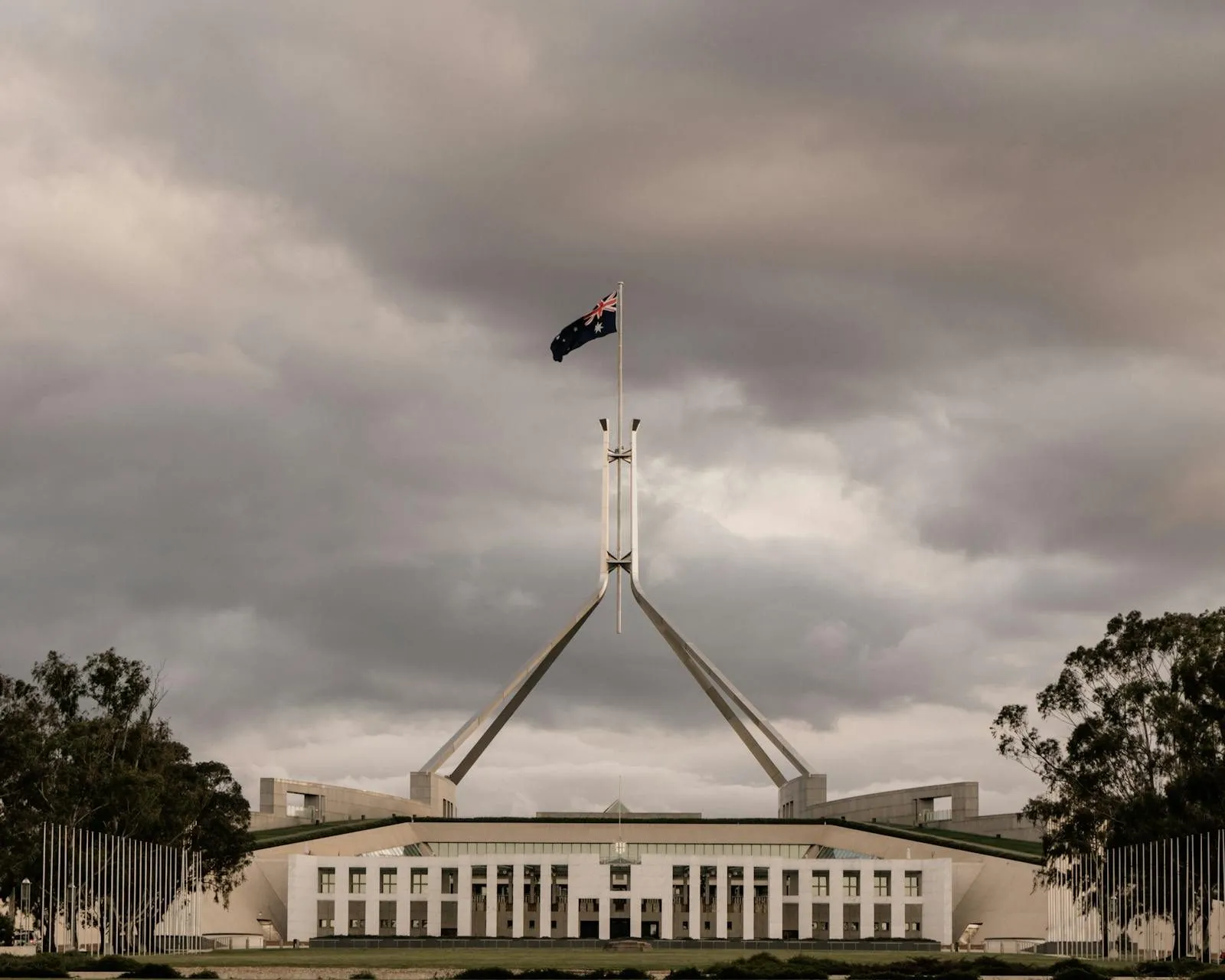
Finland ran a national civil-defence drill last northern winter that involved coordinated power-down rehearsals across multiple municipalities. Sweden reissued its civilian preparedness handbook to every household, with updated guidance on shelter and basic supplies and on what to do if state communications go down for more than seventy-two hours. Germany has been rebuilding its civil shelter inventory after years of neglect, and France has resumed conscription planning conversations that had been formally retired. Australia’s 2026 National Defence Strategy added civil preparedness to the definition of National Defence in a single paragraph and otherwise carried on as if the maritime and aerospace investments alone would carry the weight.
That paragraph mattered, in principle. The 2026 NDS broadened the concept of National Defence to include civil preparedness and economic security alongside a $4.8 billion fuel security investment commitment, all framed as elements of a whole-of-nation deterrence posture (Department of Defence, 2026). The Integrated Investment Program that accompanies the strategy puts hard numbers behind some of those elements (notably fuel storage and infrastructure resilience). The framing is correct. The execution, six months later, is not yet matching the framing. Australia has no equivalent of the Swedish handbook. There is no Australian civil-defence agency with the authority to coordinate national household-level preparedness, and no published continuity-of-government plan that an Australian household or local council could read and act on.
There is a structural reason this matters that has nothing to do with the conventional military balance. A Marcus Thompson essay published recently on Substack made the case that European nations have rebuilt civil defence at pace because the threat environment has changed and the political cost of inaction has changed with it (Thompson, 2026). The moves by Finland and Sweden, joined by the Baltic states and now Germany and France, are not nostalgic Cold War throwbacks. They are responses to a contemporary threat environment in which conventional military capability is one element of national resilience and civilian preparedness is another, and where the gap between the two has been visibly closed in Ukraine over the past four years. Australia’s threat environment differs from Europe’s in timescale rather than in consequence. The capacity gap, if it materialises, will be exposed by a Taiwan Strait crisis or a sustained supply-chain disruption, possibly arriving alongside a major natural disaster sequence rather than after one.
Taiwan offers the most useful model for what an effective domestic mobilisation institution looks like in a democracy. Taiwan’s All-Out Defence Mobilisation Agency, analysed last week by the Lowy Institute’s Interpreter (Lowy Institute, 2026), is a small body with a specific structural advantage. The agency reports close to cabinet-level decision-making rather than through a long bureaucratic chain, and its institutional authority comes from that proximity rather than from its size or its budget. The Taiwan example matters for Australia because it suggests that the location of any civil-defence authority within government will determine its effectiveness more than the size of its budget will. An Australian institution attached to Home Affairs through several layers of policy review will have less effect than a smaller body reporting directly into the National Security Committee.
The alliance reliability question makes the institutional design problem more urgent. A second Lowy Interpreter piece in early May argued that Canberra cannot want the alliance with Washington more than Washington does, and that bipartisan assumptions about unconditional US support are increasingly unreliable in a way Australian policy has not adjusted for (Lowy Institute, 2026). That argument has direct implications for how Australia thinks about civil resilience. If the alliance guarantee weakens, even at the margin, then domestic preparedness moves from the periphery of national defence to its foundation. The 2026 NDS recognised this conceptually. The institutional follow-through is the missing piece, and I have written separately about the gap between the NDS’s threat assessment and its investment program: the civil-preparedness gap is a parallel form of the same underlying problem.
There is already a state-level proof of concept for what proactive civil-defence coordination looks like in practice. The Country Fire Authority in Victoria undertook a pre-emptive mobilisation on 9 January 2026 ahead of a forecast catastrophic fire day. The CFA pre-positioned resources and activated mutual aid arrangements while engaging with at-risk communities in the 48 hours before any fire ignited (CFA News, 2026). That mobilisation demonstrated what pre-emptive preparedness looks like at scale when an institution has both the authority to act and the operational doctrine to follow. The question for the national level is whether this kind of proactive coordination can be replicated for non-fire scenarios at the federal scale, and whether the institutional authority to mobilise across portfolios and jurisdictions exists in the form the situation would demand.
Civil resilience is also a domestic equity question, and the Australian evidence on this is uncomfortable. Post-disaster shelter research from earlier in the year found that prolonged displacement after major disasters disproportionately affects underinsured and low-income households, and that the new building regulations introduced through the Bushfire Attack Level rating system add costs that impede the recovery of those same households (Post-disaster shelter paper, 2026). Civil resilience that protects only the households with resources to rebuild on the new standards stops short of population-wide protection, and the political economy of the rebuild after the next major event will turn on whether that gap was anticipated and addressed.
Across those four threads, the position for Australia is consistent. The European rebuild establishes an international benchmark for civil-defence reform at pace. Taiwan’s institutional design pattern shows how a small body in the right structural position can do real civil-defence work. Victoria’s CFA case shows that operational doctrine for pre-emptive mobilisation in civil emergencies already exists at the state level in Australia. Post-disaster shelter research from earlier in the year sets out the equity constraint any Australian framework will have to absorb. Read against those four civil-defence anchor points, the 2026 NDS reads as a useful starting paragraph rather than a working programme.
For consultants and policy professionals working at the defence-emergency-management boundary, the gap between the NDS framing and operational reality is now an emerging advisory domain in its own right. Civil preparedness has been outside the consulting mainstream in Australia for thirty years. The risk environment has changed enough that it is no longer a residual issue. The question for any agency holding part of the civil-defence portfolio in some form is whether the work currently in their forward plan would actually function in a serious crisis, and whether the doctrine for pre-emptive mobilisation in their domain matches what the CFA demonstrated for fire.
I have written separately about the gap between Australia’s defence AI policy and the operational tempo of modern electronic warfare. The civil-defence gap is a different version of the same underlying issue. Both are cases where the strategic framing has moved ahead of the institutional follow-through, and where the gap will close either through deliberate policy action or through informal accommodations that make the framework look defensible on paper without making it functional in practice. The maritime cable infrastructure problem I have written about separately sits adjacent to this argument: the same structural pattern, in a different domain.
The 2026 NDS named the gap in civil preparedness. The next document has to fill it. That follow-up needs four things at minimum: an institution with cabinet-level access; a dedicated budget line; a published doctrine for pre-emptive mobilisation; and a pathway from federal authority to household-level action. None of those things exists yet at the scale the strategic framing of the NDS implies they need to. Calling national defence whole-of-nation does not make it whole-of-nation until the parts of the nation outside Defence have something they can actually do.
References
- CFA News. (2026, January). Country Fire Authority pre-emptive mobilisation ahead of catastrophic fire day, 9 January 2026. Country Fire Authority.
- Department of Defence. (2026). 2026 National Defence Strategy and Integrated Investment Program. Commonwealth of Australia.
- Lowy Institute. (2026). Canberra can’t want the alliance more than Washington does. The Interpreter.
- Lowy Institute. (2026). Taiwan’s mobilisation model holds lessons for Australia. The Interpreter.
- Post-disaster shelter paper. (2026). Prolonged displacement, underinsurance, and Bushfire Attack Level rating cost effects on household recovery in Australia. OpenAlex.
- Thompson, M. (2026). Si vis pacem, para bellum: Europe is relearning civil defence. Substack.