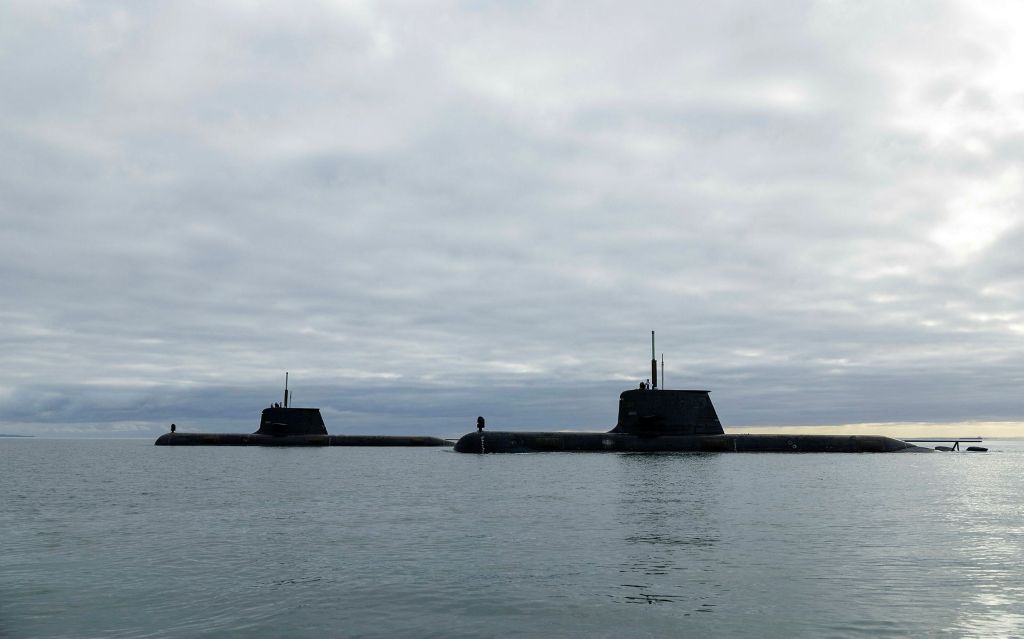
Australia’s National Audit Office released a performance audit in late May 2026 on the Collins-class Life of Type Extension design contract. The headline finding is uncomfortable. Defence spent close to A$700 million on the design phase of the upgrade. The contract grew from approximately A$125 million in 2022 to A$813 million across fifty-three contract changes over four years. The submarines are now less capable and less available than they were before the work started.
A week earlier, the Albanese government committed A$11 billion to a new Collins-class Life of Type Extension (LOTE) program, beginning with HMAS Farncomb. The program is intended to keep the Collins fleet operational into the 2040s, bridging the gap until Australia receives its first Virginia-class submarine under AUKUS Pillar 1. The Congressional Research Service publishes the Optimal Pathway transfer schedule as 2032 and 2035 for the first two Virginia-class boats, with a third transfer scheduled for 2038 and the first Australian-built SSN-AUKUS boat arriving in the early 2040s. Even on the most optimistic timeline the bridge has to hold for at least seven years.
On paper the bridging logic is reasonable. Conventional submarines age out; nuclear-powered replacements arrive when they arrive; the extension program fills the interval. Senate testimony and the original 2022 LOTE business case both treated extension as the only viable course for the Collins fleet, and the strategic environment around it has not improved since. Every published assessment from ASPI through to the Defence Department’s own 2026 National Defence Strategy reads the maritime threat picture as worse, not better. Extending Collins is therefore not a luxury and not a delaying tactic. The extension is the bridging option Australia has.
The bridging strategy is already in trouble. Naval News and Shephard Media reported in mid-2024 that Tomahawk missile integration and Safran optronic mast upgrades were dropped from the LOTE scope, with A$33 million sunk on the optronic mast before abandonment. The ABC reported in the same period that unprecedented corrosion problems would put half the fleet out of the water, with severe corrosion on HMAS Farncomb and a different form of corrosion on HMAS Sheean. By the time the ministerial announcement arrived on 19 May 2026, the program had effectively accepted that it would deliver fewer capabilities and run longer and more expensive than originally specified. The ANAO audit confirmed the same picture from inside the contracting process: delays accumulated and capability risks remained.
A US Marine captain put a sharper question on the table in the same week. Captain Collin Rogers, formerly an intelligence officer at the US embassy in Canberra and now a US Naval Postgraduate School graduate student, published a master’s thesis questioning whether Australia has the institutional and technical capacity to operate nuclear-powered submarines under AUKUS at all. The Nightly’s Andrew Greene covered the thesis on 21 May. It is unusual for a serving allied officer’s academic work to draw front-page Australian coverage. The thesis frames the AUKUS workforce and training pipeline (alongside the industrial-base assumptions on which both depend) as more fragile than the political consensus has acknowledged.
ASPI’s Declan Sullivan added a third layer the day before. The 2026 NDS, on his reading, prioritises high-intensity conflict over the peacekeeping and humanitarian assistance and disaster relief missions Australia is statistically most likely to conduct. The Collins fleet is at the centre of that prioritisation argument. Submarines are the platform of choice for the deterrence-and-denial framing the NDS leans into. They are not the platform of choice for the operations the ADF actually deploys most frequently. The strategic logic the LOTE is being asked to deliver against is itself contested.
The substantive critique buried under the audit, the rescoping, the thesis and the doctrinal argument is the same. This is a program governance failure presented as a technical one. Major capital programs that proceed without rigorous planning and without independent oversight produce these outcomes reliably, and the Australian Defence record across the last decade is the most accessible evidence base anyone needs. I have written separately about the concentration of defence acquisition authority in the new Defence Department Authority arrangements, and about the gap between the NDS’s threat assessment and its investment program. Both of those pieces point at the same recurring pattern: announcement velocity outpacing planning quality, and the absence of an independent body whose job is to call the program before it sets the next ten years of contracting trajectory.
The Collins LOTE is now the standing test of whether that pattern can be broken. The first design contract spent A$693 million across fifty-three contract changes to produce a result the audit described as “reduced submarine capability than originally planned” and “delays accumulated and capability risks remained”. The second program, at A$11 billion, is much larger. It is being managed under approximately the same institutional architecture, by approximately the same combination of Defence project authorities working with the same prime and subcontractor base, and with approximately the same external scrutiny arrangements. The ANAO audit is a test case for whether anything in the operating environment around the program has actually changed.
There is a recurring pattern across major Anglosphere submarine programs worth naming. The UK Astute-class program ran twelve years late and triple over budget across its early hulls. The US Virginia-class program is the contemporary benchmark for cost discipline but has its own escalation history and a build cadence the US Navy itself describes as behind requirement. The Canadian Victoria-class extension program consumed a decade and produced limited operational availability. The Australian Collins program is not unique in the rate at which submarine extension programs over-run on cost, over-run on time and under-deliver on capability against the original specification. The pattern in each of these programs is the same shape the Collins LOTE is now replaying. It is unique in the speed with which the next commitment is being made before the lessons of the last one are processed.
The original LinkedIn post version of this argument put the claim that “major capital programs that proceed without rigorous planning and without realistic risk assessment produce these outcomes reliably”. The ANAO audit does not contradict that argument. The audit documents it. The structural question the audit now puts on the desk of the Defence Minister and the Public Accounts Committee is whether the next A$11 billion will be subjected to the kind of independent, pre-deployment scrutiny that was conspicuously absent from the first A$693 million the audit was scrutinising.
If A$700 million has already produced negative capability, the case for treating the next A$11 billion as a high-risk program at the outset rather than at the next audit window writes itself. The accountability test is not whether the LOTE eventually delivers. It is whether the program governance that failed once is meaningfully different the second time.
References
Australian National Audit Office. (2026, May). Performance audit on the Collins-class Life of Type Extension design contract. Auditor-General Report. Cited via Senator Paterson media release, 22 May 2026.
Australian Submarine Agency. AUKUS Pillar 1: Australia’s Nuclear-Powered Submarines. https://www.asa.gov.au/aukus/australias-nuclear-powered-submarines
Congressional Research Service. Australia’s Future Submarine Program (AUKUS Pillar 1, Optimal Pathway). RL32418. https://www.congress.gov/crs-product/RL32418
Department of Defence. (2026, 19 May). Ministerial release: Government commits to Collins-class Life of Type Extension program. Minister for Defence.
Greene, A. (2026, 19-22 May). Collins LOTE rescoping and ministerial announcement coverage. The Nightly.
Greene, A. (2026, 21 May). US Capt. Collin Rogers thesis questions Australia’s institutional and technical capacity for nuclear-powered submarine operations under AUKUS. The Nightly.
Naval News. (2026, May). Australia spends big on LOTE life extension for Collins submarines. https://www.navalnews.com/naval-news/2026/05/australia-spends-big-on-lote-life-extension-for-collins-submarines/
Shephard Media. (2024, June). Tomahawk missiles and optronics axed from RAN Collins submarine upgrade.
Sullivan, D. (2026, 18 May). NDS 2026 focus on high-intensity conflict neglects peacekeeping and HADR. ASPI Strategist.

 Russell Buzby
Leave a comment