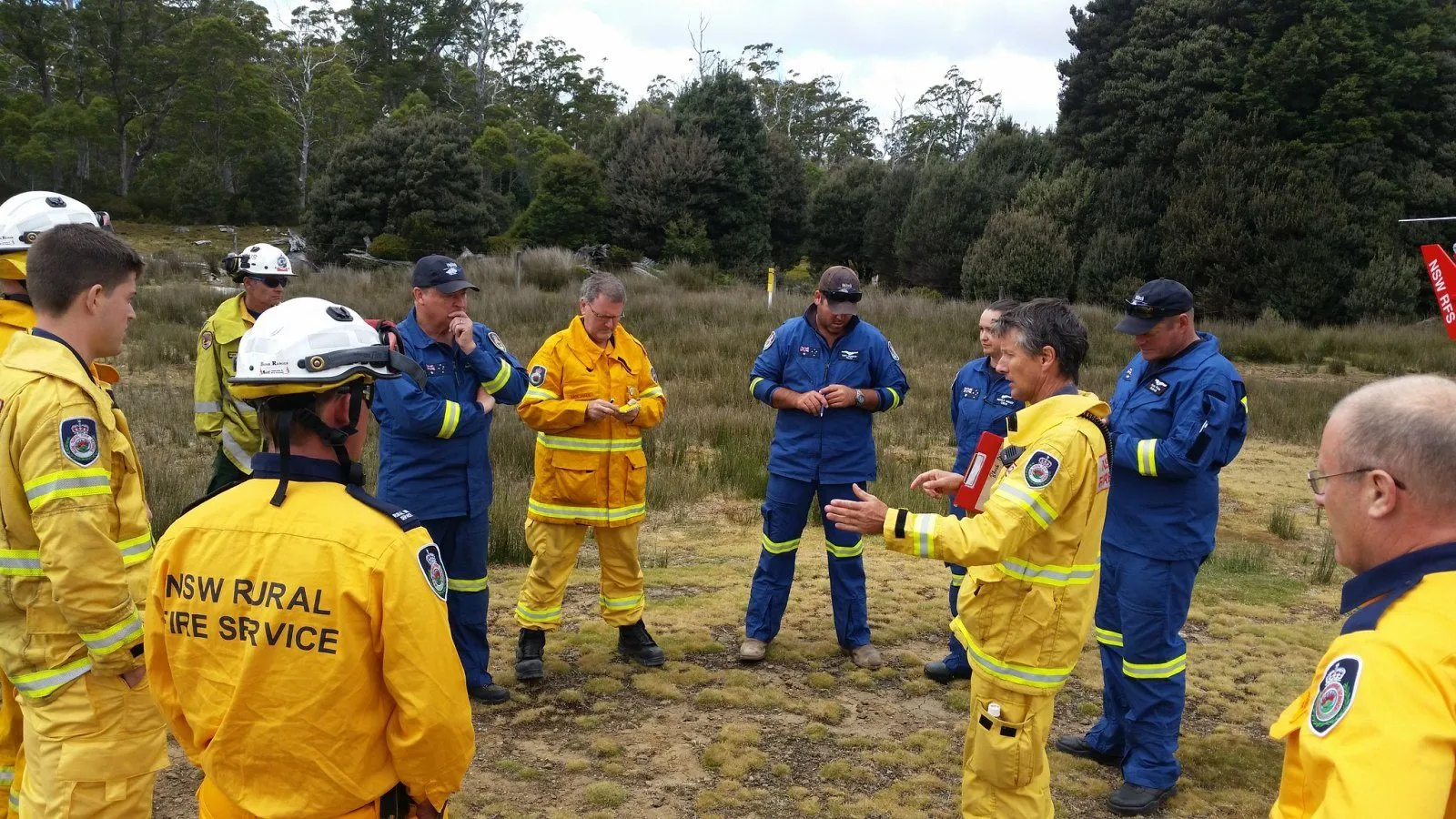
Earlier this year, barely five years after Black Summer and the Royal Commission convened to learn from it, Australia went through another severe fire season. This time the machinery built after 2019 actually ran. The National Emergency Management Agency activated its Crisis Coordination Team, Disaster Relief Australia deployed into Victoria, and South Australia found emergency accommodation for firefighting crews from interstate. The cross-jurisdictional coordination the Royal Commission had called for was visibly in place and visibly working. And a paper published in early June argues, persuasively, that better coordination of this kind may not be enough.
The paper, in the Journal of Management Studies, analyses the 2019-2020 Black Summer fires and identifies five mechanisms through which a contemporary climate crisis breaks collaborative governance. Stretching overwhelms the capacity of the system. Blurring confuses which jurisdiction is responsible for what. Fracturing snaps the coordination links between agencies that are each doing their part. Ossifying sets in when people cling to procedures designed for a simpler event. Improvising fills the gaps with ad hoc workarounds that solve the immediate problem and create new vulnerabilities behind them. The argument tying these together is that our governance arrangements were built for bounded emergencies, and a climate-era crisis is not one.
Two of those mechanisms are worth dwelling on, because they are the counterintuitive ones. A system under extreme pressure is expected to be overwhelmed, and stretching describes exactly that. What is less obvious is that the same crisis produces ossifying and improvising at once. Parts of the system freeze onto the rulebook precisely when the rulebook no longer fits, while other parts abandon it entirely and invent procedure on the fly. Both responses are rational locally and corrosive globally, and a crisis large enough will generate both in different corners of the same response. Recognising that the failure is structural rather than personal is the first step to designing for it, because no amount of individual competence resolves a contradiction built into the arrangements themselves.
That structural framing also makes the framework usable in practice. The five mechanisms give an emergency-management team a diagnostic to run over its current arrangements before the next crisis tests them, asking where this particular system is most likely to fracture or ossify under load. A diagnostic tied to a real case is more useful than a generic maturity assessment, because it names the specific failure modes rather than scoring resilience in the abstract. For anyone doing capability review or reform design, that diagnostic turns a vague worry into a set of concrete questions a governance team can actually answer.
The deeper point is a distinction the post-Black Summer reforms tend to blur. Those reforms improved operational coordination, and the 2025-26 season showed the improvement was real. But coordination is the act of doing the existing thing better together, whereas the paper’s argument is that the existing thing is the wrong shape. A response architecture designed around discrete emergencies can be coordinated immaculately and still fail against a crisis that is multi-scalar and cascading, because the problem is not that the parts are poorly synchronised. The problem is that the whole was drawn for a different kind of event. Better coordination optimises the response. It does not redesign it.
Other research from the same period fills in how that mismatch shows up on the ground. An evaluation of the Joint Emergency Services Interoperability Programme found that its frameworks remain too blue-light-centric, written in language and training that exclude the wider category of responders a modern disaster actually involves. A separate study of trauma-informed capacity found that embedding it depends heavily on organisational readiness rather than on the quality of the model itself. Both describe the same gap between intent and structure: arrangements that are improving in what they aim to do while struggling with the machinery underneath. That gap between a good intention and the structure needed to deliver it is the thread running through most of what I write about public-sector reform.
The recurrence is what makes the question impossible to defer. A second severe season in 2025-26, only five years after the Royal Commission was supposed to settle the matter, is evidence that the reforms addressed the layer that was easiest to fix. Coordination was improved because coordination is improvable through better protocols and rehearsed deployments. The governance structure was left largely intact because redesigning it is harder and less satisfying to announce. The fire season does not care which is easier. It tests the structure regardless, and it will keep testing a structure built for bounded emergencies for as long as the emergencies keep refusing to stay bounded.
This connects to arguments I have made elsewhere about wildfire governance and the end of sequential mutual aid, where the assumption that one jurisdiction can help another because their fire seasons do not overlap is dissolving as those seasons begin to coincide. It connects too to the case for treating civil defence and whole-of-society resilience as a standing capability rather than a surge response. Each of those is a version of the same structural problem the Black Summer paper names directly: arrangements drawn for a world where disasters arrived one at a time, each with a clear lead agency, and that world is receding faster than the arrangements are being redrawn.
The uncomfortable conclusion is that a disaster response can be coordinated flawlessly and still be the wrong response. Black Summer was not primarily a failure of agencies to work together, and the fix is not primarily to make them work together better, which the 2025-26 season shows they now largely do. It was a structural mismatch between the shape of the governance and the shape of the crisis, and that mismatch survives every improvement to coordination because it sits one level above it. We have made the response faster and more joined-up. We have not yet redesigned the thing that is responding, and the next season will not wait for us to get around to it.
References
- Understanding and addressing the disruptive impacts of contemporary climate crises. (2026). Journal of Management Studies. https://doi.org/10.1111/joms.70112
- JESIP (Joint Emergency Services Interoperability Programme) embedding evaluation. (2026). University of Liverpool.
- Building trauma-informed and equitable capacity for city programs. (2026, May 29). Frontiers in Public Health.
- Royal Commission into National Natural Disaster Arrangements. (2020). Final report.