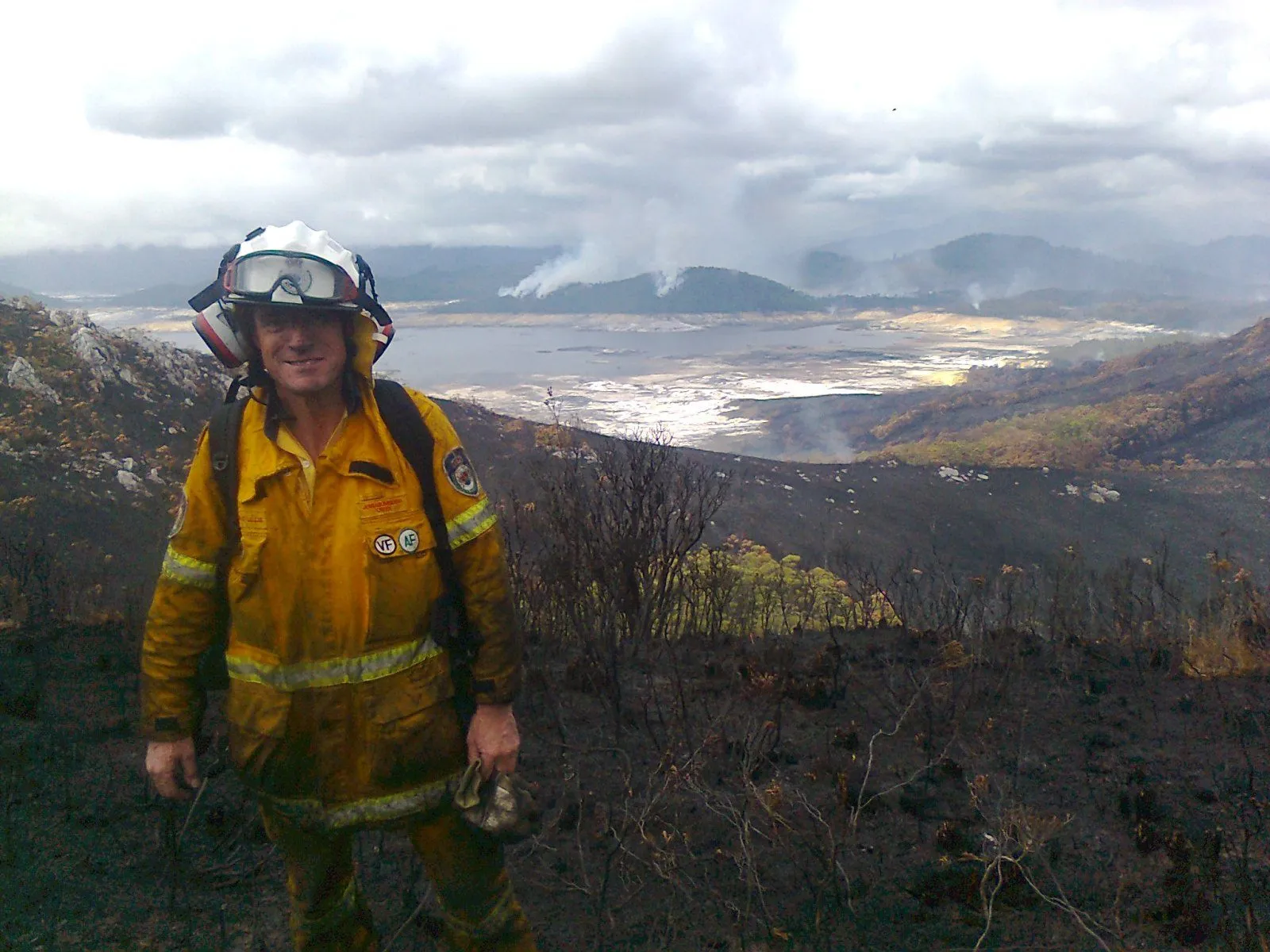
For most of the history of emergency services, the mental-health cost of the work has been filed under a single word: resilience. The implicit model held that some people are built to absorb what firefighters and other emergency workers see across a career, and that the task of the organisation is to recruit and support the resilient ones. A framework released this month retires that model. Endorsed by the Australasian Fire and Emergency Service Authorities Council and unveiled at the Natural Hazards Research Forum in Adelaide, it gives Australian agencies their first shared, evidence-based way to track a worker’s exposure to potentially traumatic events and the support the organisation provides in response.
The shift in where responsibility sits is the whole story. Resilience, as a frame, asks the question of the individual: are you tough enough for this. Developed by Phoenix Australia and funded by Natural Hazards Research Australia, the new principles ask it of the organisation instead: are you tracking what your people are exposed to, and are you responding to the accumulation. That is a different and more demanding question, because it cannot be answered by a wellbeing poster or an employee assistance hotline. It requires an agency to actually measure cumulative exposure over time and to act on what the measurement shows.
What makes the framework consequential is less its content than its endorsement. Good-practice principles drafted by a research centre carry academic weight. The same principles endorsed by AFAC carry sector authority, because AFAC speaks for the fire and emergency services across Australia and New Zealand, and an endorsement at that level turns a recommendation into something close to an expectation. That distinction matters in a sector where individual agencies have long known that cumulative trauma exposure is a serious occupational risk, but where no consistent, nationally recognised standard existed for how to monitor it or what to do in response.
The timing also closes a gap that has been open since 2020. The Royal Commission into National Natural Disaster Arrangements identified the psychological toll on emergency workers as a problem the system was managing inconsistently, and it called for a more systematic approach. A framework that places the duty to monitor exposure on the organisation, rather than on the resilience of the worker, is a direct answer to that finding. The principles are also built to evolve, with recommendations for close implementation monitoring and formal review cycles, which is a sensible acknowledgement that a first version of anything this complex will need adjustment once agencies start applying it.
There is a workforce-sustainability argument here that deserves more attention than the wellbeing framing usually gets. Fire seasons are lengthening and natural hazards are intensifying, which means the demands placed on emergency services are rising at the same time as the cumulative exposure of the people in them. Retaining experienced personnel is not a soft objective in that environment. It is a capability requirement, because an agency that burns through its experienced people faster than it can replace them is losing operational capacity in the most literal sense. Tracking and addressing the psychological cost of the work is, on this reading, a retention strategy as much as a duty of care, and the two purposes reinforce each other rather than compete.
The hardest part of the framework is the part that applies to the services least equipped to carry it. Australia’s fire and emergency response leans heavily on volunteers, and a volunteer workforce is the hardest of all to track. Volunteers do not appear on a payroll, and they rotate through exposure in a pattern no human-resources system was built to capture. Systematic tracking of potentially traumatic event exposure is demanding even for salaried staff. For volunteer-heavy agencies like the CFA and the Rural Fire Service, the same principles meet a workforce the existing tracking machinery barely sees. If the framework is to mean anything for the people who carry much of the load on the fireground, tracking the volunteers is the implementation problem its authors and the agencies will need to solve first.
The relevance of all this extends well beyond fire. Any public-service workforce with high exposure to traumatic events faces a version of the same question, from police and paramedics through to child-protection and disaster-recovery staff. Those workforces sit inside a broader shift in Australian workplace regulation, where psychosocial hazards are increasingly treated as a duty-holder’s responsibility rather than an individual’s private burden. Read against that shift, the firefighter principles are an early and well-developed example of a change coming for a much wider set of high-exposure occupations, and the agencies that work out how to implement them will hand the rest a template to borrow.
The familiar caution applies, though, because an endorsed framework is not an implemented one. I have written before about the distance between a good intention and the structure needed to deliver it, and this one will be tested at exactly that join. The principles are sound and the endorsement is real, but the tracking delivers value only when an agency builds it into how it actually operates and extends that tracking to the volunteers who are hardest to monitor. None of that tracking follows automatically from a launch at a research forum, however well received.
The deeper change is worth naming plainly, because it is easy to miss inside the procedural language of principles and monitoring cycles, and it is a change in where responsibility sits. For decades, resilience was a convenient place to put that responsibility, because it asked nothing of the organisation and everything of the person. Moving the duty to track exposure onto the agency is the harder and more honest choice. The real test of the framework is not whether it was endorsed, which it was, but whether the agencies that endorsed it will resource the tracking it calls for, especially for the volunteers who carry so much of the work and appear on none of the payrolls.
References
- Phoenix Australia – Centre for Posttraumatic Mental Health, funded by Natural Hazards Research Australia. (2026). Good practice principles for tracking potentially traumatic event exposure and organisational responses in emergency services.
- Natural Hazards Research Australia. (2026, June 10-12). Natural Hazards Research Forum 2026, Adelaide.
- Australasian Fire and Emergency Service Authorities Council (AFAC). (2026). Endorsement of the PTE exposure tracking principles.
- Royal Commission into National Natural Disaster Arrangements. (2020). Final report.