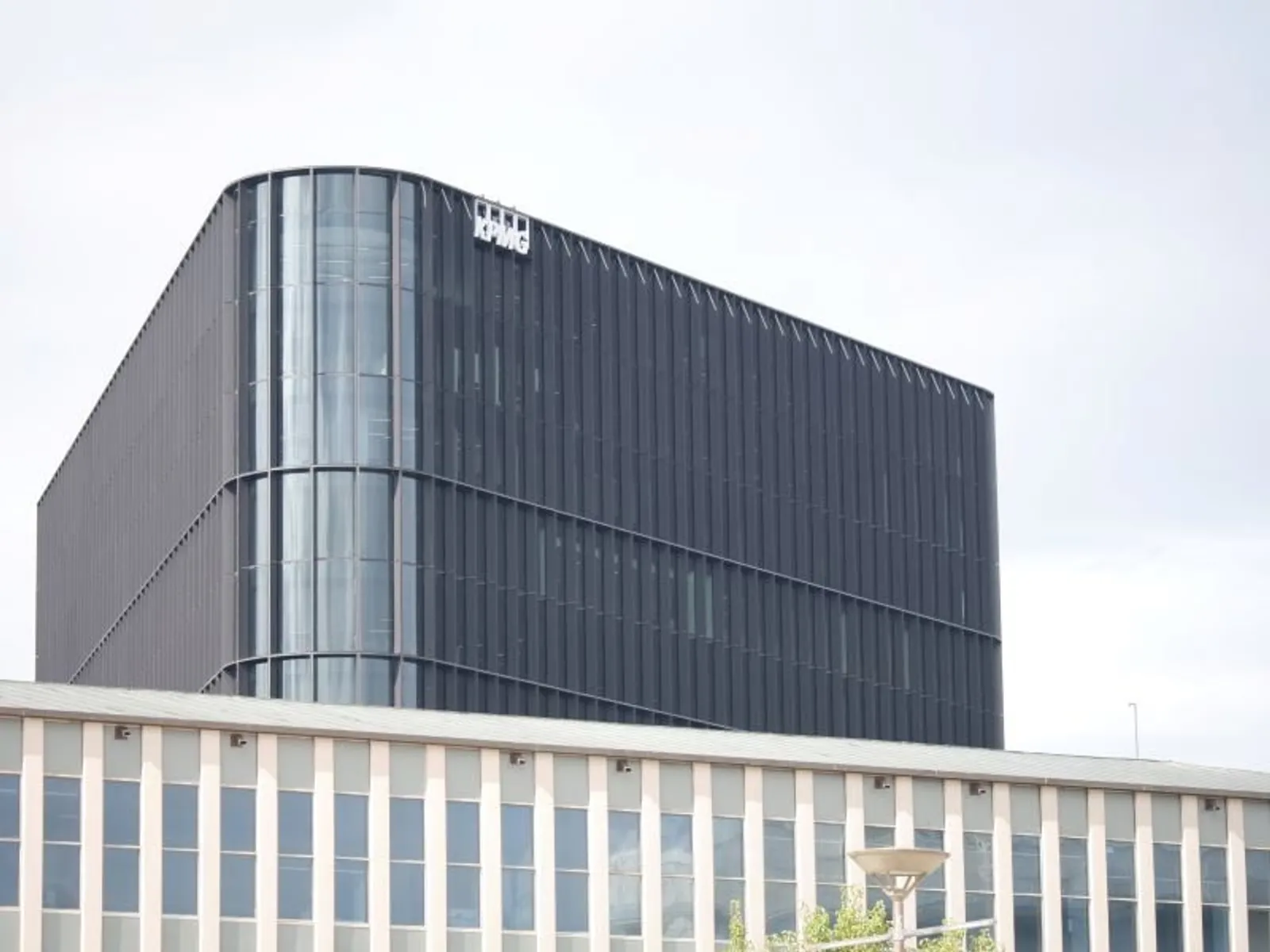
The Department of Finance has told the Commonwealth to stop giving KPMG new work. From 16 June to 30 September, no federal entity is to enter a new engagement with the firm, including through whole-of-government panels or as a subcontractor to someone else, after whistleblower allegations that the firm shared confidential client information to rig audit tenders and let its own auditors use AI to cheat on the internal exams meant to keep them honest. Two chief executives have departed. It is the second time in three years that a Big Four firm has been frozen out of Australian government work, and that recurrence is the part worth examining, because the first freeze was supposed to prevent the second.
Three years ago it was PwC, whose tax-leaks affair produced a Senate inquiry and a debarment. The system responded with the full apparatus of accountability. What it did not do was change the conditions that allowed a major firm to hold hundreds of millions of dollars in government contracts while the alleged misconduct went undetected from the inside. The mechanisms that failed to catch PwC early were largely the same mechanisms in place when the KPMG allegations came to light. Two freezes in three years is not a run of bad luck visited on an otherwise sound system. It is a system telling you something about itself.
What it is telling you is sharpened by the fine print of the ban, which is where the response starts to look less decisive than the headline suggests. The stand-down captures new approaches to market, but it does not cover current contracts or extensions already underway. Reporting has noted that close to $200 million in expiring KPMG audit work may survive the freeze through that gap, kept alive by extension rather than re-tendered in the open. A three-month pause that leaves existing revenue largely intact, while mid-tier firms circle the contracts that do fall due, is the kind of measure that photographs as a crackdown and operates as a speed bump. It signals seriousness without imposing very much of it.
This is a familiar shape, and I have written about it before in the context of defence transparency. Accountability that activates only once the misconduct reaches the front page was never really accountability. It is a clean-up crew, summoned after the damage is done and stood down once the news cycle moves on. The KPMG freeze is that clean-up crew again, a response to a failure the system’s standing controls did not catch, just as the PwC debarment was three years ago. In both cases a whistleblower did the work the oversight framework was supposed to do, which tells you the framework was not doing it.
The deeper problem sits on the buyer’s side of the relationship, and the research that came through alongside the KPMG news points straight at it. A study of AI-driven anti-corruption in public procurement across four European countries found that digitalisation and transparency requirements genuinely enable cleaner contracting, but that a determined party can still hide behind institutional culture and strategic non-disclosure when it wants to. A separate paper on procurement competencies argued that procurement roles have become far more strategic than the job descriptions admit, and that they demand judgement and relationship skills traditional capability assessments do not develop or even measure. Read together, they describe a government that buys sophisticated advisory services with a procurement function that is often outmatched by the firms it is contracting, and an oversight posture that hopes transparency rules will compensate for that gap. They do not, quite.
For the consulting industry, and this is the part that should hold the attention of anyone in it, the episode resets the terms of competition. Whether you sit inside a Big Four firm or spend your time competing against one, the accountability expectations applied to advisory work have just tightened, and they have tightened for everyone, not only for the firm in the headlines. The implicit deal under which the profession has long operated, that it can largely regulate its own conduct in exchange for the trust of its clients, looks less sustainable each time that trust is breached this comprehensively. Self-regulation survives on the assumption that the incentives to behave outweigh the incentives to cut corners, and two Big Four freezes in three years is a fairly direct challenge to that assumption.
For the boutiques and independents, the picture is more double-edged than a simple opportunity. Yes, the contracts now coming loose create openings, and yes, a market that has lost some faith in scale may give smaller and more specialised firms a hearing it would not have offered a year ago. But the credibility test that KPMG has just failed applies to every advisory engagement, regardless of the size of the letterhead. A government burned twice in three years will be warier of all of its advisers, not just the large ones, and the firms that benefit will be those that can prove their independence and their handling of client information are beyond question, rather than simply asserting it. That is a higher bar for everyone, and it is the right one.
None of which resolves the question the second freeze actually poses, which is whether anything structural changes this time. The PwC response three years ago proved that a government can run the full accountability play, from the inquiry to the reform commitments, and still leave the underlying vulnerability in place. The test for the KPMG response is not whether KPMG is punished, which it will be to some visible degree, but whether the oversight machinery is rebuilt so that the next case is caught by a control rather than by a whistleblower. On the evidence of the loophole in the current ban, that rebuilding has not started.
Two Big Four freezes in three years is the clearest possible signal that the controls switch on only after the misconduct is already public, and a control that waits for a scandal to activate is reaction dressed as oversight. Whether the response this time finally builds real oversight, or simply dispatches another reaction and waits for the third firm, is the only question that will matter in three years.
References
- Department of Finance (Commonwealth). (2026). KPMG engagement stand-down, 16 June to 30 September 2026.
- The Conversation. (2026, June 16). KPMG lost its clients’ trust, yet kept winning government contracts. Here’s what needs to change.
- The Canberra Times / PS News. (2026, June). KPMG federal contracts frozen; the contract-extension loophole and expiring audit deals.
- AI-driven anti-corruption in public procurement across four EU countries [Preprint]. (2026, June).
- Competencies for effective public procurement [Preprint]. (2026, June).