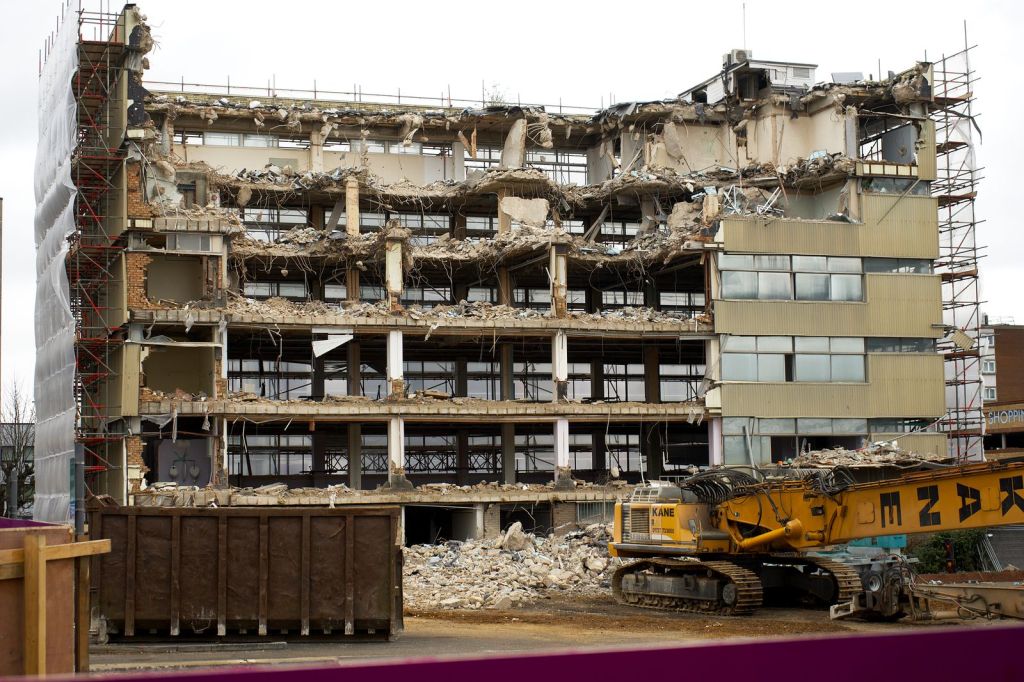
Buried in the preface of this year’s Budget Paper No. 4 is a sentence that reads like a costed apology: “In its first term, the Government rebuilt public service capacity and capability by bringing core work back in house, reducing its reliance on external labour, strengthening integrity and rebuilding public trust” (Commonwealth of Australia, 2026). The same preface counts more than 11,800 public service roles created to replace previously outsourced work, and $14.8 billion in savings since 2022-23 from reduced spending on external labour and non-wage expenses. Read those numbers slowly. Rebuilding on that scale is only necessary after something has been pulled down, and the savings figure is a receipt for what the earlier settings had been costing. It took years of deliberate reconstruction to restore capability that earlier efficiency measures had dispersed, and the budget states this as a proud achievement rather than what it also is: evidence of a cycle.
Geoff Edwards made the uncomfortable half of that argument in The Mandarin in early July, writing that the current round of public sector restructures will produce years of decline, because the expertise now walking out the door will not walk back in, and rebuilding it will cost more than the restructures save (Edwards, 2026). The example Edwards reaches for is pointed: Queensland’s dismissal of eight Indigenous leaders from knowledge-rich institutions including the State Library and the Queensland Museum, roles where the departing knowledge is cultural, relational and decades deep. You cannot re-advertise for what those people know. The position can be refilled; the capability cannot.
The structural problem sits in the business case. A restructure proposal states its savings with actuarial confidence: salaries plus floor space plus licence seats, costed to the dollar on a quarterly schedule. The other side of the ledger, what the organisation will no longer know, is recorded at zero. Institutional knowledge behaves like an off-balance-sheet asset. It compounds for decades and transfers mostly through proximity and shared work. It appears in no register, so its demolition is never booked as a cost. The asymmetry gives every restructure business case a systematic bias: precise, near-term, visible savings weighed against diffuse, deferred, invisible losses. Any evaluator who saw that asymmetry in a vendor’s proposal would reject it as rigged. Inside government, we call it a savings measure.
Where does the unbooked cost eventually appear? In the capability you need at the worst possible moment. A July case study from La Trobe University on the Northern Victorian Emergency Management Cluster describes rural and regional councils under acute emergency management capacity constraints where recruitment is hard and any capability built drains away to constant turnover (de Kleyn & Fletcher, 2026). The cluster arrangement exists precisely because individual councils can no longer hold the expertise alone. When the next flood arrives, the cost of every departed emergency management officer is paid in slower decisions and thinner local knowledge, a currency that never appears in the restructure’s benefits realisation report. I wrote separately about the Black Summer coordination failures, where the capability that mattered lived in the joins between organisations. Turnover dissolves the joins first.
The counter-model is worth studying. The UK’s Government Digital Service announced in July that its Service Standard is evolving from a static, assessment-led model into what it calls a living system supporting the whole life cycle of a service, something organisations “actively demonstrate every day”, in the authors’ words, rather than prove at a gate (Ball & Williams, 2026). Note what a living standard assumes: teams stable enough to hold the history of a service in their heads, to know why the design is the way it is, to demonstrate continuously rather than cram for assessments. A revolving-door workforce can pass a point-in-time gate. Only institutional memory can sustain a standard that never stops asking. The same week, GDS described running two-week exploration sprints to test whether a different approach is viable before committing to it (Government Digital Service, 2026), which is what proportionate structural change looks like: experiment first, commit at the scale the evidence supports, and leave the organisation intact while you learn.
The evidence connecting people systems to institutional performance keeps thickening. A systematic review of 48 studies of public sector human resource management across sub-Saharan Africa, released as a preprint in July, found strategic HRM practices directly linked to how well institutions deliver services and retain their people (Chichava et al., 2026). Merit-based recruitment was the single most consistently impactful practice. The setting differs; the mechanism does not. Workforce practice is not an administrative sidebar to institutional performance. Over any horizon longer than a budget cycle, it is the substrate performance runs on, and a restructure is the most aggressive workforce intervention an organisation can perform on itself.
None of this makes restructuring wrong. Structures accumulate their own dead weight, and I have argued elsewhere that the APS needs more genuine change capability, and sooner. The argument is narrower and harder to dodge: the standard restructure business case is systematically dishonest about cost, and everyone advising on one owes the client the honest version. That version names the knowledge assets in the blast radius and who holds them. It prices the rebuild, using the government’s own recent history as the benchmark rate. It plans the retention of critical expertise with the same rigour as the redundancy schedule, and it treats the experience curve of a workforce as capital under management rather than headcount under review. Sometimes the honest case still supports the restructure. Then proceed, eyes open. What should stop passing review is the version where the write-off is missing, because a business case that omits the destruction of the organisation’s largest unpriced asset is fiction with a spreadsheet attached.
I write separately about knowledge debt in software teams, where AI-assisted speed accumulates code that nobody on the team deeply understands. Restructures run the same dynamic at organisational scale and human speed. In both cases the output metrics improve immediately while the understanding that sustains them drains away, and in both cases the bill arrives later, at interest. An organisation can be reorganised in a quarter and the media release drafted in an afternoon. What the organisation knew took decades to compound, and some of it, as Queensland is about to discover, does not grow back. The budget papers have already told us what the round trip costs. The only question a restructure business case really needs to answer is whether anyone has read them.
References
Ball, E., & Williams, N. (2026, July 2). Evolving the Service Standard for the future of public services. Government Digital Service Blog. https://gds.blog.gov.uk/2026/07/02/evolving-the-service-standard-for-the-future-of-public-services/
Chichava, A. D., Zaqueu, L. C. M. A., & Sitoe, M. D. (2026, July 1). Human resource management practices and institutional performance in the African public sector: A systematic review of evidence and policy implications (2010-2025) [Preprint]. Research Square. https://doi.org/10.21203/rs.3.rs-10203525/v1
Commonwealth of Australia. (2026). Budget paper no. 4: Agency resourcing 2026-27 (Preface). https://budget.gov.au/content/bp4/download/bp4_02_preface.pdf
de Kleyn, L., & Fletcher, A. (2026, July 2). Strengthening collaboration in emergency management – A case study of the Northern Victorian Emergency Management Cluster: Insights into training [Report]. La Trobe University. https://doi.org/10.26181/32871134
Edwards, G. (2026, July 2). Prevention or patch-up? Years of decline to follow public-sector restructures. The Mandarin. https://www.themandarin.com.au/315496-prevention-or-patch-up-years-of-decline-to-follow-public-sector-restructures/
Thomas, T. (2026, July 1). Exploration sprints: Testing whether a different approach is actually viable. Government Digital Service Blog. https://gds.blog.gov.uk/2026/07/01/exploration-sprints-testing-whether-a-different-approach-is-actually-viable/

 Russell Buzby
Leave a comment