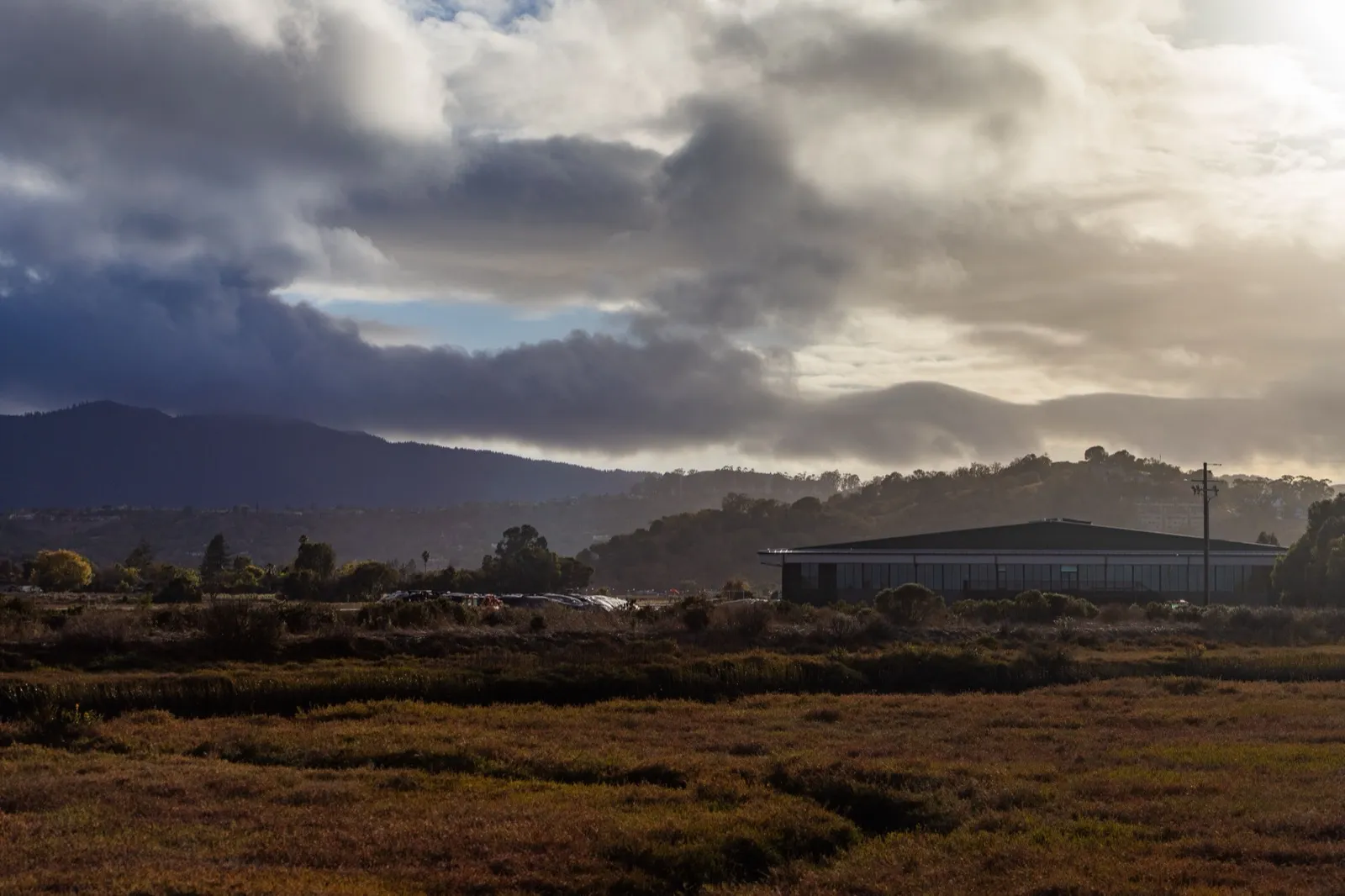
On 14 May 2026 a Swiss-backed developer called GreenSquareDC withdrew its own planning application for a 120 megawatt data centre at Hazelmere, on the eastern edge of Perth. The Metro Outer Joint Development Assessment Panel was due to determine it the following Tuesday. The panel never ruled.
That withdrawal now gets retold as the moment Aboriginal cultural heritage stopped a data centre, and it is the case people reach for as evidence that the consent question is already answered somewhere. The record does not support the retelling.
The site was 4.5 hectares of privately held land at Stirling Crescent, inside the Hazelmere Enterprise Area and roughly 40 metres from the Helena River. Opposition was substantial: about 1,900 submissions that were overwhelmingly objections, and on 13 May councillors voted 11 to 2 for the Mayor to make a deputation against the proposal. The campaign was led by Trillion Trees together with the Bibbul Ngarma Aboriginal Association, an Aboriginal-led charity chaired by Noongar Traditional Owner Walter McGuire.
City of Swan officers had also recommended refusal, and their ground was noise. Eighty-eight diesel backup generators, which the proponent had assessed on a routine testing regime and the City insisted on assessing at full load in an emergency. Statutory planning manager Phillip Russell told the council that “city staff cannot accept that the potential for noise exceedance … should be tolerable”, while conceding the proposal suited the zoning. GreenSquareDC’s chief executive Charles Penny said the decision “has not been made lightly” (Sadler, 2026), and called the emergency benchmark unrealistic and impractical.
So the proponent withdrew and no government body decided anything. Heritage drove the campaign and the political pressure behind those submissions, and it decided nothing, because nothing was decided.
The proponent’s own heritage survey sits on the City of Swan’s portal. Urbis surveyed the site in November 2025 with representatives of the Whadjuk Aboriginal Corporation, and recorded that the seven cultural consultants had “no immediate objections to the proposed works”, subject to conditions that included complete avoidance of the registered Hump Paddock site and two Whadjuk monitors during ground disturbance. The same report records that consultation with the state heritage department “confirmed that Helena River (ID 3758) does not extend into the Project Area” (Urbis, 2025). It is watermarked draft and says it awaits Whadjuk endorsement, so it cannot be read as the corporation’s settled position, and no public statement from the corporation opposing the project has appeared.
Which group was right is not the question. The question is which group held a legal right at all. Bibbul Ngarma ran the campaign. Whadjuk Aboriginal Corporation is the body with formal standing under the South West Native Title Settlement, and under Western Australian heritage law the review right created in 2023 belongs to the native title party. The group with the objection and the group with the standing were not the same.
Western Australia announced the repeal of its Aboriginal Cultural Heritage Act 2021 five weeks after that Act took effect. It restored the amended Aboriginal Heritage Act 1972 through the Aboriginal Heritage Legislation Amendment and Repeal Act 2023, which commenced on 15 November 2023. Premier Roger Cook’s explanation was unusually plain: “The Juukan Gorge tragedy was a global embarrassment, but our response was wrong, we took it too far …”
Under the restored Act a landowner who wants to disturb a registered site gives notice under section 18 to the Aboriginal Cultural Heritage Committee. The Committee recommends and the Minister decides. The department’s consultation policy sets out what a Traditional Owner receives. Where different views are expressed, “it will be for the Committee and ultimately the Minister to determine the relative weight to be given to alternate views”. What matters, the policy says, is “that there is the opportunity for the relevant Aboriginal people to provide those views” (DPLH, 2023).
An opportunity to provide views, weighted by a committee, decided by a minister. That is the ceiling of the entitlement. No statutory consultation requirement appears in the Act or its regulations: the landowner should consult as a matter of departmental policy, and if they do not, the Minister may defer. May.
One thing did change in 2023 and deserves fair acknowledgement. Amended section 18(5) gives native title parties the same right of review to the State Administrative Tribunal that landowners have long had. Attorney General John Quigley called it a first: “For the first time ever, Traditional Owners will have a right of appeal …”
Then read the next section. If a native title party applies to the Tribunal, the Premier may take the application over where it raises issues “of such State or regional importance” that the Premier should determine it. And section 18A(11)(a) provides that a consent the Premier then gives is treated as a section 18 consent “except that section 18(5) does not apply in relation to the decision to give the consent”. The one new right in the Act can be called in by the head of government, and the outcome of that call-in cannot be reviewed.
The usual answer to a thin state regime is a Commonwealth backstop. There is not one.
The Environment Protection and Biodiversity Conservation Act names the matters of national environmental significance, and Aboriginal cultural heritage is not among them. Indigenous heritage is reached only where a place already sits on the National Heritage List. Commonwealth Heritage listing cannot help on land like Hazelmere, because the Act reaches only a place sitting entirely within a Commonwealth area or Commonwealth-held land overseas.
The Aboriginal and Torres Strait Islander Heritage Protection Act 1984 has not been amended since 2016, and its structure puts the burden on Aboriginal people to activate it. A person or group applies, and the Minister “may, by legislative instrument, make a declaration”. Refusal is expressly contemplated. The Act is drafted as a last resort in terms: the Minister must consult the State about whether effective protection exists under State law before declaring, and must revoke where satisfied that State law makes effective provision.
Native title does not reach a project like this either. The right to negotiate requires a government party doing a future act, and confines the trigger to mining rights and compulsory acquisition, plus whatever else the Commonwealth Minister approves by legislative instrument. A valid freehold grant extinguishes native title. Even where the right does bite, the obligation is to negotiate in good faith, and the arbitral body may determine that the act may be done.
Western Australia is not a special case here. In Melbourne’s west a proposed AI and data centre precinct at Plumpton, reported at roughly 350 hectares of green wedge land where five transmission lines intersect, has drawn a Legislative Council petition sponsored by David Ettershank MLC, carrying 5,393 signatures as at 2 September and closing on 30 November. The petition names “areas of Aboriginal cultural heritage sensitivity” among the values at stake (Parliament of Victoria, 2026), and no permit application had been lodged as at late August. AEMO’s 2026 forecast puts data centres at about 13 per cent of grid demand by 2035-36 (Noroozinejad, 2026).
At National Cabinet on 26 August, First Ministers agreed that large data centres bring material impacts on energy and water, and on land use, “that need to be managed”, and the Commonwealth undertook to develop consistent mandatory standards for the same three impacts (Prime Minister of Australia, 2026). Search the AI and data centre section of the communique for heritage or First Nations or consent and nothing comes back. The sentence doing the real work is the jurisdictional one: Commonwealth legislation “will be designed to complement, not duplicate” state and territory planning and approval processes. Cultural heritage goes back to the states without ever being named.
This is not a single oversight. The federal expectations of data centre and AI infrastructure developers, published in March, mention First Nations peoples exactly once in the body of the text, inside the water expectation, as people to engage with on appropriate locations (DISR, 2026). Cultural heritage and consent appear nowhere in that document. Jenna Imad Harb and Shanine Ryan wrote in late August that Aboriginal communities have had little say in AI infrastructure planning, and that decisions taken now could shape Indigenous relations with government around AI for years (Harb & Ryan, 2026). The documents bear them out.
The government describes what is coming as the first framework of its kind legislated by any government worldwide. Germany’s Energieeffizienzgesetz has set data centre renewable electricity obligations in law since 2023, rising to 100 per cent from January 2027. A bill approved by the German Cabinet in June would defer that 100 per cent step to 2030, and the 2023 legislation is the precedent either way. The narrow reading survives: Australia may be first to put those three impact standards together with conditions on AI training in a single national statute. Being first to legislate is a weaker claim than it sounds when the scope has been drawn this narrowly.
The Environment Protection Reform Act 2025 creates national environmental standards. Before making a standard about engagement with Indigenous persons, the Minister must invite the Indigenous Advisory Committee to comment and must consider what it says. The subsection immediately after that provides, to avoid doubt, that the Minister is not prevented from making the standard if the Committee says nothing at all.
Draft legislation for the data centre framework is due by the end of this year for passage in early 2027. No exposure draft or consultation paper has been released on it. The window for submissions is still in front of us, which is the only reason to write this down now rather than in 2028.
Nobody in Australia holds a consent right over a data centre on Aboriginal cultural heritage, at any level of government. And the case everyone cites as the exception is a company that withdrew over generator noise.
References
- Aboriginal and Torres Strait Islander Heritage Protection Act 1984 (Cth). Compilation C2016C00937. https://www.legislation.gov.au/C2004A02942/latest/text
- Aboriginal Heritage Act 1972 (WA). Version 04-n0-00, as at 28 May 2026. https://www.legislation.wa.gov.au/
- Department of Industry, Science and Resources. (2026, March 23). Expectations of data centres and AI infrastructure developers. Australian Government. https://www.industry.gov.au/publications/expectations-data-centres-and-ai-infrastructure-developers
- Department of Planning, Lands and Heritage. (2023). Consultation policy for section 18 applications. Government of Western Australia. https://www.wa.gov.au/organisation/department-of-planning-lands-and-heritage
- Energieeffizienzgesetz (EnEfG) 2023 (Germany), § 11 Klimaneutrale Rechenzentren. https://www.gesetze-im-internet.de/enefg/__11.html
- Environment Protection and Biodiversity Conservation Act 1999 (Cth). Compilation No. 69, 1 July 2026 (C2026C00292). https://www.legislation.gov.au/C2004A00485/latest/text
- Environment Protection Reform Act 2025 (Cth) No. 68, 2025. https://www.legislation.gov.au/
- Harb, J. I., & Ryan, S. (2026, August 28). The fight over AI data centres is becoming Australia’s next Indigenous policy challenge. The Conversation. https://theconversation.com/the-fight-over-ai-data-centres-is-becoming-australias-next-indigenous-policy-challenge-289623
- Native Title Act 1993 (Cth). Compilation No. 50 (C2024C00224). https://www.legislation.gov.au/C2004A04665/latest/text
- Noroozinejad, E. (2026, August 27). Australia’s backdown on data centres allows them to use energy from coal and gas. Here’s what that means. The Conversation. https://theconversation.com/australias-backdown-on-data-centres-allows-them-to-use-energy-from-coal-and-gas-heres-what-that-means-290613
- Parliament of Victoria. (2026). Fully assess planning decision for a proposed Victorian AI Hub (Legislative Council petition #770). https://www.parliament.vic.gov.au/get-involved/petitions/fully-assess-planning-decision-for-a-proposed-victorian-ai-hub/
- Prime Minister of Australia. (2026, August 26). Meeting of National Cabinet. https://www.pm.gov.au/media/meeting-national-cabinet-26-august-26
- Sadler, D. (2026, May 19). Perth data centre plan withdrawn. Information Age. Australian Computer Society.
- Urbis. (2025). Archaeological site identification survey, Lots 14 and 15 Stirling Crescent, Hazelmere (Draft). Prepared for GreenSquareDC. City of Swan consultation portal.