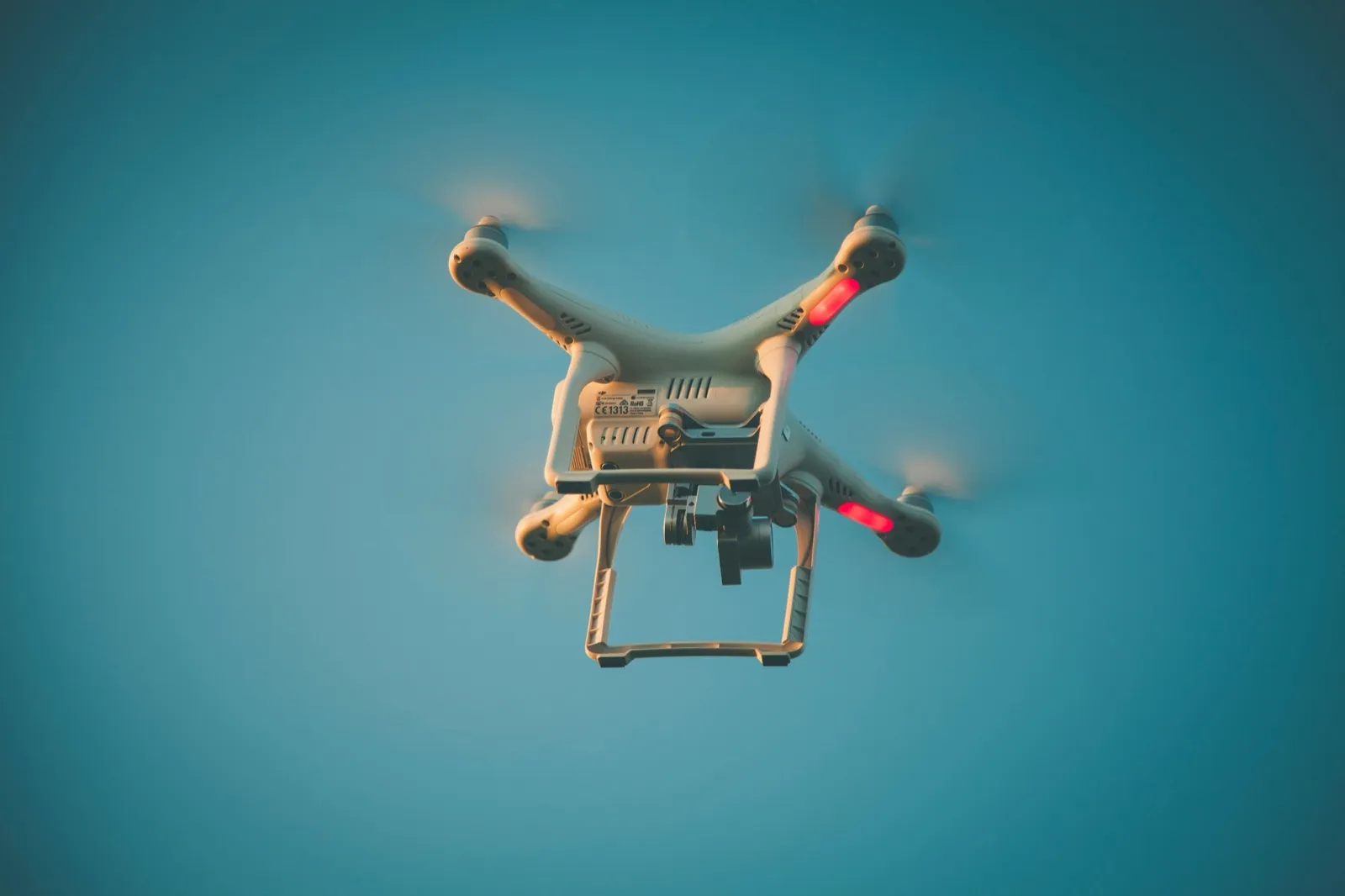
Late in 2025, soldiers patrolling the Cultana Training Area in South Australia were engaged by drones on purpose, so they could try out the equipment meant to stop them. The assessment ran ten days. Twenty systems went in and eight came out, selected to introduce into service. Behind it is Project Land 156, funded early in 2025, which bought its first systems that April and had them in field trials eight months after the concept (Department of Defence, 2026).
That is quick by any standard. What those eight systems are matters more than the count. The suite runs from soldier-worn sensors, through portable ones for fixed sites and vehicle movements, to hand-held jammers. Sensing is by radio frequency and protocol detection. The systems then identify the threat and determine its bearing, and counter it with radio frequency jamming and protocol disruption. Project representative Brad Pettit said the sensors and effectors came from eleven industry providers, many of them Australian, alongside some of the best systems from overseas partners. He stated the operating principle plainly: “As long as we’ve got more power than what their radio has, we’ll beat them” (Department of Defence, 2026). Defence gives a total investment of $1.3 billion over ten years for ADF counter-drone capability.
That is not the figure in circulation. The number everyone quotes is up to A$7 billion, which the government attributes to the 2026 Integrated Investment Program, released on 16 April (Arthur, 2026), effectively double the A$3 billion earmarked for counter-drone technology in 2024 (Stewart, 2026). John Coyne (2026) has it in his second paragraph, and the government has every reason to lead with it too.
Then read what the envelope contains. Reporting the contracts that followed the announcement, Gordon Arthur (2026) noted that the A$7 billion for drone defences also covers naval missiles, the NASAMS air defence system, a new medium-range one and upgrades to fighters. Marcus Hellyer of Strategic Analysis Australia was blunter about it at the time: “When the government says it will spend $7bn over the decade on counter-drones, you can’t see it in the Integrated Investment Program that came out last week, so you assume it is there, maybe” (Stewart, 2026).
So there are three numbers in play and they measure different things. The $1.3 billion spans the whole ADF effort over a decade, not the eight systems now being rolled out. The A$7 billion is an envelope that also pays for some of the most expensive air defence Australia owns. And A$31.7 million is what the cheap end of the problem received in April. AIM Defence got A$21.3 million for its Fractl laser and Sypaq A$10.4 million for the Corvo Strike interceptor drone (Arthur, 2026), both awarded through the Advanced Strategic Capabilities Accelerator’s Mission Syracuse (Asia Pacific Defence Reporter, 2026). Both are development contracts, so neither system is ready for widespread fielding (Arthur, 2026).
Nobody needs convincing about the economics here. The minister made the case himself when he announced those two contracts. “At the moment, we’re seeing nations having to use $3m missiles to take out a $100,000 drone,” Pat Conroy said. “These (new Australian) systems can be deployed and cost tens of thousands of dollars to take out a $100,000 drone” (Stewart, 2026). The cost exchange is already the government’s own stated reason for the money.
Ukraine is where that layer is in daily use, and its numbers are specific. Ukrainian interceptor drones cost between US$1,000 and US$2,500 each, with SkyFall’s fibre-optic P1-SUN at the bottom of the range and Wild Hornets’ Sting at the top (Livingstone, 2026). By February 2026, Ukrainian interceptors were reported to be destroying more than 70 per cent of incoming Shahed drones over Kyiv (Livingstone, 2026), though the publication carrying that figure names no source for it. The attributable number is lower and measures something wider. Yuriy Cherevashenko, deputy commander of uncrewed systems for the Ukrainian Air Force’s air defence, put interceptors at 30 per cent of all airborne targets destroyed, one in three, with no region specified (United24 Media, 2026). Manufacturers claim individual tallies in the thousands. Those are company figures and should be read as such.
The reason that layer matters is structural, and American analysts have set it out. Mark Cancian and Chris Park (2026) reviewed munitions use at the Iran ceasefire. They say of the high-end air and missile defence inventory that “they are not suitable for defense against drones because of their high cost and scarcity”. The United States mostly avoided firing those munitions at low-cost drones, and on their account it “also has not had enough cheap interceptors”. Across 39 days of that campaign it “may have expended more than half of the prewar inventory” of four of seven heavily used munitions, on their hedged estimate. The low-cost options they list include laser-guided rockets and interceptor drones that destroy the target by crashing into it. Britain’s DragonFire beam weapon sits at the far end of the same logic, at a cost per shot Mustafa Bilal (2026) puts at £10.
Australia is not absent from the kinetic side of this. The live-fire demonstration at Cultana on 4 December 2025 integrated the equipment of five suppliers: Acacia Systems’ Cortex command and control, Department 13’s sensor system, Echodyne’s MESA radars, EOS Defence Systems’ effector suite and L3Harris’s VAMPIRE laser-guided rocket system. That weapon has been used in support of European combat operations since 2023, on L3Harris’s account (Australian Defence Magazine, 2025). The pieces exist. Nobody has published a cost per engagement for any of the systems in that demonstration, or a date on which the figure gets measured again.
Read Pettit’s condition a second time: more power than their radio has. It is an accurate description of how those eight systems work, and it holds for as long as the threat is flying on a radio link. Ukraine already fields interceptors flown down a fibre-optic cable instead of a radio, at the cheapest end of its range (Livingstone, 2026), so control links that owe nothing to radio are neither new nor expensive. A ten-day assessment in late 2025 tells a reader which equipment beat the drones somebody brought to South Australia that fortnight. Defence has said the project will trial more systems during 2026, which is the right instinct. What it has not published is the interval: how often those eight get re-tested, against what, and at what cost for each engagement.
Coyne’s (2026) answer runs through industry. “Australia must also be able to repair damaged systems, replace components, update software and increase production as circumstances demand,” he writes. “Those capabilities take years to develop and cannot simply be purchased when a crisis emerges.” He wants a complementary northern proving ground instead of another Woomera, built on infrastructure that is already there. Procurement, he argues, must be certain enough “for companies to invest in permanent facilities and skilled workers, while rewarding the ability to expand production when required”. His measure of success is “how quickly equipment can be tested, repaired, adapted and returned to service” instead of the value of construction contracts or a tally of companies opening Darwin offices.
That measure needs an owner. A cost per engagement is a requirement, and so is a date for re-measuring it. Under the acquisition reform I wrote about in Who Confirms the Requirement?, requirements get confirmed on one side of a boundary and delivery is accountable on the other, so the people building the capability cannot set this requirement for themselves.
The trials flagged for 2026 are the place to start publishing a cost per engagement. A trial that publishes one figure for each engagement gives the cost a short history before anybody needs it. Nobody has done it yet, which leaves the A$7 billion without a price for a single drone.
References
- Arthur, G. (2026, April 24). Australia awards contracts for counter-drone tech based on lasers, interceptors. Defense News. https://www.defensenews.com/global/asia-pacific/2026/04/24/australia-awards-contracts-for-counter-drone-tech-based-on-lasers-interceptors/
- Asia Pacific Defence Reporter. (2026, April 21). Australia commits up to A$7 billion for counter-drone ops. https://asiapacificdefencereporter.com/australia-commits-up-to-a7-billion-for-counter-drone-ops/
- Australian Defence Magazine. (2025, December 12). Leidos demonstrates integrated counter-drone capability. https://www.australiandefence.com.au/news/news/leidos-demonstrates-integrated-counter-drone-capability
- Bilal, M. (2026, November 4). A quick look at the cheap ways to shoot down strike drones. The Strategist. https://www.aspistrategist.org.au/a-quick-look-at-the-cheap-ways-to-shoot-down-strike-drones/
- Cancian, M. F., & Park, C. H. (2026, April 21). Last rounds? Status of key munitions at the Iran war ceasefire. Center for Strategic and International Studies. https://www.csis.org/analysis/last-rounds-status-key-munitions-iran-war-ceasefire
- Coyne, J. (2026, November 3). Australia’s defence investment must build the industry to sustain a fight. The Strategist. https://www.aspistrategist.org.au/australias-defence-investment-must-build-the-industry-to-sustain-a-fight/
- Department of Defence. (2026, February 2). Countering threats from above. Australian Government. https://www.defence.gov.au/news-events/news/2026-02-02/countering-threats-from-above
- Livingstone, K. (2026, March 11). These are Ukraine’s $1,000 interceptor drones the Pentagon wants to buy. Military Times. https://www.militarytimes.com/news/pentagon-congress/2026/03/11/these-are-ukraines-1000-interceptor-drones-the-pentagon-wants-to-buy/
- Stewart, C. (2026, April 24). Government pledges up to $7bn for Aussie counter-drone defences. The Australian (republished by Stockhead). https://stockhead.com.au/tech/government-pledges-up-to-7bn-for-aussie-counter-drone-defences/
- United24 Media. (2026, February 24). Ukraine’s interceptor drones now account for 30% of air defense kills. https://united24media.com/latest-news/ukraines-interceptor-drones-now-account-for-30-of-air-defense-kills-16202