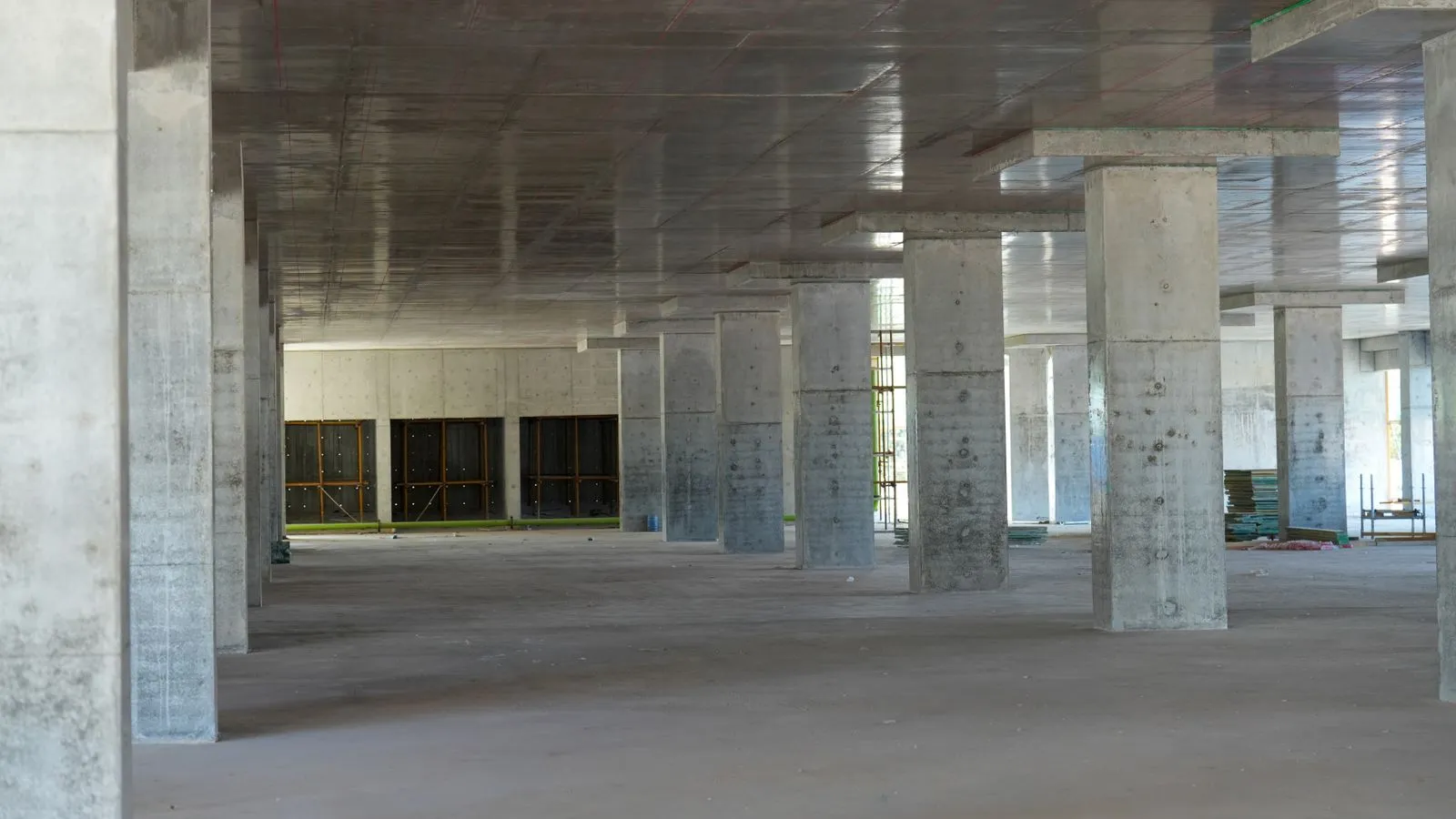
Health Infrastructure finalised the full business case for the Lower Mid North Coast Health Service in December 2025. It included a fourth floor at Manning Hospital: around 1,600 square metres, with capacity for 28 inpatient beds. The floor would go up as a bare shell, with no services connected and no finished floor or ceiling. Demand projections showed the beds would be needed in future. Fitting the space out would have taken the project past the money it had been given (Audit Office of NSW, 2026).
The practice has a name. Cold shelling, in the auditor’s definition, is a space constructed inside a facility without the fitout it requires, which can mean no water or power run to it and no floor or ceiling installed. Health Infrastructure encourages project teams to look for the opportunity as part of value management. The Audit Office of NSW found it weighed as a cost reduction in all four projects examined for its 12 November report on health capital expenditure, and three of those four left spaces unfitted to deal with budget constraints.
On its own, none of that reads as failure, and the report does not present it that way. Health Infrastructure has effective project-level governance and delivers to approved budgets. The full business cases for all four complied with NSW Treasury and Infrastructure NSW requirements, and each showed a preferred option whose benefits were expected to exceed its costs. The paperwork is in order.
What the audit takes apart is the order the paperwork arrives in. Since 2018, health projects above $10 million have run through a streamlined process. Health Infrastructure prepares an investment decision document, a simplified business case carrying “only information regarded as critical” for the state budget round, and a budget is typically allocated at this stage. Preliminary and full business cases follow, because the Infrastructure Investor Assurance Framework requires them, but their preparation “occurs after the government has approved a budget for a capital project”.
Every one of the four projects had its funds before anybody drafted a case for spending them. The report sets out what the later document then does: Health Infrastructure “prepares business cases that include an infrastructure solution as the preferred option and the already allocated budget as the fixed cost of the project”. A business case is usually taken to settle whether to build and what to build. Both answers are in place before the drafting starts, and what remains is to show the funded thing can work inside the funded sum.
With the sum held, scope is the term that moves. “Once funding is allocated, delivering within the approved budget becomes the priority and scope changes are the main mechanism for controlling costs.” The Ministry of Health generally treats an allocation as a fixed parameter, which the auditor says raises the risk of a project being resourced “on insufficient information and with funding which is materially different to the amount needed”. The conclusion names the result: a mismatch between the service people expected when the money was committed and “the final, narrower scope” settled later through the business case.
The cost of the trade reappears in somebody else’s budget. Where cold shelling is done for cost control, the Audit Office lists the risk of clinical services not being delivered as planned. The report adds the later costs of completing the facility, which “can be substantial” and are likely to disrupt both staff and services. The Manning floor will need further material investment before it can treat a patient. Hunter New England Local Health District, which runs the hospital, lodged a fresh capital proposal during 2026 that included the scope to finish the fitout, so those 28 beds are back in a queue they had already come through once. The report is blunt about how the queue works: “The existence of a cold shell does not result in a project being prioritised for future funding through Ministry of Health-run capital prioritisation rounds.”
Nobody keeps a count of the spaces either. Health Infrastructure and the Ministry “do not know how often these spaces are planned for or delivered across the capital program”, or whether they are later made ready for clinical use. The trade-offs behind each space are not clearly reported program-wide. The spaces also go unlabelled by purpose: one project may be holding room for forecast growth while another has simply run out of money, and the auditor found the two reasons are not distinguished.
A second gap works the same way. Building capacity and staffing it are settled by separate decisions at different times, and NSW Health identifies recurrent funding gaps in its cases but generally leaves them until a facility is close to opening. In 2025-26 the Ministry received $90.5 million to address operating affordability gaps at newly commissioned facilities. Where such a gap stays open, a building opens without the staff to run it at the level used to justify constructing it.
The Audit Office has been here before. Its 2020 audit, Health capital works, examined 13 business cases across eight projects. It found election commitments in 2015-16 and 2019-20 had together created a $15.0 billion program to build and upgrade 89 hospitals and health services. That program was “established without advice from the Ministry on how these projects aligned with statewide health infrastructure priorities” (Audit Office of NSW, 2020). That audit also named the mechanism. Leaning on endorsement instead of testing options inside the document, it warned, “can focus the process on a capital solution before the business case is developed or alternative options are assessed”. Doing so “limits accountability and risks compromising the role of a business case”. Six years on, the same office reports the money now arrives in the same position as the solution, and that it “has not yet been demonstrated” that the reforms brought in since are achieving their intended outcomes.
Much of the assurance work I see, and a fair share of my own, tests the document against the framework: whether the options analysis is present and the benefits quantified, whether the right committee has signed. The work has value, and it cannot reach the question this audit asked, because compliance says nothing about which decisions were open when somebody sat down to write. A related gap sits on the other side of delivery. I wrote about it in Two Auditors Asked for the Same Fix and Got Different Answers: a cost never recorded as its own category cannot be measured against the case that justified it. Here the gap sits at the front, where the case is written to fit a decision already taken.
The auditor’s fifth recommendation asks for state-wide reporting on capacity delivered against what the business case said it would buy, and on what later becomes of spaces left without a fitout. It falls due in November 2027. Before then, on the audit’s own account, no one can say how many of the beds arrived.
References
- Audit Office of New South Wales. (2020). Health capital works. https://www.audit.nsw.gov.au/our-work/reports/health-capital-works
- Audit Office of New South Wales. (2026). Health capital expenditure and infrastructure delivery. https://www.audit.nsw.gov.au/our-work/reports/health-capital-expenditure-and-infrastructure-delivery