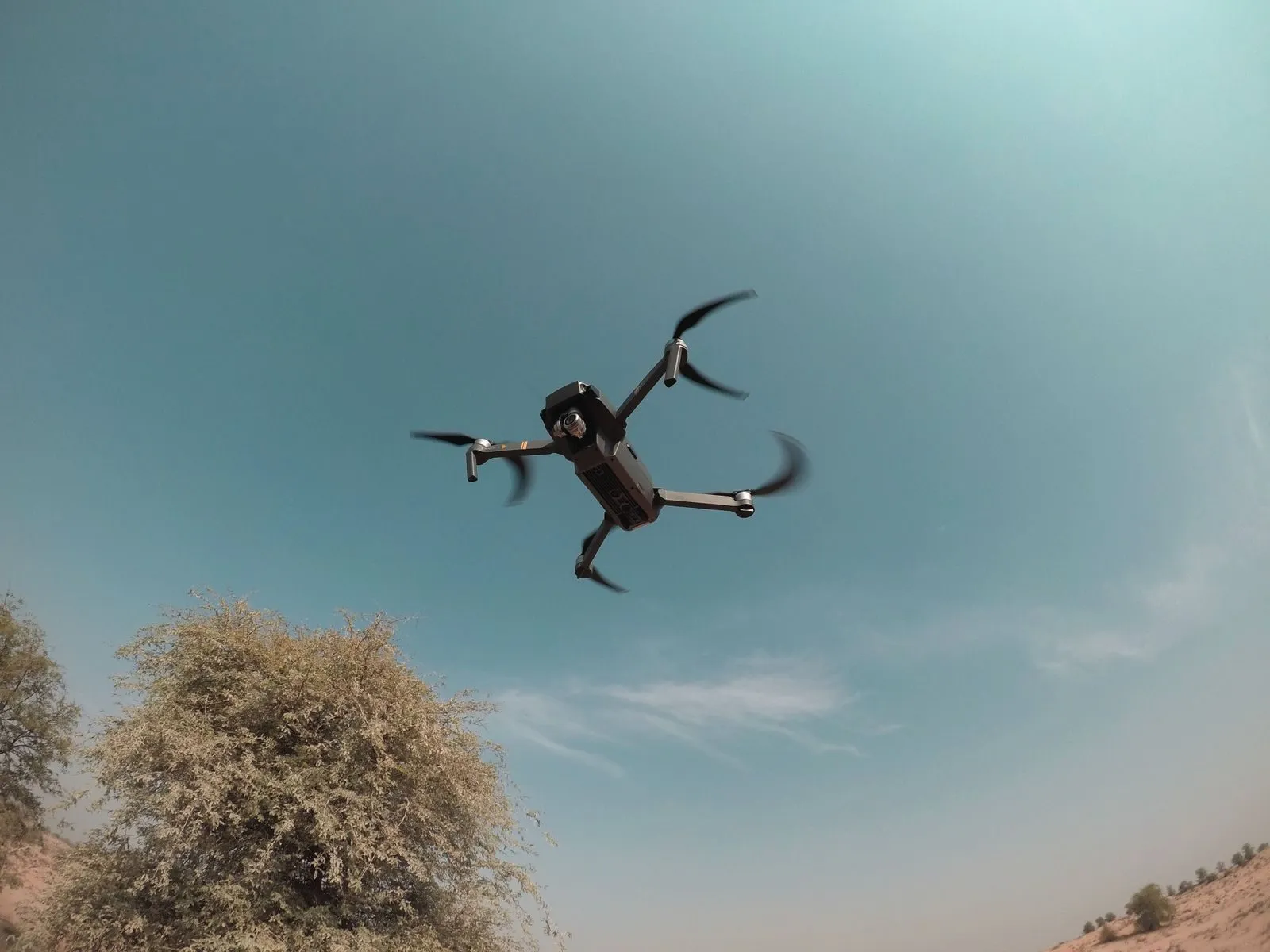
Picture an autonomous drone making a call during a bushfire that turns out to be wrong. It misreads a smoke column, or it directs ground crews into the dead man zone, or it simply fails at the moment it was relied on. The question that follows is deceptively simple. Who is responsible. Field trials of autonomous drones in firefighting, reported this month, found that the answer is genuinely unclear, with the deployments creating significant uncertainty in accountability attribution, unclear hierarchical roles, and novel human-drone interactions that the existing chain of command was never designed to absorb. The technology is arriving faster than the answer to that question is.
The capability on offer is not a modest one, which is exactly why the gap matters. A multi-agent early-warning system called MAESTRO matched expert typhoon alert levels in 98% of test scenarios and, in a replay of a real typhoon, would have moved roughly 180,000 residents to evacuate eight hours earlier than they actually did. Eight hours is the difference between an orderly departure and a highway full of stationary cars as the weather closes in. A separate distributed-robotics framework, ED3R, demonstrated up to 97% success in wildfire detection missions while holding down its energy use, and FireSwarm intends to test an autonomous firefighting system with wildfire agencies in Ontario and British Columbia during 2026. These are not laboratory curiosities. They are systems heading for operational deployment inside this fire season and the next.
The trouble is that the governance is maturing far more slowly than the hardware. When an autonomous system contributes to a bad outcome on a fireground, the lines of responsibility scatter. The incident controller was relying on the system’s output, the operator was monitoring rather than directing it, the developer wrote the model that made the call, and the agency procured the whole arrangement under a contract that almost certainly did not specify who owns a decision the machine makes on its own. Each of those parties can point to one of the others. Current command structures, built around human decisions with clear authority, do not yet have a defensible answer for a decision that no single human quite made.
This is where the most practical of the new research earns its place. A companion study drew on four field trials and 95 interviews to identify 44 distinct interaction patterns between emergency teams and drones, and formalised them into a modular framework its authors call DroneLets. The value is in the move it enables, from one-off pilots improvised by whichever crew happens to be trialling the technology, toward standardised and repeatable patterns of collaboration that an agency can train against and hold people to. Forty-four documented interaction patterns derived from real fireground trials is precisely the kind of evidence base that procurement standards for autonomous systems could be built on, rather than the vendor assurances that currently fill the gap.
That procurement point is where the abstract accountability problem becomes a concrete contracting one. If an agency cannot specify, in the contract, who is responsible when an autonomous system acts, it has bought a capability and outsourced the liability to chance. Writing accountability into the procurement is harder than buying the drone, because it requires the agency to understand the interaction patterns well enough to allocate responsibility across them in advance. The DroneLets work makes that possible for the first time, by giving the messy human-machine relationship a structure that a contract can actually reference. Without something like it, autonomous-system procurement is an exercise in hoping nothing goes wrong.
The deeper issue is one I have written about in the context of agentic AI more broadly, and it is the same issue wearing fireproof overalls. The only place to govern a system that acts on its own is before it acts, because once an autonomous drone has directed a crew or an early-warning system has issued a call, the consequence is already in motion and cannot be recalled the way a recommendation can be declined. Retrospective accountability, the Royal Commission convened after the failure, is the model emergency management knows best, and it is the model least suited to a technology whose entire value is acting at a speed and scale that outpaces human review. The accountability has to be designed into the deployment, not appended to the post-incident report.
Australia is not a spectator to this. Drone use in the January 2026 Victorian fires demonstrated both the genuine value of the technology and the limits of the current deployment model, where aircraft are flown under arrangements improvised for each incident rather than governed by a standing framework. The question of who answers for an autonomous system’s actions is therefore not a problem for some future fire season. It is a problem for the procurement decisions agencies are making now, while the technology is still novel enough that the governance can be built alongside it rather than retrofitted after an incident forces the issue.
It is worth being clear that none of this is an argument for slowing the technology down. Eight hours of additional evacuation warning saves lives, and an agency that refused the capability on accountability grounds would be making a different and worse error. The argument is about sequence, the same sequence that runs through everything I write about putting machine systems into public service. The capability and the governance have to be built together, because a capability deployed without the governance is a liability waiting for an incident, and governance designed without the capability in front of it is theory. The DroneLets framework is valuable precisely because it lets an agency do both at once, turning field experience into the structure that accountability and procurement both need.
The drones already work, and the early-warning systems already buy eight hours that save lives. What those systems lack is an answer to the first question any inquiry would ask after a serious failure: who decided, and who is answerable for it. On current trajectory, agencies are buying that capability now and will write the accountability later, once something has gone wrong badly enough to compel it. That is the usual order, and it is exactly the order that an autonomous system, once it can act without waiting for a human, no longer permits.
References
- Accountability in autonomous drone-based firefighting: Insights from a field trial [Preprint]. (2026). arXiv:2606.17831.
- From ad hoc pilots to repeatable patterns: Structuring drone collaboration in emergency services with DroneLets[Preprint]. (2026). arXiv:2606.17839.
- ED3R: Energy-aware distributed disaster detection enabled by cooperative robotic agents [Preprint]. (2026). arXiv:2606.17739.
- MAESTRO multi-agent AI early-warning system [Preprint]. (2026).
- FireSwarm autonomous firefighting trials, Ontario and British Columbia (2026).