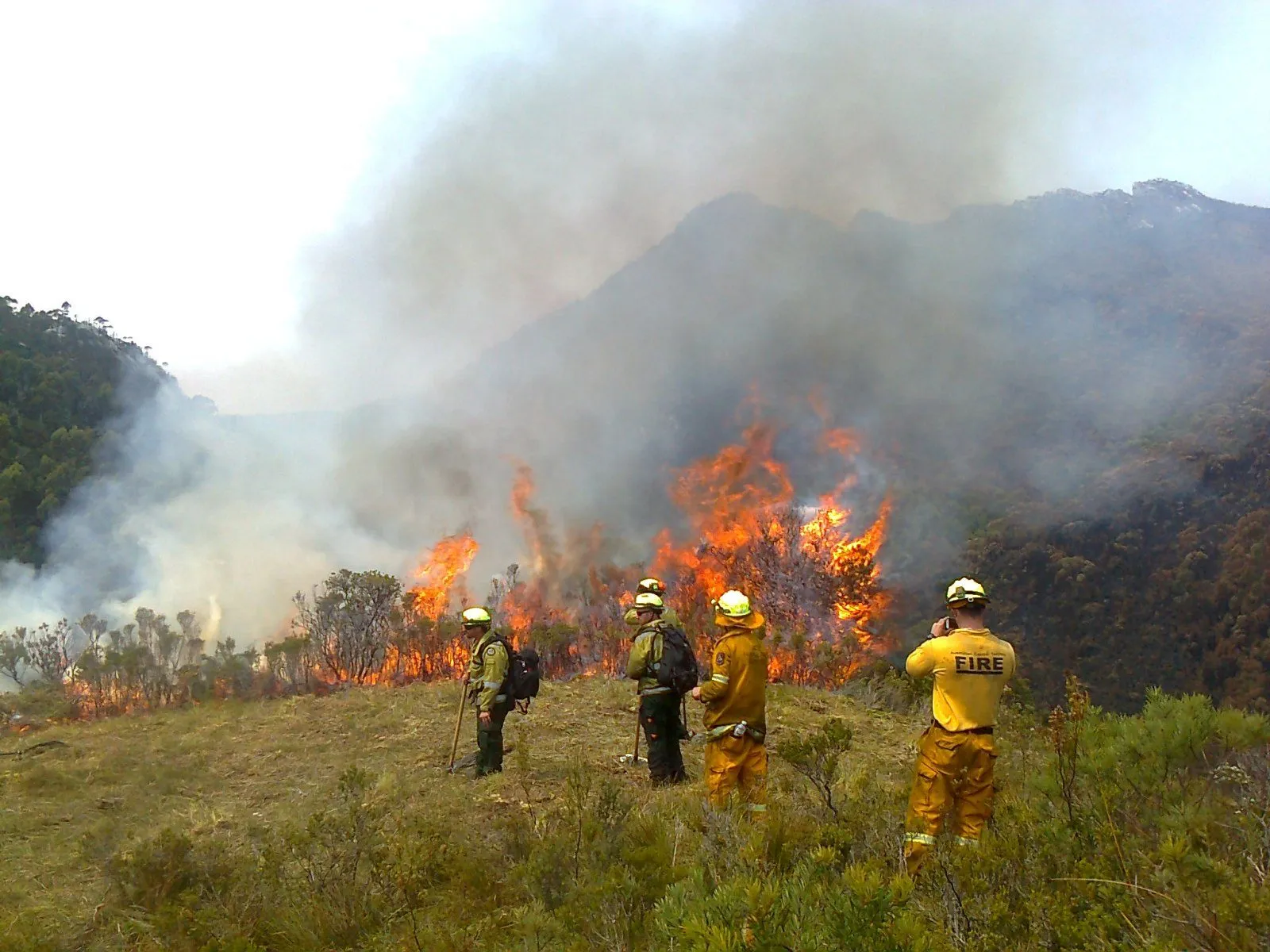
A study published this month put a number on something fire managers have suspected for years. Across the western United States between 2001 and 2024, 42% of all the forest that burned did so during or immediately after a heatwave, even though heatwaves made up only 12 to 15% of warm-season days. Nearly half the damage done over
a handful of days. The concentration is the finding, and it changes the shape of the problem from a diffuse, everywhere risk into something far more specific and, potentially, far more manageable.
The scale of the effect is as striking as its concentration. Forest burned area in the region increased two and a half times over the period, and roughly 64% of that increase coincided with heatwaves. The frequency of dry heatwaves, the kind that matter most for fire, rose fivefold. The mechanism behind the link is compound rather than singular, because a heatwave does several things to a forest at once. It dries the fuels down toward ignition-ready moisture levels, it tends to co-occur with the lightning that starts fires, and it produces the atmospheric conditions that let a fire run once it is alight. The heat is not just one risk factor among many. It is the condition that switches several other risk factors on together.
The most operationally useful part of the study is a distinction it draws carefully. The heatwave-fire relationship holds in forests, but it does not hold in grasslands and shrublands, where the availability of fuel matters more than the temperature. That specificity is a gift to anyone planning a fire season, because it tells you not only which days carry the most risk but which landscapes those days act on most powerfully. A heatwave forecast means something different for a forested catchment than it does for grassland, and a resourcing model that treats the two the same is leaving information on the table.
Australia did not need the study to recognise the pattern, because it lived the pattern in January. Victoria’s bushfire crisis at the start of 2026 was the dynamic the paper describes, made local and severe. A heatwave there pushed temperatures past 40 degrees for consecutive days while soil moisture fell to critical levels and wind gusts reached around 100 kilometres an hour, producing the most dangerous fire weather the state had seen since Black Summer. That heatwave destroyed more than 300 structures and burned more than 300,000 hectares. The compound mechanism the researchers measured across two decades of western US data expressed itself in a single Australian fortnight, which is roughly how climate risk announces itself: as an average until it is suddenly an event.
If heat is the dominant driver in forests, the obvious question is whether the systems that allocate suppression effort weight heatwave forecasts heavily enough. Fire danger rating tools blend many variables, and the new evidence suggests that for forested country the heatwave signal deserves more prominence in how resources are pre-positioned ahead of a forecast hot spell. Pre-positioning is where the science becomes operational. Knowing that a defined and forecastable set of days drives nearly half the forest loss is only useful if crews and aircraft are concentrated against those days rather than spread evenly across a season that is no longer evenly dangerous.
The risk is also compounding from a second direction that the heatwave study does not cover but that sits next to it. Separate ecohydrological modelling found that increasing forest density following rural land abandonment reduces streamflow and raises both drought and fire risk, as denser, thirstier vegetation accumulates on the landscape. Put that beside rising heatwave frequency and the two trends multiply rather than add. More fuel, arranged more continuously, set against heat that arrives more often and burns hotter, is a worse combination than either trend produces alone, and it is the combination much of the forested temperate world is now moving toward.
The same problem shows up here, where the fire science gets settled well ahead of the resourcing question it implies. The attribution work is increasingly clear that climate is driving the trend, and now the mechanism work is clear that heat is the proximate lever in forests. Clarity of that kind raises a sharp accountability question that the Bushfire and Natural Hazards CRC research on shared responsibility tries to answer: when the science is this unambiguous but the hazard-reduction work is not keeping pace, who is actually accountable for the gap. Prescribed burning, which I have argued works on the operational evidence, is one of the few levers that acts on the fuel side of the compound, and the case for doing more of it before the season strengthens every time a study like this narrows the mechanism further.
There is a more constructive way to read all of this than the usual fatalism about a warming climate. The study has taken a sprawling, hard-to-plan-for hazard and tied a large share of it to a specific and forecastable trigger. That is the opposite of hopeless. A risk that announces itself a few days in advance, in identifiable landscapes, is a risk you can actually organise against, provided the planning and resourcing are built to respond to the forecast rather than to the long-run average. In narrowing the problem to that forecast, the science has already done the hard part.
A handful of hot days now drive close to half the forest that burns. That fact should frighten anyone responsible for a fire season and, at the same time, should focus them, because it tells them precisely which days to fear and which country to watch. The science has narrowed the threat to something close to addressable. The open question is the familiar one: whether the resourcing narrows with it, or whether we keep spreading suppression evenly across a risk that has stopped being evenly spread.
References
- Heatwaves enable wildfire activity in the western United States. (2026). Science Advances. https://doi.org/10.1126/sciadv.aea1277 (University of California, Merced)
- MEDFATELAND ecohydrological modelling of forest density after land abandonment [Preprint]. (2026, June).
- Bushfire and Natural Hazards CRC. (2026). Shared responsibility in bushfire risk management.
- Country Fire Authority (Victoria). (2026). 2025-26 bushfire season records.