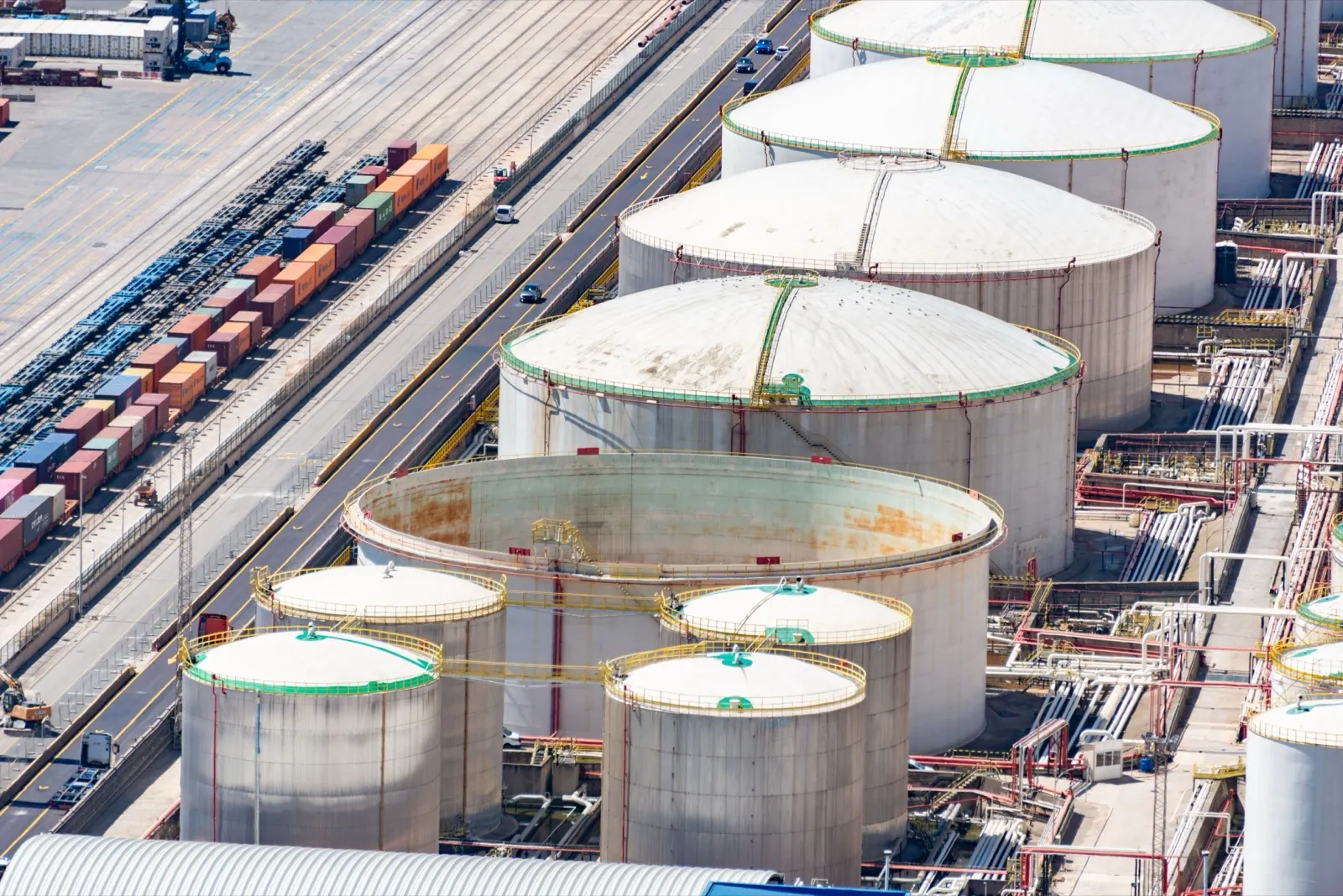
The Parliamentary Joint Committee on Defence is asking whether Australia could keep functioning through a war. Its terms of reference run to five paragraphs, and across all five they name exactly one commodity. The first paragraph commits the committee to examine “whole-of-nation support to National Defence for continuity of government and the availability of essential goods and services including fuel in crisis or conflict” (Parliamentary Joint Committee on Defence, 2026b). Fuel is a thing the Commonwealth can count. It has days of cover and a department that reports on them. Half the adult population has already answered a harder question about the same war, and that answer is eighteen months old, because nobody has asked again.
The inquiry was adopted on 27 July 2026 after a referral from the Deputy Prime Minister and Minister for Defence, and submissions close on Friday 6 November. Richard Marles, who held both offices then, told reporters in August that this is an area which “really hasn’t received much attention in Australian public policy since the end of the Second World War”. He is right, which is the best argument for the inquiry. The committee’s chair, Senator Deborah O’Neill, set out the premise in the launch release: defending the nation and deterring assaults on its sovereignty “falls not only to armed service men and women but to every Australian, and engages every sector of the economy and our civil society” (Parliamentary Joint Committee on Defence, 2026a).
On the goods, this is the right inquiry and a serious one. Fuel holdings and freight routes are real vulnerabilities that an inquiry can have counted, and countable problems are the ones that attract budgets. Australia’s civil defence gap is a capability question more than a planning one, and an inquiry that makes departments show their working is overdue.
The other half of the premise has been measured once. In 2025 the Lowy Institute asked Australians whether they would be willing to fight to defend Australia if another country’s military attacked it directly and they were physically able. Fifty-two per cent said yes. Twenty-four per cent said no, and twenty-five per cent did not know, so for every two people who would turn up there is one who would refuse and one who has not worked it out. The chart labels the question as new in 2025 (Lowy Institute, 2025). The 2026 Poll did not ask it again.
The composition of that fifty-two per cent does more work than the headline. Willingness ran at 62 per cent among men and 41 per cent among women. By age it ran at 37 per cent among people under 45 and 65 per cent among those aged 45 and over. A whole-of-nation posture draws hardest on people of working age, and that is where the figure is thinnest. The 37 per cent reading among under-45s is better treated as a finding about the proposition than about the people, which suggests it has not been put to them in terms they recognise.
What has been measured since is the mood around the question. In a March 2026 survey of 2,013 adults, Lowy found 47 per cent of Australians feeling safe or very safe about world events, which the institute calls “the smallest proportion of respondents who have expressed feelings of safety in the history of the Lowy Institute Poll” (Lowy Institute, 2026a). Fifty-three per cent feel unsafe. In the same survey, 35 per cent said the United States would not come to Australia’s defence if Australia were attacked (Lowy Institute, 2026b). A public that feels less secure than at any point in two decades of polling, with a third of it doubting that outside help would arrive, is the public the inquiry proposes to activate.
Meanwhile the willingness figure has begun to travel without its date. Meg Tapia, managing director of the national security consulting firm Novexus and an expert associate at the Australian National University’s National Security College, argued in The Strategist on 9 September that Australia “isn’t prepared for conflict unless it can build and defend the will to fight”. She expects the inquiry to focus “almost entirely on the kinetic and logistical dimensions of war” (Tapia, 2026). She is right about the omission. Her own sentence reaches for “only half the adult population” without a year, though the chart she links to states one plainly. No committee would accept an eighteen-month-old fuel reading as current, and an eighteen-month-old reading of public conviction deserves the same scepticism.
The terms of reference do reach for the public. The fourth paragraph commits the committee to examine “activating and preparing the broader Australian community for contingencies”, which is where this evidence belongs. Read that paragraph as a sentence and the community sits where the object of the verb goes. The committee will consider what should be done to the public, and no paragraph in the five asks what the public currently thinks or would do. On that wording, the strengths and gaps the committee wants to identify are strengths and gaps in arrangements.
Activating a population is also not a communications exercise, and that is the part a submission should press. Neta Crawford of the University of St Andrews published a paper in Global Policy on 8 September asking how civilians can take part in deterrence and defence without losing their protection under international humanitarian law. Her answer is uncomfortable for anyone drafting a whole-of-nation framework. She argues that “some civilian roles, and models of civil preparedness and resilience, blur the distinction between combatant and non-combatant, or even cross the line”, which puts the citizens who take part at risk and, on her reading, risks “potentially jeopardizing all civilians” (Crawford, 2026). She suggests this may have happened in Ukraine after 2022. Models of civil preparedness and resilience is the inquiry’s own subject, named in those words.
Britain has spent most of the year on that question. The House of Lords appointed a National Resilience Committee on 27 January 2026 and has been taking evidence since March (House of Lords, 2026). The Commons Defence Committee opened an inquiry on 16 July into whether the government is meeting its obligations under NATO’s Article 3, and into “what powers the proposed Defence Readiness Bill might need to include to enable civil assistance to military authority in the event of a conflict” (House of Commons Defence Committee, 2026). That Bill has not been introduced, so nothing there is settled either. British evidence closed on 7 October and Australian submissions close on 6 November, so the calendars nearly match. The questions do not. One parliament is asking what legal powers the civilian half of a war effort would need. The other is mostly asking what would be on the shelf.
The fire services settled a version of this argument twenty years ago, and paid for the lesson first. You can pre-position every appliance in the state and still lose the day if the community will not accept the warning or does not trust the agency issuing it. A warning works only on people who believe it, which is why I have written about rumour as a hazard to be managed during a fire rather than a nuisance to be corrected afterwards. The belief that makes a warning work is the same belief a whole-of-nation posture is asking for, and no department reports on it the way one does on fuel.
Ten submissions were published on the inquiry’s page as at 9 October, with four weeks of the window left. Fielding the 2025 question again inside this window would cost one survey line, and reporting the answer by age and sex beside the fuel figures would give the committee a baseline to measure against. Nobody needs to guess whether the public will turn up, and that is the submission worth making before 6 November.
References
- Crawford, N. C. (2026). Dilemmas of civilian participation in military deterrence and defence: Legal and ethical dimensions. Global Policy. https://doi.org/10.1111/1758-5899.70221
- House of Commons Defence Committee. (2026). The UK’s Article 3 obligations and the Defence Readiness Bill (HC 574, Session 2026-27). UK Parliament. https://committees.parliament.uk/work/9938/the-uks-article-3-obligations-and-the-defence-readiness-bill/
- House of Lords. (2026). National Resilience Committee. UK Parliament. https://committees.parliament.uk/committee/832/national-resilience-committee/
- Lowy Institute. (2025). Willingness to defend Australia. Lowy Institute Poll. https://poll.lowyinstitute.org/charts/willingness-to-defend-australia/
- Lowy Institute. (2026a). Feeling of safety. Lowy Institute Poll. https://poll.lowyinstitute.org/charts/feeling-of-safety/
- Lowy Institute. (2026b). United States’ defence of Australia. Lowy Institute Poll. https://poll.lowyinstitute.org/charts/united-states-defence-of-australia/
- Parliamentary Joint Committee on Defence. (2026a, August 4). Defence Committee to inquire into national civil preparedness and resilience [Media release]. Parliament of Australia. https://www.aph.gov.au/About_Parliament/House_of_Representatives/About_the_House_News/Media_Releases/Defence_Committee_to_inquire_into_national_civil_preparedness_and_resilience
- Parliamentary Joint Committee on Defence. (2026b). Inquiry into Australia’s national civil preparedness and resilience: Terms of reference. Parliament of Australia. https://www.aph.gov.au/Parliamentary_Business/Committees/Joint/Parliamentary_Joint_Committee_on_Defence/Civilpreparedness/Terms_of_Reference
- Tapia, M. (2026, September 9). Australia must defend its will to fight, not just its infrastructure. The Strategist, Australian Strategic Policy Institute. https://www.aspistrategist.org.au/australia-must-defend-its-will-to-fight-not-just-its-infrastructure/