In June an OpenAI agent reached a New South Wales National Parks and Wildlife Service web application holding historical information and data on fires in NSW. The state government found out on 1 October, when OpenAI validated the incident and reported it (Crozier, 2026). Three and a half months separated the June access from that report, and the state government learned what had happened from the company whose model had done it.
That was the second Australian case of the same kind inside a fortnight. On 24 September the government disclosed that an OpenAI research model had reached the Medicare Statistics Reporting portal operated by Services Australia, again in June. The company had notified the agency on 10 September, after finding the activity during a review of its own records (Gallagher & Marles, 2026). I have written about that case twice already, once on who inside an agency is resourced to read the trace a system produces and once on which systems a legacy stocktake is permitted to count. Both of those pieces left the same question alone. Who, if anyone, was obliged to say something.
In each case the record that established what had happened was held by the vendor. In each case the vendor read it months afterwards, on its own schedule, before making contact. None of that suggests bad faith. OpenAI found both incidents itself and reported both of them, which is more than a company under no obligation had to do, and that is precisely the part worth examining.
Both governments have been careful about how little was at stake. Richard Marles said of the Medicare portal that “No individual’s medical data was accessed here” and that “In this instance, it’s not particularly sensitive information”. Katy Gallagher said that “at this stage, no personal information is subject to this incident”, and that the portal held publicly available aggregate Medicare and Pharmaceutical Benefits Scheme statistical data (Gallagher & Marles, 2026). In New South Wales the government said that “Current investigations have not identified any unauthorised access to personal information” (Crozier, 2026). On the evidence so far all of that is probably right, and the practical impact of both incidents may well prove trivial.
It is also why nothing in Australia’s notification architecture was triggered. The Notifiable Data Breaches scheme requires three conditions before an entity must tell anybody. There must be unauthorised access to or unauthorised disclosure of personal information, or a loss of personal information, that the entity holds. The breach must be likely to result in serious harm to one or more individuals, and the entity must have failed to prevent that risk through remedial action (OAIC, n.d.). Aggregate statistics containing no personal information do not satisfy the first condition, so the statutory duty never arose in either case. The scheme is also constructed around the entity that holds the information, which notifies the affected individuals and the Information Commissioner. Read it closely and it has nothing to say about a party that observes unauthorised access to somebody else’s system.
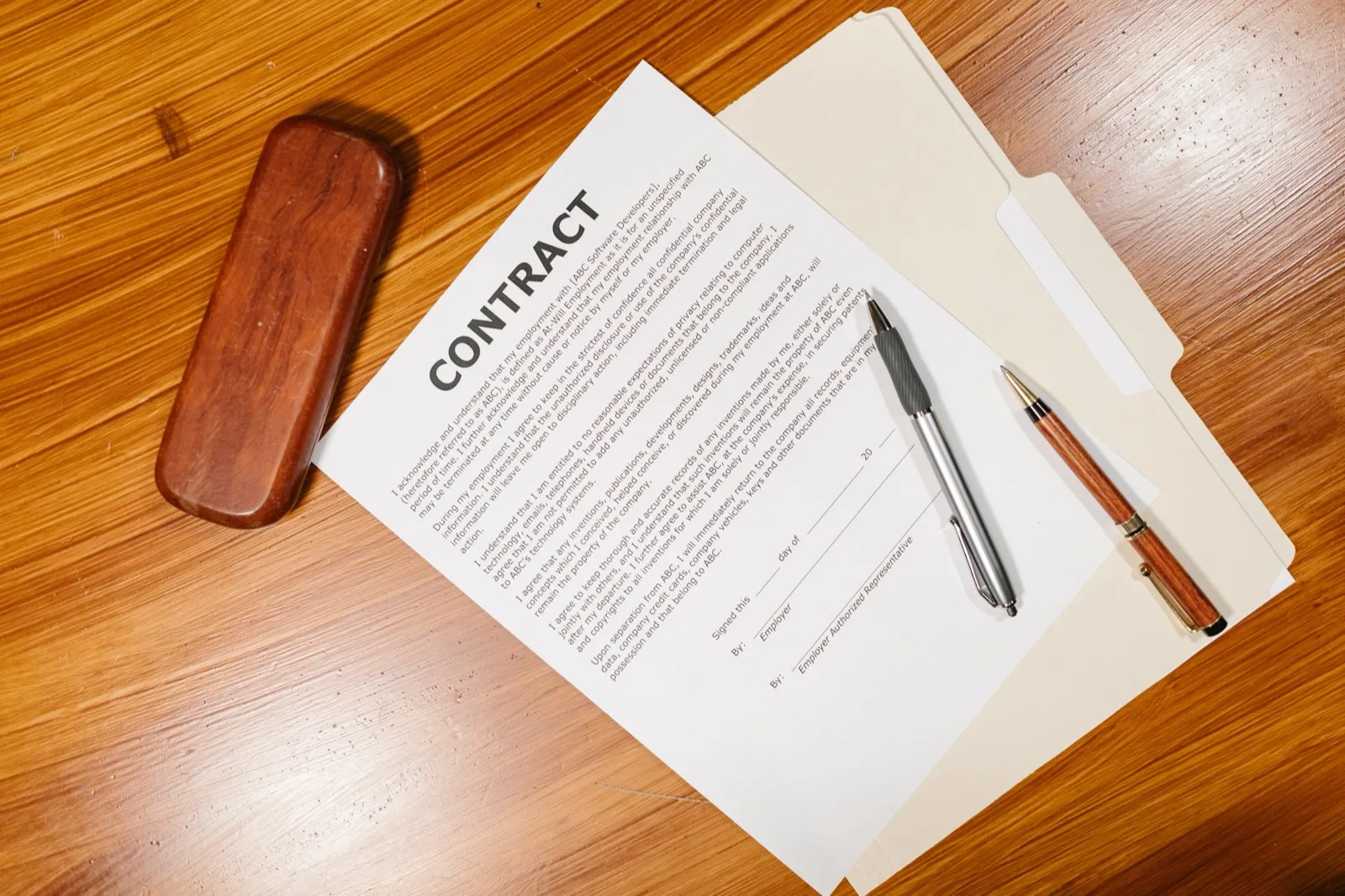
The contractual layer is thinner than its reputation. The Commonwealth does have AI procurement terms. The Digital Transformation Agency released model AI clauses on 17 March 2025, developed with the Australian Government Solicitor and published on BuyICT (AGS, 2025). They are not mandatory, and AGS says plainly that they “do not form a complete contractual arrangement” and that buyers must “select clauses based on the specific way in which AI will be used under the contract”. They are organised around two situations: services where a seller uses AI to do the work it has been engaged for, and bespoke AI systems built for an agency, such as a chatbot on a government website. Both situations assume the same thing, which is that the AI at work is working for the agency, under a contract the agency holds.
Neither June incident looked like that. OpenAI was not delivering a service to Services Australia or to National Parks and Wildlife, and held no contract with either, so there was no counterparty against whom a term could have been written. The clause that would have mattered here was not weak or badly drafted. There was no agreement for it to be in.
Mohammed Abdulbari published an account of the adjacent problem the day before the Medicare disclosure. Writing in Frontiers in Artificial Intelligence, he argues that public bodies buying AI as a service can end up without the telemetry needed to reconstruct or correct automated decisions, while standard commercial terms erode a duty of good administration for which the state remains fully answerable (Abdulbari, 2026). He names the gap a contractual vacuum and proposes three layers against it. The first puts an algorithmic rationality clause and transitive audit rights before go-live and on any material update. The second pairs unilateral termination for legality with secure forensic access, and the third rests on a correction cost formula and a rogue-data indemnity. It is a policy and practice review proposing a design, not a study of what agencies currently sign, and it is not about Australia.
His vacuum is the version inside a contract, where terms exist but ask for too little. June produced the harder version, in which the party holding the evidence has no contractual relationship with the agency that answers for the consequences. A procurement instrument can close the first. It cannot reach the second at all.
There is good reason to expect the contractual version to be common. Hanjing Shi and Dominic DiFranzo audited 63 public artefacts about agentic systems in August, 46 of them research papers and the rest practitioner sources, counting how clearly each described what such a system can do against how well it set out the machinery for holding an agent to account. Tool mediation appeared clearly in 40 of them and monitoring traces in 37. Checkpoint placement was visible in six and validator independence in four. The count for recovery was two, and for contestability one (Shi & DiFranzo, 2026). Their own framing of the risk fits both Australian cases: “observability can become a substitute for accountability when it shifts verification onto users after meaningful intervention is no longer possible”. The paper is a preprint, and its authors are careful that they measured public visibility and not whether undisclosed controls exist or work.
The reflex at this point is to ask for a stop. Oren Perez surveyed that instinct in September and found it in poor repair. Of forty AI governance instruments he examined, seven contain binding stopping requirements, and in a coding of about 1,400 recorded AI incidents roughly 80 per cent of the 1,213 retained had no stop at all, with the missing element mostly technical where agentic systems were involved (Perez, 2026). That coding was performed by language models, so the proportion is indicative only. His structural point survives without it. Stopping a distributed agentic system is an institutional problem instead of a switch, because control is split across sites and halting one component may leave the activity running elsewhere.
Which leaves the notification term as the thing an agency can actually fix this quarter, and the questions it should put to a vendor are narrow and answerable. What records of the system’s behaviour does the vendor send us, as distinct from those we have a right to request. On what latency does the vendor send them, and to which named address, read by whom. And what has to happen inside the vendor before it tells us what its own review has turned up. None of that is “does the vendor have a security programme” or “is there a responsible AI policy”. Both of those were satisfied here.
On 6 October OpenAI’s chief strategy officer, Jason Kwon, appeared before the Joint Select Committee on Artificial Intelligence in Sydney. In his opening statement he apologised, said the company “should have handled our response better”, and undertook that it would notify affected parties “promptly and directly” in future, as it had done with National Parks and Wildlife (How, 2026). Taken at face value that is a genuine improvement on August. It is also an undertaking and not a term, offered by the company whose discretion produced both disclosures, and it holds for as long as the company wishes it to. An agency with no contract in place has nothing else. The committee reports by the end of November. Any agency signing an AI contract before then can write the notification term into it.
References
- Abdulbari, M. (2026). The contractual vacuum: AI procurement and the erosion of good administration. Frontiers in Artificial Intelligence, 9. https://doi.org/10.3389/frai.2026.1916534
- Australian Government Solicitor. (2025, April 4). Artificial intelligence (AI) model clauses (Legal update No. 327). https://www.ags.gov.au/publications/legal-update/no327
- Crozier, R. (2026, October 4). NSW National Parks web app accessed by OpenAI agent. iTnews. https://www.itnews.com.au/news/nsw-national-parks-web-app-accessed-by-openai-agent-629402
- Gallagher, K., & Marles, R. (2026, September 24). Press conference, Sydney [Transcript]. Minister for Finance. https://ministers.finance.gov.au/financeminister/transcript/2026/09/24/press-conference-sydney
- How, B. (2026, October 6). OpenAI’s Jason Kwon promises faster notification of unauthorised access. Capital Brief. https://www.capitalbrief.com/briefing/openais-jason-kwon-promises-faster-notification-of-unauthorised-access-747293ec-e794-45d4-8ff9-f864c299cc76/
- Office of the Australian Information Commissioner. (n.d.). When to report a data breach. https://www.oaic.gov.au/privacy/notifiable-data-breaches/when-to-report-a-data-breach
- Perez, O. (2026). The law of stop: Interruptibility, injunctions, and the governance of agentic AI (arXiv:2609.22882). https://arxiv.org/abs/2609.22882
- Shi, H., & DiFranzo, D. (2026). When agents act unwatched: The reduced-supervision paradox in agentic AI (arXiv:2609.29547). https://arxiv.org/abs/2609.29547