A ten-second siren went off on phones across Australia at two in the afternoon on 27 July. It was the first national test of AusAlert, the cell-broadcast emergency warning system that became available to emergency services from 1 October, and by the government’s account it went well. The Emergency Management Minister, Kristy McBain, said afterwards that the message had reached “nearly 94 per cent of towers across the country”, above the 90 per cent benchmark the agency had set, with the rest offline for maintenance or otherwise unusable. Nobody could say how many phones received the broadcast, in July or at any point since. For people who heard nothing, the National Emergency Management Agency’s deputy coordinator-general, Katarina Carroll, offered one remedy: “hop on ausalert.gov.au there will be a survey there to fill it out.”
The gap between what was measured and what anybody wanted to know is a property of the technology, and it has arrived mid-season, in a country that has chosen to run two warning systems concurrently and let each jurisdiction decide which to use.
AusAlert deserves the good press it got, and the engineering case for the broadcast design is strong. Cell broadcast pushes a message from the tower to every compatible device nearby, needing neither a phone number nor an app, and the programme’s guidance notes that a device needs no working SIM card (National Emergency Management Agency, 2026b). McBain’s case was that it depends on no single telco, and the agency describes the design as carrier-agnostic (National Emergency Management Agency, 2026d). That is true, and it is worth having.
Emergency Alert keeps running through the high-risk weather season, partly because it reaches landlines and AusAlert does not (ABC News, 2026, July 22). McBain put landline use at about 12 per cent of Australians, with 2 per cent depending on them. Phones connected by satellite instead of a tower receive nothing. States and territories may keep their own arrangements going alongside. The decision to issue any warning rests with whichever agency is running the emergency: “that will be a decision for emergency service agencies who are in control of whatever that disaster may be at the time.”
What that freedom has produced is a map nobody outside the agencies can read. The ACT confirmed in July that it would move across on 1 October while keeping its existing service in parallel. Queensland went the other way, having sat out the national test. Hours after it, the state’s Fire and Disaster Recovery Minister, Ann Leahy, said Queensland would keep using its own text-message alerts for this bushfire season. She was careful, saying she was “not opposed to having the AusAlert system” but that it “needs to be comparable to the existing system that we have”, with the landline gap as her specific objection and the timing “a matter for negotiation”. Every other jurisdiction the ABC approached in July declined to say either way. Western Australia and South Australia were assessing how it would fit their established channels. Tasmania reported “some concerns around its functionality”, and Victoria called it a powerful tool while advising residents against relying on any single source. Since the switch-on, no public statement I can find establishes which of them actually moved.
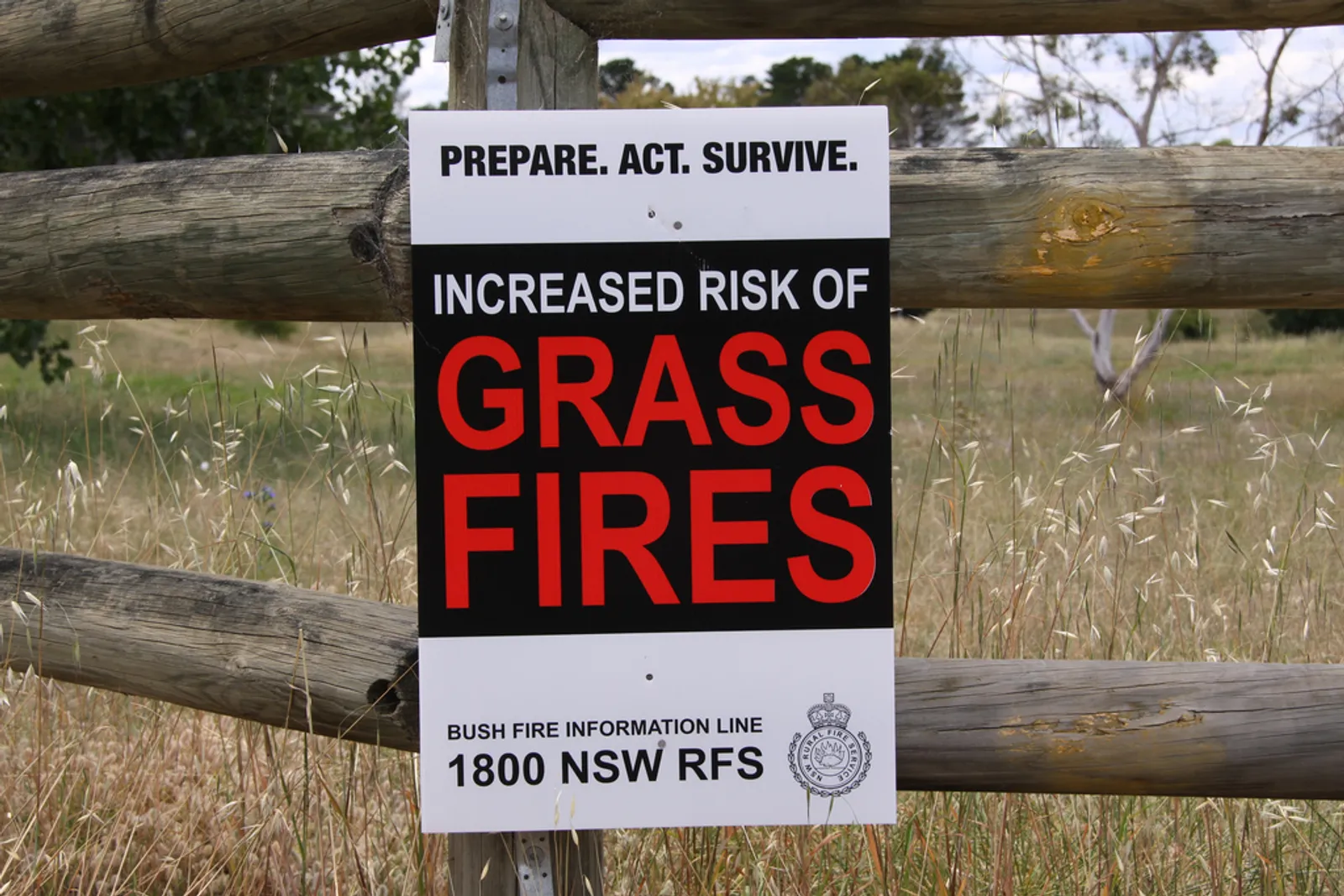
Set that beside the season. The Spring outlook from the Australasian Fire and Emergency Service Authorities Council, published on 19 August, put a heightened risk of fire over regions including northern New South Wales and south-east Queensland (AFAC, 2026). Queensland, the one jurisdiction to have publicly chosen to stay where it is, therefore sits on that map. Running both systems through the season is the defensible decision, and I would have made it too: a hard cutover on a fixed date, in a season flagged worse than normal, on a technology that cannot reach a landline, would be careless.
For the person holding the phone, the operative question is which message counts. A warning works when somebody recognises it as authoritative and acts on it, and recognition is built by repetition over years, from a sender and an alarm that do not change. The AusAlert changeover alters the mechanism and the siren, during a season when fire pays no regard to a state border. In some places it alters the sender too. Should New South Wales have moved while Queensland has not, a fire running across their shared boundary would be warned about by one mechanism on one side and a different one on the other. No household has been told which applies to it, because no part of the arrangement obliges anyone to say.
Then there is the narrower question of who can receive it. The published compatibility list runs to iPhone 11 and newer on iOS 26.4 or later, and Android devices running version 12 or above. Apple iPads will not receive AusAlerts. Older Android handsets and phones using neither operating system “might” receive them, which grants permission to hope without promising anything. Before the test, Carroll relayed the manufacturer’s advice to the agency: “we know from Apple devices, 80% will receive this based on the devices running iOS 26.4 and above.” On the manufacturer’s own estimate, then, one Apple device in five falls outside the specification. Her Android number was about 15 million handsets “able to support AusAlert”, a count of capability rather than of anything delivered.
Language marks the other boundary. The alert goes out in English, at least to begin with. NEMA has translated the explanatory material about AusAlert into 20 languages including Auslan. That is worth doing, and it is a different thing altogether: the translation tells you what the system is, while the message that wakes you at three in the morning will be in English. Anuradha Madugalla of Deakin University observed in July that more than one in five Australians speak a language other than English at home, and that people with disability are up to four times more likely to die in a disaster than those without (Madugalla, 2026). The agency’s own account of its assistive-technology testing says the results were “varied”.
All of which gives that 94 per cent its proper weight: an accurate number about towers, which cannot be converted into a number about people. A text message leaves a record: dispatched, delivered, to how many handsets, in which area. Cell broadcast produces no equivalent record, because it never addresses a particular device in the first place. The broadcast’s speed and its blindness come out of the same design choice, and no amount of programme management will separate them.
So the evidence about this season’s warnings will be whatever people volunteer. Reviews will rest on surveys and complaints. Both instruments register who noticed and who was annoyed enough to say so, and both under-count precisely the households least equipped to receive a message. Australian warning research already has a long literature on what people intend to do and very little on what reached them. I have written separately about the gap between understanding a warning and acting on it, and this is the layer underneath, where what matters is whether anything arrived. I have also argued that alerting and sustained broadcasting are separate capabilities that were funded as though they were one.
The transition is, in research terms, a comparison that will not come round again: two systems in one season, with jurisdictions choosing differently. Measuring it needs no new technology. Door-knocking a warned area within a week, with the sample drawn from the zone instead of from volunteers, would produce the receipt estimate the broadcast cannot generate for itself. A system unable to report whether it reached anybody can be audited from the other end, by asking the people who live there. Someone has to commission that while the season is running, because afterwards there will be nothing to ask about.
References
- ABC News. (2026, July 22). States can choose to run own emergency warning systems when AusAlert goes live. https://www.abc.net.au/news/2026-07-22/emergency-warning-system-in-doubt-as-states-raise-concerns/106942870
- ABC News. (2026, July 27). AusAlert test a “success” as millions of devices nationwide receive alert siren. https://www.abc.net.au/news/2026-07-27/ausalert-test-a-success-declares-minister/106963350
- Australasian Fire and Emergency Service Authorities Council. (2026, August 19). Seasonal bushfire outlook spring 2026. https://www.afac.com.au/public-resources/seasonal-bushfire-outlook-spring-2026
- Braue, D. (2026, July 28). The AusAlert test worked, but not for everybody. Information Age. https://ia.acs.org.au/article/2026/the-ausalert-test-worked—but-not-for-everybody.html
- Government News. (2026, September 28). AusAlert. https://www.governmentnews.com.au/ausalert/
- Madugalla, A. (2026, July 21). AusAlert will deliver emergency warnings to all, but they must actually be accessible. The Conversation. https://theconversation.com/ausalert-will-deliver-emergency-warnings-to-all-but-they-must-actually-be-accessible-285589
- National Emergency Management Agency. (2026a). AusAlert launch. https://www.ausalert.gov.au/alerts-explained/ausalert-launch
- National Emergency Management Agency. (2026b). Compatible mobile devices. https://www.ausalert.gov.au/receiving-alert/compatible-mobile-devices
- National Emergency Management Agency. (2026c). Transcript: ABC Cairns interview with Deputy Coordinator-General Katarina Carroll. https://www.nema.gov.au/about-us/media-centre/transcript-abc-cairns-interview-deputy-coordinator-general-katarina-carroll
- National Emergency Management Agency. (2026d). Understanding AusAlert and the national test. https://www.nema.gov.au/about-us/media-centre/understanding-ausalert-and-national-test
- National Emergency Management Agency. (2026e, August 19). Spring to bring heightened bushfire risk. https://www.nema.gov.au/about-us/media-centre/spring-bring-heightened-bushfire-risk