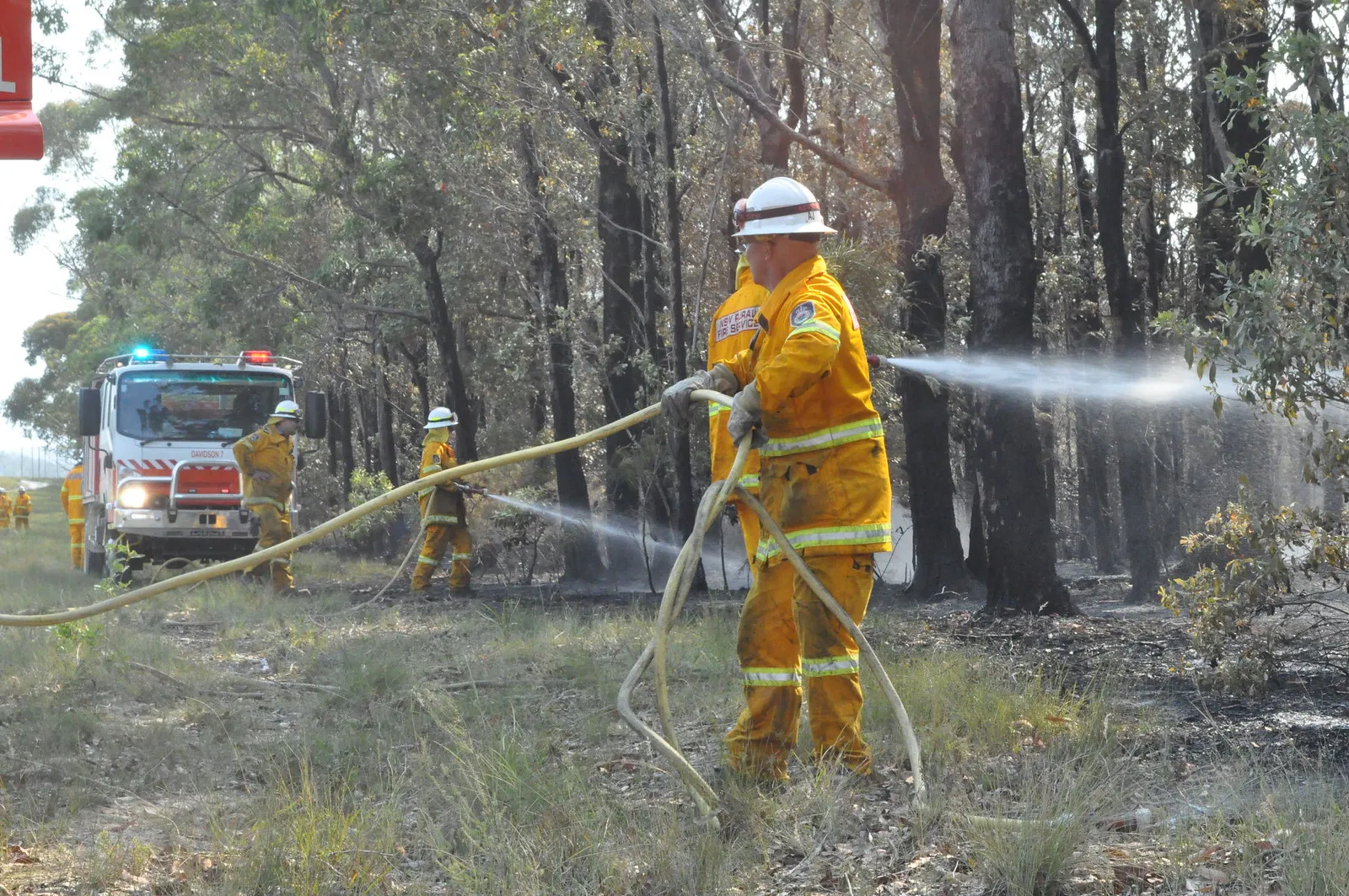
On 2 October the Fire Safety Research Institute published 724 pages on the January 2025 fires in southern California, carrying 175 findings and 266 recommendations. Its own account of what it found is that the outcomes were “shaped by the interaction of multiple interlinked systems rather than any single factor or failure” (Alkonis et al., 2026). Those two statements sit badly together, which matters here because Australia has run the same exercise and cannot tell you how it finished.
The work itself is serious. California’s Governor commissioned it. A timeline report came first to establish what happened and when, and this second phase went after the conditions and decisions behind the loss, using a systems method informed by the institute’s own analysis of the 2023 Lahaina fire. The evidence base runs from technical discussions with responders and resident surveys to site inspections and geospatial analysis; dispatch logs and radio traffic sit behind it. The report is also fair to the jurisdictions it examines. California had the programs you would expect in place before January 2025: defensible space inspections and fuel reduction; community preparedness and evacuation systems; mutual aid agreements and extensive suppression resources. The Palisades and Eaton fires exceeded many of the assumptions underneath them.
Which is where the 266 becomes its own difficulty. A numbered list exists to break a problem into parts small enough to give to someone, each with an owner, a budget, a test for being finished. The report’s central finding is that the pieces were largely present and their interaction shaped the outcome, so no single entry on a list of 266 can be the remedy for a combination. The risk is that every item on the list gets closed while the seam between the programs stays where it was. This is the response-side cousin of an argument I have made before about better coordination of arrangements designed for bounded emergencies, which improves a structure without redesigning it.
Australia’s version of this exercise is six years older and worse accounted for. The Royal Commission into National Natural Disaster Arrangements reported in October 2020 with 80 recommendations divided between Commonwealth and state or territory responsibility (National Emergency Management Agency, 2026). On 14 December 2023 the then minister, Murray Watt, announced that all 15 recommendations directed solely to the Australian Government were complete. Subtract those and 65 remain, most of them involving the states and territories.
The most recent public answer on the 65 that I can find is an interim national report NEMA published in October 2023. It is a substantial document and it does a genuinely useful thing: every recommendation inside its scope gets a written status against four defined categories, from completed through to begun but dependent on other work. Two things about it matter here. Its scope covers recommendations aimed at the Commonwealth alone and those it shares with the states and territories, so anything directed solely to a single state sits outside it. And it publishes no total. I counted the status entries myself, because nobody else has: 58 of them, of which 13 are marked complete, 11 approaching completion, 33 underway, one waiting on other activities (National Emergency Management Agency, 2023). NEMA’s own page says a final report on the steps taken to implement the recommendations is anticipated to be published in 2026. In the third week of October I could not find it published.
The supply of recommendations, meanwhile, has not slowed. On 28 July this year the Victorian Legislative Council’s Environment and Planning Committee tabled its report on the 2026 summer fires. It made 93 findings and 80 recommendations, with six months allowed for the government to respond (Environment and Planning Committee, Parliament of Victoria, 2026). The eleventh item in that committee’s terms of reference asked it to examine “lessons from and progress on the implementation of recommendations from previous inquiries, reports and Royal Commissions”. So the question was asked, formally, at the start of an inquiry that then added another 80 items to the stack.
None of this is a complaint about the quality of the advice. The constraint is that nobody in the Australian arrangements has the standing to close a recommendation. A royal commission issues its report and dissolves. NEMA coordinates and tracks the work and reports on progress. That is a real job and a different thing from being able to require a state to finish something and then declare the matter shut. The closing act belongs to whoever owns the underlying job, spread across nine governments that share no register and no agreed test for what finished looks like. That is why the only completions anybody can quote with confidence are the Commonwealth’s 15, which happen to be the one set where a single government controlled both the work and the announcement.
Two papers published in the same week put the narrower version of this, which is that the decisions that matter are the ones taken before the event. Rodman and 38 co-authors examined 9,129 fires of 404 hectares or more across Canada and the United States between 2016 and 2024, measuring how long an agency waits for imagery it can actually use to map burn severity. Sentinel-1 radar arrives first at a median of four days, since cloud does not stop it. It also begins at lower accuracy than the optical products. The harmonised Landsat and Sentinel-2 feed takes seven days and clears 80 per cent accuracy for stand-replacing disturbance inside a month, measured on the 77 fires where field indicators existed to check it against. The authors end up recommending high-frequency multispectral data over the earliest arrival (Rodman et al., 2026). Decisions about flood mitigation and revegetation are made inside that same window, so an agency is trading three days against an accuracy band. That trade should be settled in a document written before the season starts.
The second paper is closer to home. Tasker and colleagues returned to nine rare plants after the 2019-20 fires, re-surveying known sites between 1.6 and 2.6 years later. Three had declined, two possibly had on inconclusive data, two showed no apparent change, two increased from the soil seedbank. The threats predicted by the desktop triage done soon after the fires correlated only weakly with the threats the surveys actually found. Erosion was the most common threat they recorded. The authors name their first reason plainly: for many sites there was no pre-fire data to compare against (Tasker et al., 2026). The triage had been the best available and it pointed at the wrong things.
That is the thread through all of it. What a jurisdiction can establish after a fire is set by what it instrumented before one. A recommendation works the same way: the test for closing it has to exist before it is written. The instrumenting is dull work and nobody’s priority in a bad season. Queensland’s fire department publishes its incidents and warnings as a structured feed. The dated daily snapshots of it sitting on Zenodo are an independent republication by a third party rather than an official archive (Queensland Fire Department, 2026). Somebody’s side project is now the durable record of what Queensland said and when. The national picture underneath that is a governance problem dressed as a data problem and it has not moved.
The Spring outlook put seven states and territories at increased risk of fire this season, so the Californian report will be read here over summer. The natural reflex will be to audit our arrangements against its 266 items. A more useful audit is of the 80 recommendations we already hold. Six years after Black Summer, the public record offers 15 completions announced in December 2023 and a 58-entry status list that nobody inside government had added up.
References
- Alkonis, D., Gorham, D., Horn, G. P., Willi, J., Kerber, S., Schrader, R., Knight, H., & Hodges, J. (2026). Southern California Fires Incident Analysis Report. UL Research Institutes, Fire Safety Research Institute. https://doi.org/10.60752/102376.31982232
- Australasian Fire and Emergency Service Authorities Council. (2026, August 19). Seasonal Bushfire Outlook: Spring 2026. AFAC. https://afac.com.au/public-resources/seasonal-bushfire-outlook-spring-2026
- Environment and Planning Committee, Parliament of Victoria. (2026, July 28). Inquiry into the 2026 summer fires across Victoria: Final report. Parliament of Victoria. https://www.parliament.vic.gov.au/2026firesinquiry
- National Emergency Management Agency. (2023, October 20). National report: Royal Commission into National Natural Disaster Arrangements recommendations implementation status [Interim report]. Australian Government. https://www.nema.gov.au/sites/default/files/2024-08/Royal%20Commission%20into%20National%20Natural%20Disaster%20Arrangements%20recommendations%20implementation%20status.pdf
- National Emergency Management Agency. (2026). Royal Commission into National Natural Disaster Arrangements. Australian Government. https://www.nema.gov.au/about-us/governance/reviews/royal-commission-into-natural-disaster
- Queensland Fire Department. (2026). Current bushfire incidents and warnings, Queensland, daily snapshot [Data set]. Zenodo. https://doi.org/10.5281/zenodo.23103355
- Rodman, K. C., Whitman, E., Howe, A. A., Spannuth, A., Barrett, K., Beinhart, C., … Yocom, L. L. (2026). Right on time: Evaluating accuracy and timing of burn-severity assessments to support post-fire management. Fire Ecology, 22(1). https://doi.org/10.1186/s42408-026-00589-y
- Tasker, E. M., Sritharan, M. S., Denham, A. J., Wilkins, K., & Mackenzie, B. D. E. (2026). Assessing impacts of the 2019-20 fires on nine rare plants: Challenges and solutions for improved conservation responses. Australian Journal of Botany, 74(7). https://doi.org/10.1071/bt26004