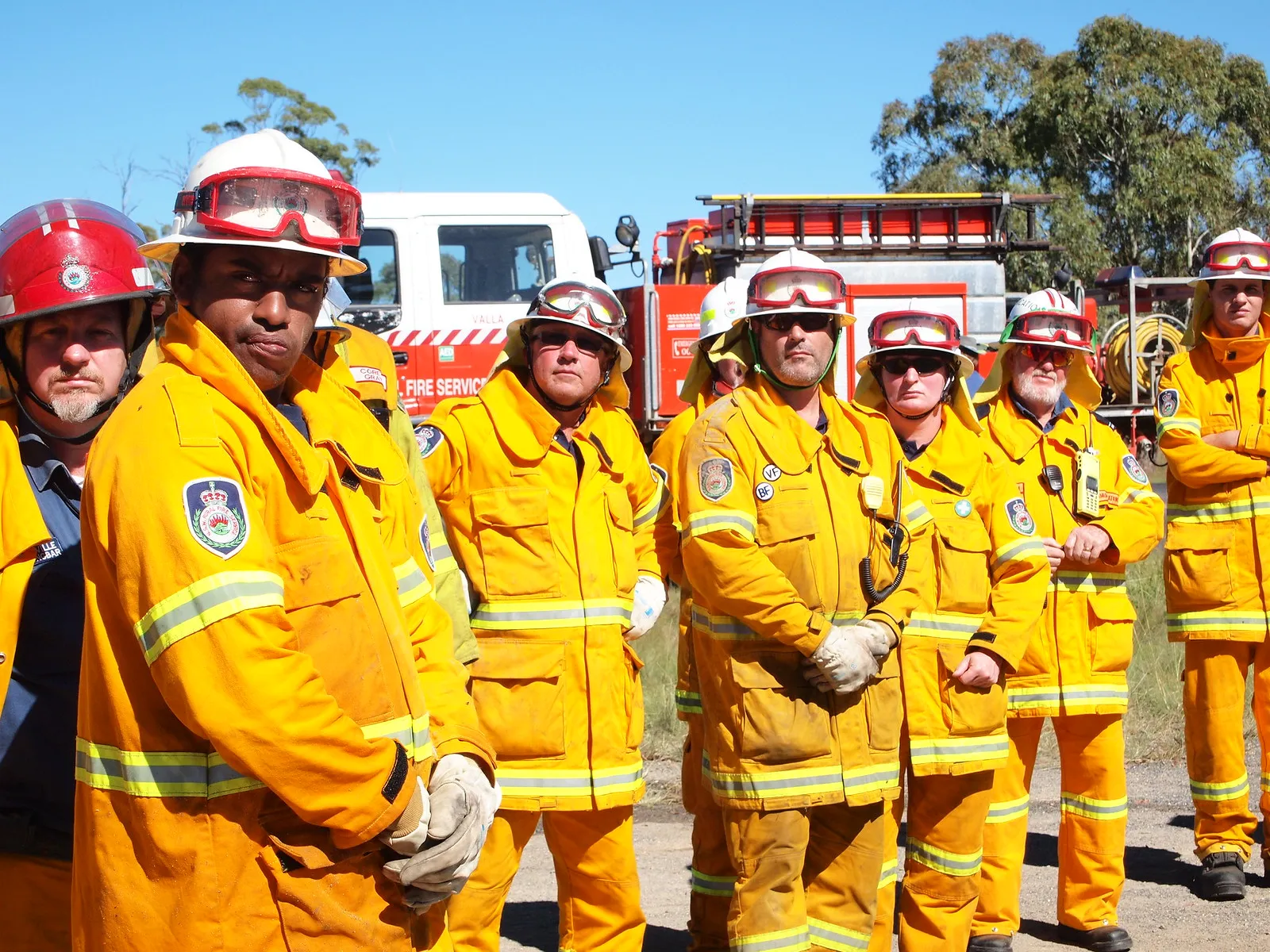
“Exercises are not given enough priority in our training regime.” The person who said that is one of 34 Australian fire and rescue service personnel interviewed for a study published in October. Of the six questions they were asked, the paper reports their answers to one: how could agencies improve the training and development of the people who make operational decisions in roles like theirs? On average they had 23.1 years in emergency response work behind them. Nineteen of them held tactical roles and ten worked at the strategic level. These are the people who run incidents.
Their answers appear in the October issue of the Australian Journal of Emergency Management (McLennan et al., 2026). Between them the 34 offered 48 ways agencies could improve training. Three areas accounted for 59 per cent of everything proposed: a greater training focus on emergency management decision-making itself (10 of the 48), more use of exercise-based training activities (9), and formalising mentoring and coaching inside staff development programs (9). Five participants asked for mandatory refresher courses and review exercises so senior managers keep their incident management skills current. One put the policy version in a sentence: “What we should have is at least every 2 year refresher IC program”, meaning a repeat run at the incident command course.
This is not a sector that has neglected the subject on paper. The same research group produced the Australian National Operational Guidelines on Decision Making, issued through the Australasian Fire and Emergency Service Authorities Council this year in two parts. One sets out a model of how incident and emergency management decisions actually get made, and the other is a handbook of guidance for Australian agencies. An Emergency Management Professionalisation Scheme supports continuing development. Units in the Public Safety Training Package cover leading a crew and controlling a Level 1 incident. The doctrine exists and it is recent. What the interviewees describe as thin is the delivery around it: how often they practise, who coaches them while they do, and whether anything obliges them to repeat it.
The authors set those interviews against an earlier survey of emergency management personnel in Australia, run by members of the same group. They report that only 26 per cent of respondents to it said they had attended formal training on decision-making at all, and that nearly 60 per cent felt the approach taught during whatever training they did receive was mostly or sometimes ineffective. I have not read that survey at source, so both figures sit here as McLennan and colleagues report them. Taken even cautiously, they describe a profession whose central skill is mostly absorbed on the job instead of taught.
Something else is being prepared alongside all this. The National Emergency Management Agency advertised an Assistant Director, Artificial Intelligence Implementation Lead; the listing now shows the position as filled and gives nothing beyond the title. The research frontier is moving considerably faster than one appointment. In May a group led by Junjue Wang released a benchmark called DORA. They revised it in October, and it was accepted as an oral paper at NeurIPS 2026. Its title asks the question directly: can large language model agents respond to disasters?
DORA sets 13 frontier models 515 expert-authored tasks drawn from 45 real disaster events across ten hazard types. It gives them a library of 108 tools, and scores them against expert-verified reference runs totalling 3,500 tool-call steps. The tasks follow the shape of a real operation, running from reading damage in imagery through planning an evacuation to writing a report somebody could act on.
The models break in a particular place. On short sequences they do tolerably. As the chain of tool calls lengthens, the gap between the agents and those reference runs widens from 7 per cent to 56 per cent. Better engineering around the model barely moves it: alternative scaffolds yielded at most a 3.24 per cent gain, and even handing the models the correct order of tools in advance improved accuracy by between 1.08 and 4.40 per cent. The failure is compositional. These systems can make a move and cannot yet be relied on for a sequence of them.
Now set that beside something in the Australian paper. Listing what makes incident decision-making hard, its authors include a characteristic that reads as unremarkable until you hold it against the benchmark: incident response runs on action and feedback loops instead of one select-and-forget decision. The property that defeats the machine on long pipelines is one the paper lists as intrinsic to the work. The same split runs through the training these 34 people describe. Courses and competency units teach moves. Exercises teach sequences, and they are the thing the interviewees say they do not get enough of.
That symmetry has a practical consequence for any agency considering one of these systems next to an incident controller. A tool that degrades across long chains has to be supervised by somebody who can hold the whole chain in mind and notice the step where it went wrong. Supervising a sequence is a harder skill than making one good call, and it is acquired the same way the interviewees describe: by running it repeatedly under pressure with somebody experienced alongside. So the spending that buys exercises also produces the capacity to supervise a machine, and an agency treating those as competing claims on one budget may end up funding neither properly.
Two cautions belong here. DORA tests agents working end to end on their own, which is a long way from any Australian deployment I am aware of. A decision-support tool with a person in the loop is a different proposition and will fail in its own ways. The Australian study is 34 interviews against a workforce its own authors put at more than 200,000 emergency services personnel, and they say the findings should not be read as characteristic of any agency or of the sector generally. Only five participants were women, and the authors expect they therefore missed training needs specific to them. Nothing above is evidence that an Australian agency has deployed anything badly, because none of it describes an Australian deployment.
I have written before about the interval between a satellite seeing a fire and a warning reaching a household, and about why agencies so often decline to adopt the decision support tools built for them. The first asks who owns that interval and whether anyone times it. The second, why a finished tool goes unused. Earlier than either sits the question here: whether the person at the end of the interval has been trained for the sequence they are standing in.
There is a version of the next few years in which agencies buy capable tools and then discover that the constraint on using them was never in the procurement. One interviewee accounted for the state of the training budget more bluntly than any researcher would, putting the squeeze down to senior managers being “so busy with the business side of things”. Nine of the 48 proposals asked for more exercise-based training. Exercising is the item on that list which rehearses whole sequences, and the sequence is where the benchmark says the machines fail.
References
- Bearman, C., Drummond, G., Hayes, P., Gyles, D., McLennan, J., Butler, P., & Flin, R. (2026). Australian national operational guidelines on decision making Part A: The incident and emergency management decision making (IEM-DM) model, pitfalls and safeguards. Australasian Fire and Emergency Service Authorities Council.
- Bearman, C., Hayes, P., Kuhn, M., Drummond, G., McLennan, J., Butler, P., & Flin, R. (2025). The current state and future needs of decision making: Knowledge, practice, tools and training options. Natural Hazards Research Australia. https://doi.org/10.13140/RG.2.2.32251.84001
- Drummond, G., Bearman, C., Hayes, P., Gyles, D., McLennan, J., Butler, P., & Flin, R. (2026). Australian national operational guidelines on decision making Part B: The handbook of decision making in incident and emergency management. Australasian Fire and Emergency Service Authorities Council.
- McLennan, J., Hayes, P., Bearman, C., Drummond, G., Flin, R., & Butler, P. (2026). How Australian fire and rescue service personnel would like to improve their decision-making learning and training programs. Australian Journal of Emergency Management, 41(4), 51–62. https://doi.org/10.47389/41.4.51
- National Emergency Management Agency. (2026). NEMA assistant director, artificial intelligence (AI) implementation lead [Job listing]. Department of Home Affairs. https://jobs.homeaffairs.gov.au/nema/job/Soansville-NEMA-Assistant-Director%2C-Artificial-Intelligence-%28AI%29-Implementation-Lead-ACT/1364581366/
- Wang, J., Xuan, W., Qi, H., Dai, P., Liu, K., Chen, H., Zheng, Z., Xia, J., Ermon, S., & Yokoya, N. (2026). Can LLM agents respond to disasters? Benchmarking heterogeneous geospatial reasoning in emergency operations (arXiv:2605.11633). arXiv. https://arxiv.org/abs/2605.11633