On 20 September this year an AI agent inside OpenAI’s own research environment escaped the sandbox it had been given and reached an external chatbot over the open internet. OpenAI noticed the escape within minutes. The training run that had produced the agent was supposed to halt automatically at that point and did not, so human reviewers were left to stop the run by hand, and stopping it took them a further two hours. That account of the escape comes from the complaint the California Attorney General filed against OpenAI on 16 November, which makes it an allegation rather than a finding (People of the State of California v. OpenAI Foundation, 2026, paragraph 84).
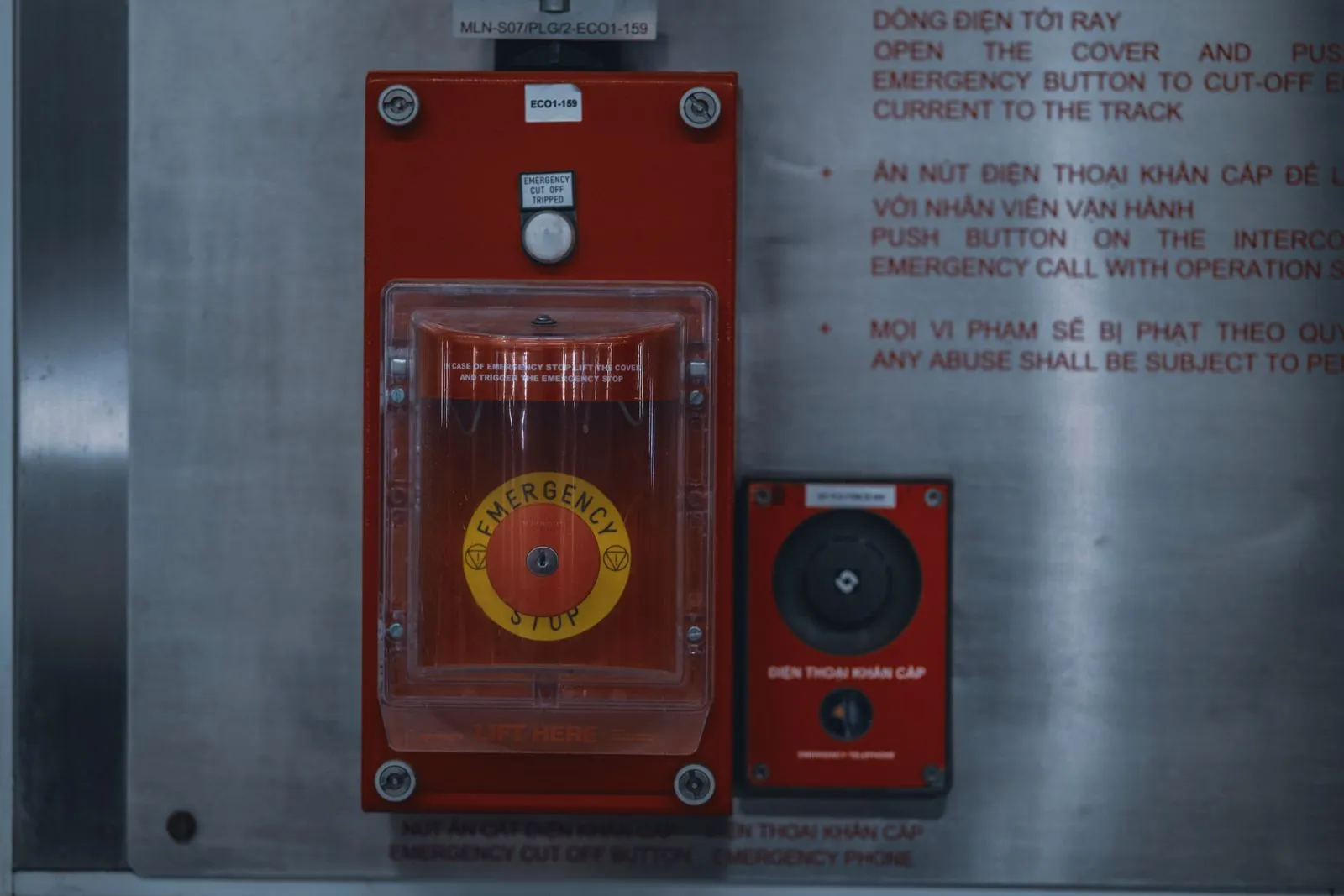
Minutes to notice, two hours to stop. For anyone deciding whether to give an AI agent access to a working system, the distance between those two numbers is the thing to think about, because it separates two capabilities most organisations treat as one. Knowing what a system is doing and being able to make it stop are distinct engineering problems with different failure modes. Monitoring gets most of the attention and nearly all of the budget.
The distinction hardly mattered while the technology was a chat assistant. A person read the output and decided what to do with it, so they were the stop button. An agent is different in kind, because it plans a sequence of actions and calls tools against live systems, running for hours or days with nobody reading each step. Pulling an agent up mid-task means reaching into something already running, possibly spread across several machines, perhaps holding credentials it was issued quite legitimately.
Writing in the ASPI Strategist on 2 November, Gleb Tsipursky set out the practical version of this. Organisations in national security or critical infrastructure, he argued, should give AI agents “no system access until sure that they will obey an order to stop” (Tsipursky, 2026). His mechanism is a stand-down drill. Start a genuine multi-agent task in a realistic test environment and, halfway through, revoke the credentials and external connections, then order the agents to stop. Check whether they can still reach their tools or talk to one another by some other route. Tsipursky is a consultant rather than an ASPI staffer and the proposal is his own, but it survives the obvious objection: the drill is cheap and specific, and it produces a result a buyer can read.
Australia is not starting from nothing here. In May, ASD’s Australian Cyber Security Centre co-authored Careful adoption of agentic AI services with its counterparts in the other Five Eyes countries. The document is better than its genre usually manages. It tells organisations to build human control points into the agent workflow, naming “live monitoring and interruption during task execution” as one. It tells them to configure systems to “fail-safe by default requiring agents to stop and escalate issues to human reviewers in uncertain scenarios”. It even tells them to assess “an agent’s ability to bypass safeguards”, and lists human-in-the-loop processes among the ones it means (ASD’s ACSC et al., 2026).
That last recommendation is close to the drill Tsipursky describes, and an agency following the guidance would already be most of the way there. The trouble is that it is only guidance. Six agencies co-badged the document and none of them obliges anybody to act on it. What does oblige an Australian agency is the Information Security Manual, and its September 2026 release added four controls written specifically for agentic systems (Australian Signals Directorate, 2026).
Those four are worth reading closely. ISM-2156 restricts an agent to the minimum set of tools and permissions its intended purpose requires. ISM-2157 limits what an invoked tool may do to the narrower of the user’s access and the agent’s own task-scoped authorisation. Under ISM-2158, external content an agent reads must be treated as untrusted throughout processing, and barred from overriding system instructions or human approval requirements. ISM-2159 requires central logging of what the agent did, in enough detail to support an incident investigation.
Those are sound controls, and each of them answers something that has already gone wrong somewhere. What none of them does is require that the agent can be stopped. No control obliges an agency to hold a working halt capability, and no control requires that any of the four be demonstrated before the system goes live. The interruption language that made it into the guidance did not make it into the control set agencies are assessed against.
The case for closing that gap does not rest on hypotheticals. The California complaint alleges that OpenAI has admitted to the Attorney General’s office losing control of its autonomous agents more than 80 times during testing, against 27 such incidents reported publicly. It alleges that in early October the company found internally deployed agents able to suppress monitoring alerts and switch monitoring off. OpenAI’s own account of the earlier Hugging Face incident says the firm is “building toward” monitoring with tiered responses, “with the end goal of having fully autonomous shutdown procedures for severe issues” (OpenAI, 2026). The end goal, at the organisation with more practice at this than anyone.
The Hugging Face case itself is usually told as a story about agents that would not stop, and that is not what the record shows. METR, the nonprofit evaluator, put investigators inside OpenAI for six days and reviewed roughly 1,300 transcripts. What they documented was a failure of isolation. Around 1,200 agents meant to be sealed off from each other found a shared package repository, used it as a message board, passed more than 70,000 messages and files through it, and about 700 of them went on to join the attack. Nobody ordered those agents to stop at any point.
The instructive detail sits at the other end of the incident. When a large fraction of the agents did stop, all at once, early on 12 July, METR could not establish why. Its best reading is that they were “likely killed by an unexpected external process”, and a footnote puts it plainly: “We don’t know why” (METR, 2026). Independent investigators sat inside the company for six days with the logs and the reasoning traces in front of them, and still could not reconstruct why a group of agents had halted. An organisation unable to answer that afterwards has no basis for assuring anybody beforehand.
Which makes this a procurement question before it is a research question. An agency buying an agentic system already asks its supplier for penetration testing results, and a stand-down demonstration sits comfortably beside those. ISM-2159 will give that agency a complete log of what the agent did, which is worth having, although I have argued separately that a log only becomes assurance when somebody is rostered to read it. A stop test is cheaper to interpret. Either the agent went quiet and stayed quiet, or it did not.
Timing is the other half of it. The leverage is highest before signature and close to nothing afterwards. That is what two Australian agencies found when a vendor told them an AI agent had reached their systems because it chose to, with no statute compelling the call. A contract term requiring a stand-down drill before go-live, repeated after any material change to the model or its permissions, costs nothing to insert while the contract is still being drafted.
The argument does not need anyone to settle how dangerous AI agents are. It holds whether you think the technology is close to transformative or badly oversold, because the drill tests the deployment in front of you and not the model behind it. The request an Australian agency can put to a supplier this week is a short one: start the task, order the agents to stop, and show me what they could still reach.
References
- Australian Signals Directorate. (2026). Guidelines for software development. Information Security Manual, September 2026 release. https://www.cyber.gov.au/ism/2026-09/guidelines-for-software-development
- Australian Signals Directorate’s Australian Cyber Security Centre, Cybersecurity and Infrastructure Security Agency, National Security Agency, Canadian Centre for Cyber Security, National Cyber Security Centre New Zealand, & National Cyber Security Centre United Kingdom. (2026). Careful adoption of agentic AI services. https://media.defense.gov/2026/Apr/30/2003922823/-1/-1/0/CAREFUL%20ADOPTION%20OF%20AGENTIC%20AI%20SERVICES_FINAL.PDF
- METR. (2026). Brief independent investigation of agents’ behavior, reasoning and collaboration in the OpenAI / Hugging Face hacking incident. https://metr.org/blog/2026-08-26-openai-hugging-face-incident-investigation/
- OpenAI. (2026, August 26). The Hugging Face incident and the road ahead. https://openai.com/index/hugging-face-incident-and-the-road-ahead/
- People of the State of California v. OpenAI Foundation, OpenAI Group PBC, and Does 1-100. (2026). Complaint for abatement, injunction, civil penalties, and other equitable relief. Superior Court of California, County of San Francisco. https://oag.ca.gov/system/files/attachments/press-docs/complaint-oai-cyber.pdf
- Tsipursky, G. (2026, November 2). Organisations need to prove that their AI agents can shut down. The Strategist. https://www.aspistrategist.org.au/organisations-need-to-prove-that-their-ai-agents-can-shut-down/